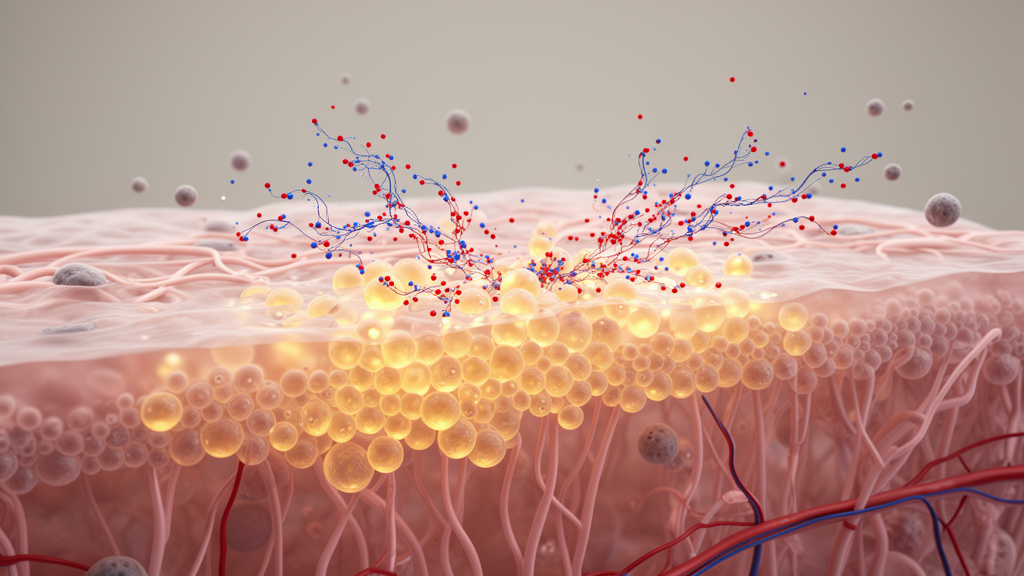
Mast Cell Activation Syndrome (MCAS) has long resisted tidy medical explanation. Patients report symptoms that fluctuate across the autonomic, immune, gastrointestinal and behavioural domains, vary substantially between individuals, and often respond only partially to interventions aimed at a single organ. A new perspective article in Frontiers in Systems Biology argues that this stubborn pattern is not a puzzle to be solved organ by organ, but a signature of a complex adaptive system in which illness emerges from interacting feedback dynamics rather than from isolated dysfunction in one subsystem.
The article, authored by Werner Richardt Van Zyl, an independent researcher in Johannesburg, and Sanchen Henning of the University of South Africa in Pretoria, was received on 27 August 2026 and accepted on 19 October 2026. It is explicitly a conceptual contribution rather than an empirical study: the authors present a theoretical framework intended to generate hypotheses and stimulate future research, not to report new clinical measurements or treatment outcomes.
At the core of the framework are two primary reinforcing feedback structures. The first is a nervous system loop characterised by autonomic and stress-related dysregulation. The second is an immune system loop characterised by escalating inflammatory activity. In the authors’ account, these two loops do not merely coexist; their persistent coupling generates higher-order emergent dynamics, including amplification, persistence and instability. That coupling, they argue, is what produces the hallmark experience of MCAS: symptoms that flare, settle and flare again, spread across body systems, and shift from patient to patient in ways that single-cause models struggle to capture.
The framework also identifies moderating influences. Balancing regulatory processes, in the systems-theory sense, can dampen the reinforcing loops and support adaptive stability. From this perspective, health reflects the capacity to maintain functional adaptation under perturbation, whereas disease emerges when dynamics exceed the system’s regulatory capacity. This reframing shifts the clinical question from “which subsystem is broken?” to “which feedback relationships have lost their balance, and what would restore it?”
The authors position the model as a response to the limits of reductionist approaches in this condition. Because MCAS presents with multisystem involvement and variable treatment responses, organ-specific interventions frequently yield only partial relief. A systems view, they contend, naturally accommodates fluctuating symptoms, multisystem patterns and heterogeneous outcomes, because these are precisely the behaviours that coupled feedback loops are known to produce in other complex systems.
Importantly, the article does not claim that the framework has been validated. It is offered as a hypothesis-generating scaffold that complements established biomedical approaches rather than replacing them. The stated aim is to stimulate empirical research into the systems-level dynamics of chronic multisystem illness, including the nervous, immune, behavioural and environmental domains the framework spans. Any therapeutic implications would need to be tested in future studies; the perspective itself reports no trials, measurements or patient data.
The conceptual move has precedent. Complex adaptive systems thinking has been applied to ecosystems, economies and immune regulation, where local interactions give rise to system-wide patterns that cannot be predicted from any single component. Applying that lens to MCAS suggests that the condition’s notorious variability may be an expected property of coupled reinforcing loops, moderated by balancing processes, rather than evidence of diagnostic confusion or unrelated comorbidities.
For researchers, the framework’s value will lie in whether it generates testable predictions: for example, whether measures of autonomic and inflammatory coupling track symptom amplification or instability over time, and whether interventions that strengthen balancing regulatory processes produce more durable benefit than organ-targeted approaches alone. For now, the contribution is conceptual: a structured way to think about MCAS as a dynamic system whose emergent behaviour, the authors argue, mirrors what patients and clinicians already observe.
Subject of Research: A conceptual framework describing mast cell activation syndrome as a complex adaptive system with coupled nervous and immune feedback loops.
Article Title: A framework for understanding mast cell activation syndrome from a complex adaptive systems perspective
Article References: Van Zyl, W. R., & Henning, S. (2026). A framework for understanding mast cell activation syndrome from a complex adaptive systems perspective. Frontiers in Systems Biology, 6, Article 1980056. https://doi.org/10.3389/fsysb.2026.1980056
Image Credits: AI Generated
DOI: 10.3389/fsysb.2026.1980056
Keywords: mast cell activation syndrome, complex adaptive systems, systems biology, neuroimmune interaction, feedback dynamics, chronic illness, autonomic dysregulation, inflammation, hypothesis-generating framework, multisystem symptoms, framework, understanding
News Source: Drew Townsend. (October 30, 2026). Mast Cell Activation Syndrome Reframed as a Complex Adaptive System. Scienmag.