• HOME
  • NEWS
  • EXPLORE
    • CAREER
      • Companies
      • Jobs
    • EVENTS
    • iGEM
      • News
      • Team
    • PHOTOS
    • VIDEO
    • WIKI
  • BLOG
  • COMMUNITY
    • FACEBOOK
    • INSTAGRAM
    • TWITTER
Thursday, April 30, 2026
BIOENGINEER.ORG
No Result
View All Result
  • Login
  • HOME
  • NEWS
  • EXPLORE
    • CAREER
      • Companies
      • Jobs
        • Lecturer
        • PhD Studentship
        • Postdoc
        • Research Assistant
    • EVENTS
    • iGEM
      • News
      • Team
    • PHOTOS
    • VIDEO
    • WIKI
  • BLOG
  • COMMUNITY
    • FACEBOOK
    • INSTAGRAM
    • TWITTER
  • HOME
  • NEWS
  • EXPLORE
    • CAREER
      • Companies
      • Jobs
        • Lecturer
        • PhD Studentship
        • Postdoc
        • Research Assistant
    • EVENTS
    • iGEM
      • News
      • Team
    • PHOTOS
    • VIDEO
    • WIKI
  • BLOG
  • COMMUNITY
    • FACEBOOK
    • INSTAGRAM
    • TWITTER
No Result
View All Result
Bioengineer.org
No Result
View All Result
Home NEWS Science News Biology

Mapping the complexity of T cells to improve immunotherapy

Bioengineer by Bioengineer
November 2, 2021
in Biology
Reading Time: 2 mins read
0
University of Houston M.D. Anderson Professor of chemical and biomolecular engineering Navin Varadarajan
Share on FacebookShare on TwitterShare on LinkedinShare on RedditShare on Telegram

It is not an exaggeration to say that immunotherapy has revolutionized cancer treatment. Nor is it boastful to say University of Houston M.D. Anderson Professor of chemical and biomolecular engineering Navin Varadarajan intends to make it better.  
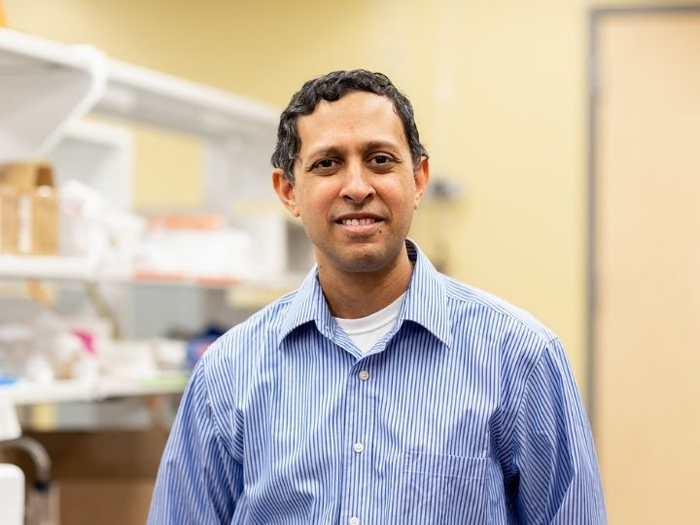
University of Houston M.D. Anderson Professor of chemical and biomolecular engineering Navin Varadarajan

Credit: University of Houston

It is not an exaggeration to say that immunotherapy has revolutionized cancer treatment. Nor is it boastful to say University of Houston M.D. Anderson Professor of chemical and biomolecular engineering Navin Varadarajan intends to make it better.  

Immunotherapy works by harnessing the power of the immune system and its ability to recognize and eliminate cancer cells. Much of that power resides within T cells, a type of white blood cell which protects the body from infection and clears out mutant cells when recognized by T cell receptors. In fact, genetically engineering T cells for redirecting immune responses has recently received approval from the Food and Drug Administration. Although this Adoptive Cell Therapy (ACT), based on infusing in vitro expanded T cells bearing either T cell receptors or chimeric antigen receptors has demonstrated dramatic and durable responses, patient responses vary widely.  

Recent data indicate that variability in the manufactured T cell products may be the primary determinant of clinical success.  

“Since cellular infusion products are a heterogeneous mixture of cells, mapping the complexity of the population requires the ability to identify the function and molecular profiles of cells at single-cell resolution,” said Varadarajan. “Our objective is to develop and rigorously validate a transformative technology that integrates cellular functions and activities with their deep molecular signatures at single-cell resolution in high-throughput.”  

Varadarajan will use a $1.8 million grant from the National Institute of General Medical Sciences to develop and validate what he calls Multiscale Intelligent Convergence (MusIC). MusIC will integrate advances in molecular profiling, dynamic cellular imaging and artificial intelligence (AI) to offer unprecedented insights into the function of immune cells being prepared for immunotherapy.  

Varadarajan’s collaborators on the project include Badri Roysam, Hugh Roy and Lillie Cranz Cullen University Professor and Chair of electrical and computer engineering at UH; Hien Van Nguyen, assistant professor of electrical and computer engineering at UH; and Sattva Neelapu, a medical doctor at MD Anderson Cancer Center. 

“MusIC will provide multi-scale data from molecules to subcellular dynamics to cell-cell interaction biology on the same cells across thousands of cells,” said Varadarjan. “Given the heterogeneity in the composition of cells being used for ACT, it serves as the ideal system for the development and validation of MusIC. By validating it directly on patient samples, we will be able to identify attributes of cells essential for patient benefit.”  

He anticipates that successful implementation will enable the validation of MusIC as a platform for studying multi-scale cell biology which, in turn, will lead to more reliable biomanufacturing of T cell infusion products and engineering more potent immune cells that can have a broad impact on immunotherapy. 


Share16Tweet10Share3ShareShareShare2

Related Posts

Exploring the Heart of the Liver: A Scientific Journey — Biology

Exploring the Heart of the Liver: A Scientific Journey

April 30, 2026
Embryos Show Resilience to Cell Division Disruptions at Key Developmental Stages — Biology

Embryos Show Resilience to Cell Division Disruptions at Key Developmental Stages

April 30, 2026

University of Oldenburg Unveils Cutting-Edge Facility for Animal Navigation Research

April 30, 2026

Streptomyces Secrete Insect-Targeting Diphtheria-Like Toxin

April 30, 2026

POPULAR NEWS

  • Research Indicates Potential Connection Between Prenatal Medication Exposure and Elevated Autism Risk

    830 shares
    Share 332 Tweet 208
  • New Study Reveals Plants Can Detect the Sound of Rain

    710 shares
    Share 284 Tweet 177
  • Scientists Investigate Possible Connection Between COVID-19 and Increased Lung Cancer Risk

    67 shares
    Share 27 Tweet 17
  • Salmonella Haem Blocks Macrophages, Boosts Infection

    60 shares
    Share 24 Tweet 15

About

We bring you the latest biotechnology news from best research centers and universities around the world. Check our website.

Follow us

Recent News

Exploring the Heart of the Liver: A Scientific Journey

Hemp-Based Thermoplastic Presents Sustainable Alternative for Plastic Packaging

From AI Mammograms to Pocket CRISPR: Pioneering the Shift Toward Proactive Healthcare

Subscribe to Blog via Email

Enter your email address to subscribe to this blog and receive notifications of new posts by email.

Join 82 other subscribers
  • Contact Us

Bioengineer.org © Copyright 2023 All Rights Reserved.

Welcome Back!

Login to your account below

Forgotten Password?

Retrieve your password

Please enter your username or email address to reset your password.

Log In
No Result
View All Result
  • Homepages
    • Home Page 1
    • Home Page 2
  • News
  • National
  • Business
  • Health
  • Lifestyle
  • Science

Bioengineer.org © Copyright 2023 All Rights Reserved.