• HOME
  • NEWS
  • EXPLORE
    • CAREER
      • Companies
      • Jobs
    • EVENTS
    • iGEM
      • News
      • Team
    • PHOTOS
    • VIDEO
    • WIKI
  • BLOG
  • COMMUNITY
    • FACEBOOK
    • INSTAGRAM
    • TWITTER
Friday, May 22, 2026
BIOENGINEER.ORG
No Result
View All Result
  • Login
  • HOME
  • NEWS
  • EXPLORE
    • CAREER
      • Companies
      • Jobs
        • Lecturer
        • PhD Studentship
        • Postdoc
        • Research Assistant
    • EVENTS
    • iGEM
      • News
      • Team
    • PHOTOS
    • VIDEO
    • WIKI
  • BLOG
  • COMMUNITY
    • FACEBOOK
    • INSTAGRAM
    • TWITTER
  • HOME
  • NEWS
  • EXPLORE
    • CAREER
      • Companies
      • Jobs
        • Lecturer
        • PhD Studentship
        • Postdoc
        • Research Assistant
    • EVENTS
    • iGEM
      • News
      • Team
    • PHOTOS
    • VIDEO
    • WIKI
  • BLOG
  • COMMUNITY
    • FACEBOOK
    • INSTAGRAM
    • TWITTER
No Result
View All Result
Bioengineer.org
No Result
View All Result
Home NEWS Science News Chemistry

Manipulating non-magnetic atoms in a chromium halide enables tuning of magnetic properties

Bioengineer by Bioengineer
July 24, 2020
in Chemistry
Reading Time: 3 mins read
0
IMAGE
Share on FacebookShare on TwitterShare on LinkedinShare on RedditShare on Telegram

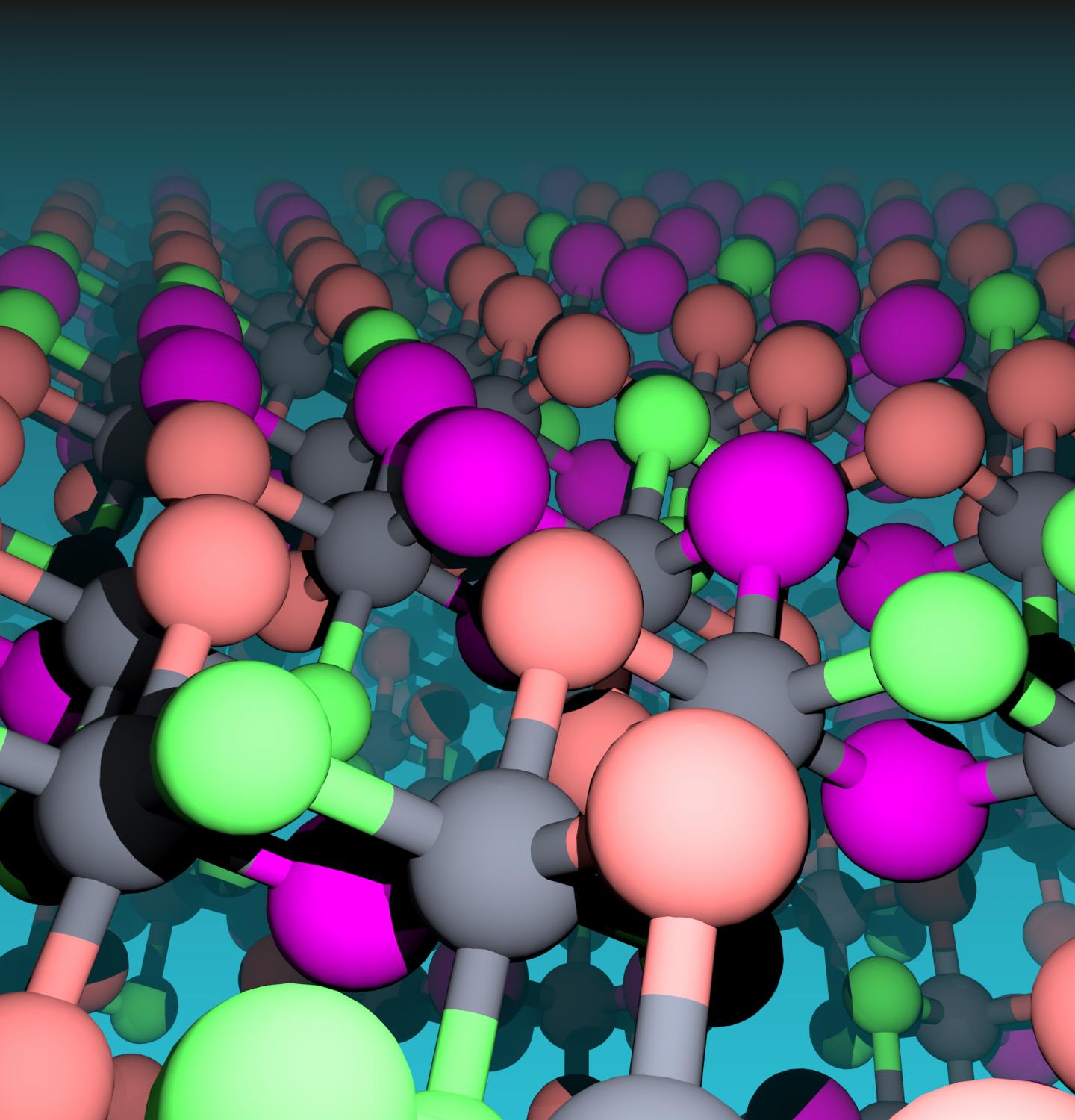
New approach creates synthetic layered magnets with unprecedented level of control over their magnetic properties
IMAGE

Credit: Fazel Tafti

Chestnut Hill, Mass. (7/24/2020) – The magnetic properties of a chromium halide can be tuned by manipulating the non-magnetic atoms in the material, a team, led by Boston College researchers, reports in the most recent edition of Science Advances.

The seemingly counter-intuitive method is based on a mechanism known as an indirect exchange interaction, according to Boston College Assistant Professor of Physics Fazel Tafti, a lead author of the report.

An indirect interaction is mediated between two magnetic atoms via a non-magnetic atom known as the ligand. The Tafti Lab findings show that by changing the composition of these ligand atoms, all the magnetic properties can be easily tuned.

“We addressed a fundamental question: is it possible to control the magnetic properties of a material by changing the non-magnetic elements?” said Tafti. “This idea and the methodology we report on are unprecedented. Our findings demonstrate a new approach to create synthetic layered magnets with unprecedented level of control over their magnetic properties.”

Magnetic materials are the backbone of most current technology, such as the magnetic memory in our mobile devices. It is common practice to tune the magnetic properties by modifying the magnetic atoms in a material. For example, one magnetic element, such as chromium, can be replaced with another one, such as iron.

The team studied ways to experimentally control the magnetic properties of inorganic magnetic materials, specifically, chromium halides. These materials are made of one Chromium atom and three halide atoms: Chlorine, Bromine, and Iodine.

The central finding illustrates a new method of controlling the magnetic interactions in layered materials by using a special interaction known as the ligand spin-orbit coupling. The spin-orbit coupling is a property of an atom to re-orient the direction of spins – the tiny magnets on the electrons – with the orbital movement of the electrons around the atoms.

This interaction controls the direction and magnitude of magnetism. Scientists have been familiar with the spin-orbit coupling of the magnetic atoms, but they did not know that the spin-orbit coupling of the non-magnetic atoms could also be utilized to re-orient the spins and tune the magnetic properties, according to Tafti.

The team was surprised that they could generate an entire phase diagram by modifying the non-magnetic atoms in a compound, said Tafti, who co-authored the report with fellow BC physicists Ying Ran and Kenneth Burch, post-doctoral researchers Joseph Tang and Mykola Abramchuk, graduate student Faranak Bahrami, and undergraduate students Thomas Tartaglia and Meaghan Doyle. Julia Chan and Gregory McCandless of the University of Texas, Dallas, and Jose Lado of Finland’s Aalto University, were also part of the team.

“This finding puts forward a novel procedure to control magnetism in layered materials, opening up a pathway to create new synthetic magnets with exotic properties,” Tafti said. “Moreover, we found strong signatures of a potentially exotic quantum state associated to magnetic frustration, an unexpected discovery that can lead to an exciting new research direction.”

Tafti said the next step is to use these materials in innovative technologies such as magneto-optical devices or the new generation of magnetic memories.

###

Media Contact
Ed Hayward
[email protected]

Related Journal Article

http://dx.doi.org/10.1126/sciadv.abb9379

Tags: Chemistry/Physics/Materials SciencesMaterials
Share12Tweet8Share2ShareShareShare2

Related Posts

Study Reveals How Valproate Affects Early Brain Development: Insights into the Antiepileptic Drug’s Impact — Chemistry

Study Reveals How Valproate Affects Early Brain Development: Insights into the Antiepileptic Drug’s Impact

May 22, 2026
Sustainable Chemistry: Iron Replaces Noble Metals in Catalytic Reactions — Chemistry

Sustainable Chemistry: Iron Replaces Noble Metals in Catalytic Reactions

May 22, 2026

Advancing Thin-Film Device Manufacturing with Imaging Ellipsometry for Enhanced Process Control

May 22, 2026

Simple Adjustment in 3D Printing Enhances Fit of Dental Crowns

May 22, 2026
Please login to join discussion

POPULAR NEWS

  • blank

    New Study Reveals Plants Can Detect the Sound of Rain

    734 shares
    Share 293 Tweet 183
  • ESMO 2025: mRNA COVID Vaccines Enhance Efficacy of Cancer Immunotherapy

    309 shares
    Share 124 Tweet 77
  • Research Indicates Potential Connection Between Prenatal Medication Exposure and Elevated Autism Risk

    847 shares
    Share 339 Tweet 212
  • Breastmilk Balances E. coli and Beneficial Bacteria in Infant Gut Microbiomes

    58 shares
    Share 23 Tweet 15

About

We bring you the latest biotechnology news from best research centers and universities around the world. Check our website.

Follow us

Recent News

Enhancing Low-Dose CT Scans with Interpretable Multi-Gaussian Cluster Variance Reduction

Intelligent Routing Powered by Photonic Spiking Reinforcement Learning

Breakthrough in Augmented Reality: Active Retinal Projection Display Achieves Pixel-to-Pixel Collimation

Subscribe to Blog via Email

Enter your email address to subscribe to this blog and receive notifications of new posts by email.

Join 82 other subscribers
  • Contact Us

Bioengineer.org © Copyright 2023 All Rights Reserved.

Welcome Back!

Login to your account below

Forgotten Password?

Retrieve your password

Please enter your username or email address to reset your password.

Log In
No Result
View All Result
  • Homepages
    • Home Page 1
    • Home Page 2
  • News
  • National
  • Business
  • Health
  • Lifestyle
  • Science

Bioengineer.org © Copyright 2023 All Rights Reserved.