Beer’s Building Blocks, Refined: Malt and Hop Polyphenols Show Promise Against Psoriasis in Preclinical Tests
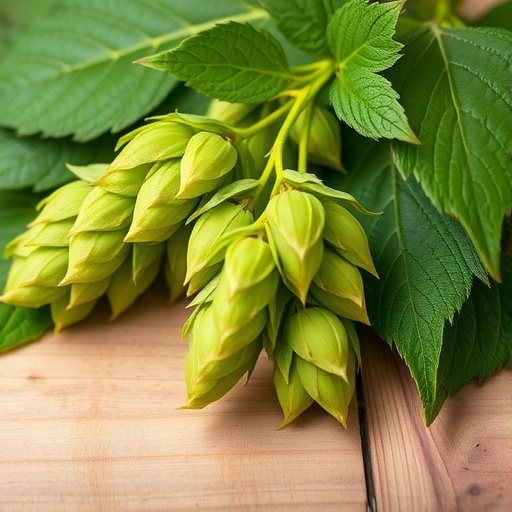
In a result that reads like alchemy from the brewing world, Italian researchers have taken barley malt and hops—the raw botanicals behind beer—and refined them into a concentrated polyphenol extract that shields human skin cells from oxidative damage and measurably calms psoriasis-like inflammation in mice. The study, published in Current Research in Biotechnology, centers on a purified fraction named Aliophen-XP, derived from a patented formulation called Aliophen® that is manufactured from malts and hops without any fermentation step. When the fraction was applied to human keratinocytes in the laboratory, the cells ramped up a key cytoprotective enzyme and kept inflammatory cytokine genes in check; when it was rubbed onto the ears of mice with chemically induced psoriasis-like lesions, the animals developed milder disease and lower levels of the inflammatory driver IL-17A. The findings, the authors say, position a beer-adjacent botanical extract as a candidate topical adjunct for one of the world’s most common and treatment-resistant inflammatory skin diseases.
Psoriasis is far more than a cosmetic nuisance. It affects roughly two percent of people in Europe and North America and arises from a self-reinforcing conversation between immune cells and keratinocytes, the workhorse cells that form the epidermis. In the prevailing model, dendritic cells activate T cells that flood the skin with interleukin-17 and interleukin-22, driving keratinocytes into hyperproliferation and stabilizing thick, scaly plaques. Modern biologics that block the IL-23/IL-17 axis can transform outcomes, but they are injectable, costly, and reserved for moderate-to-severe disease. Meanwhile, oxidative stress is increasingly recognized as an amplifier of the disease loop: reactive oxygen species promote DNA damage and switch on pro-inflammatory signaling cascades such as NF-κB, MAPK, and JAK/STAT in epidermal cells. The burden is enormous—inflammatory skin diseases as a group generated an estimated 4.86 billion incident cases and 42.9 million disability-adjusted life years in 2019, prompting the WHO Executive Board in 2025 to declare skin diseases a global public-health priority. Plant-derived (poly)phenols—quercetin, resveratrol, curcumin, green tea catechins—have long shown multi-targeted antioxidant and immunomodulatory potential in preclinical models, but poor bioavailability and formulation headaches have kept most of them at the margins of dermatology.
The new work began with a formulation problem rather than a molecule discovery. Years earlier, the same research group had characterized Aliophen®, a patented extract rich in natural (poly)phenols derived from malts and hops, and showed that it could inhibit the oxidation of low-density lipoprotein and protect red blood cells from hemolysis. But the formulation carried a hidden weakness: its total (poly)phenol content was only about 0.3 percent by weight, because sugars, proteins, and other non-phenolic co-extractives bulked up the mass and diluted the bioactive punch per gram. The team hypothesized that stripping away these passengers would concentrate the activity. They first precipitated proteins with trichloroacetic acid, then passed the material through reversed-phase solid-phase extraction cartridges and eluted it stepwise with a water–acetonitrile gradient. The fraction released at 35 percent acetonitrile—Aliophen-XP—proved the most biologically active. Chemical assays confirmed the strategy had worked: total (poly)phenols jumped roughly twelvefold, from 3.23 to 36.30 milligrams of quercetin equivalents per gram of dry weight, and ferric-reducing antioxidant power rose in parallel, from 6.73 to 81.92 milligrams of Fe2+ equivalents per gram.
What exactly is inside Aliophen-XP? To find out, the researchers deployed high-performance liquid chromatography coupled to ultraviolet and fluorescence detectors and to an electrospray-ionization quadrupole time-of-flight tandem mass spectrometer, then added a nanoflow HPLC-Orbitrap pass to catch low-abundance peptides. The chemical portrait that emerged was dominated not by hop flavonoids but by barley phenolamides—above all hordatines A, B, and C, dehydrodimeric compounds assembled from hydroxycinnamic acids and agmatine—alongside a remarkable diversity of their mono-, di-, and tri-hexosylated and hydroxylated derivatives. Their monomeric precursors, p-coumaroylagmatine and feruloylagmatine, appeared at high intensity, as did free hydroxycinnamic acids such as ferulic, p-coumaric, and sinapic acid. The team also catalogued flavonoid C-glycosides including schaftoside and isovitexin-O-hexoside (meloside A), spermidine-based phenolamides, and numerous peptides derived from barley B-hordeins and serpin Z4, the likely handiwork of endogenous proteases activated during malting. Strikingly, the fraction contained no detectable xanthohumol, the much-studied prenylated chalcone of hops. That absence matters analytically: it rules xanthohumol out as the active principle and points the finger squarely at barley-derived hordatines and related phenolamides as the probable engines of the extract’s effects.
The cellular experiments were built around HaCaT cells, a spontaneously immortalized human keratinocyte line that preserves the proliferation, differentiation, and inflammatory responses of primary skin cells. First came safety: across 24- and 48-hour exposures at concentrations up to 0.8 milligrams per milliliter, viability measured by crystal violet staining stayed essentially at control levels, with a maximum dip of only about 14 percent. Then came the oxidative stress test. Cells were pre-incubated with Aliophen-XP for 30 minutes, washed thoroughly, loaded with the oxidation-sensitive fluorescent probe DCFH-DA, and finally challenged with tert-butyl hydroperoxide. The washout design is analytically crucial: because the extract was gone before the probe and the oxidant were introduced, direct chemical quenching of the fluorescent signal by the extract itself is unlikely to explain the result. Even so, fluorescence—readout of intracellular oxidant activity—was significantly lower at every tested concentration, and the protection persisted from 30 to 120 minutes after the oxidant hit, suggesting the cells had been genuinely primed rather than merely buffered.
The anti-inflammatory results followed. Keratinocytes pretreated with Aliophen-XP at 0.4 milligrams per milliliter for two hours were stimulated with tumor necrosis factor-alpha, a cytokine central to psoriatic inflammation. Quantitative RT-PCR revealed a marked, concentration-dependent dampening of the messenger RNA for IL-1β, IL-6, and IL-8—three workhorse inflammatory genes of the epidermis—and immunoblotting confirmed that IL-6 protein accumulation fell in step. The extract also raised levels of NQO1, a multifunctional flavoprotein that detoxifies quinones and supports cellular redox control, in a concentration-dependent manner. The authors are careful about interpretation: NQO1 is often treated as a textbook target of the NRF2 transcription factor, but its promoter is a regulatory crossroads where the antioxidant response element, AP-1 sites, and aryl hydrocarbon receptor signaling intersect. NQO1 induction, they write, is solid evidence of reinforced cytoprotective defenses, but not yet proof of NRF2 activation—a question that will need nuclear-translocation assays, reporter constructs, and gene-silencing experiments to settle.
The decisive test came in living animals. The team used the imiquimod model, in which a TLR7/8-activating drug applied to the skin triggers a psoriasis-like dermatitis through the same IL-23/IL-17 axis that drives the human disease. Male C57BL/6J mice had imiquimod cream smeared on one ear for four consecutive days; 30 minutes before each application, researchers painted on Aliophen-XP at 0.8 or 1.6 milligrams per milliliter. Lesions, scored daily with a modified Psoriasis Area and Severity Index combining erythema, scaling, and thickening, typically peaked on day five. At the higher dose, the extract delayed the onset of lesions and significantly blunted that peak severity; at both doses it prevented the splenic enlargement that imiquimod provokes, a sign of systemic inflammatory spread. Most telling, enzyme-linked immunosorbent assays of inflamed ear tissue showed reduced IL-17A—the signature cytokine of psoriatic pathology—hinting that topical pretreatment had functionally dented the very immune circuit that sustains plaques.
The star molecules here have a curious history. Hordatines are inducible phytoalexins—antimicrobial compounds that barley seedlings deploy against fungal attackers such as Fusarium and Blumeria graminis—and they double as radical scavengers and metal chelators. Yet their behavior in mammals remains largely uncharted, making this one of the first demonstrations that a hordatine-rich botanical fraction can attenuate psoriasiform inflammation. The formulation science underlying the result may prove as consequential as the biology: by raising phenolic content twelvefold, the enrichment step turned a dilute extract into a workable topical candidate. There is already a human signal downstream: in a separate exploratory 56-day study cited by the authors, a cream containing 4 percent of the parent Aliophen® formulation was well tolerated and improved objective measures of wrinkles, pigmentation, skin biomechanical properties, and dermal density. An adjunctive, barrier-friendly product that could be layered onto maintenance therapy for psoriasis—or for stressed, inflamed skin generally—is the obvious development direction.
The researchers are equally clear about what the study does not show. Treatment was strictly preventive, applied before lesions developed, so therapeutic value against established plaques remains untested. No pharmacological positive control—no corticosteroid or calcineurin inhibitor—was run alongside, leaving the extract’s relative potency unknown. Only IL-17A was quantified in tissue; there was no histopathology, no multiplex cytokine profiling, and no cell-type-resolved immunophenotyping of the γδ T cells, innate lymphoid cells, and dendritic cells thought to orchestrate the response. And while the washout design strengthens the antioxidant interpretation, DCFH-DA remains an indirect, non-specific probe. The necessary-and-sufficient chemistry is also unresolved: targeted fractionation of hordatines, phenolamides, and minor flavonoids will be needed to untangle synergy from redundancy. Still, the convergence of rigorous mass-spectrometric chemistry, keratinocyte biology, and disease-modifying activity in mice is an unusually complete preclinical package for a botanical fraction. By simultaneously raising the redox threshold and quieting inflammatory transcription, Aliophen-XP offers a plausible way to disrupt the feed-forward loop that keeps psoriatic skin inflamed—and it does so with molecules sourced from what might otherwise be beer’s footnote ingredients.
Subject of Research: A (poly)phenol-enriched fraction from malts and hops (Aliophen-XP) that enhances keratinocyte antioxidant defenses and modulates psoriasis-like inflammation in human skin cells and in a mouse model
Subject of Research: Biology
Article Title: A bioactive enriched fraction derived from malts and hops, enhances keratinocyte antioxidant defenses and modulates psoriasis-like inflammation
Article References: Adabbo, E., De Palma, G., Tedesco, I., Recine, M., Picariello, G., Siano, F., Tarricone, F., Cicala, C., Spagnuolo, C., & Russo, G. L. (2026). A bioactive enriched fraction derived from malts and hops, enhances keratinocyte antioxidant defenses and modulates psoriasis-like inflammation. Current Research in Biotechnology, Article 100416. https://doi.org/10.1016/j.crbiot.2026.100416
Image Credits: AI Generated
DOI: 10.1016/j.crbiot.2026.100416
Keywords: psoriasis, Aliophen-XP, malt and hops polyphenols, hordatines, keratinocyte antioxidant defenses, NQO1, imiquimod mouse model, IL-17A, oxidative stress, phenolamides, topical anti-inflammatory
Cite Scienmag News
APA MLA Chicago
Drew Townsend. (August 30, 2026). Malt and hop compounds strengthen skin antioxidant defenses against psoriasis inflammation. Scienmag. https://scienmag.com/malt-and-hop-compounds-strengthen-skin-antioxidant-defenses-against-psoriasis-inflammation/
Drew Townsend. “Malt and hop compounds strengthen skin antioxidant defenses against psoriasis inflammation.” Scienmag, 30 August 2026, https://scienmag.com/malt-and-hop-compounds-strengthen-skin-antioxidant-defenses-against-psoriasis-inflammation/. Accessed 30 August 2026.
Drew Townsend. “Malt and hop compounds strengthen skin antioxidant defenses against psoriasis inflammation.” Scienmag. August 30, 2026. https://scienmag.com/malt-and-hop-compounds-strengthen-skin-antioxidant-defenses-against-psoriasis-inflammation/
Copy citation Download RIS
Tags: antioxidants in psoriasis treatmentbeer-derived polyphenol extractbeer-derived polyphenol extracts for skin healthbioactive compounds from brewing botanicalsIL-17A and immune response modulationIL-17A cytokine in psoriasisinnovative approaches to psoriasis managementinnovative approaches to psoriasis therapykeratinocyte protection against oxidative damagemalt and hop compounds for skin healthnatural antioxidants for skin inflammationnatural compounds for skin barrier protectionoxidative stress and psoriasisoxidative stress and skin inflammationplant polyphenols in skin disease managementplant-based anti-inflammatory agentsplant-based compounds in dermatologyplant-derived skincare ingredientspreclinical psoriasis researchpreclinical studies on botanical extracts for psoriasispsoriasis treatment researchrole of malt and hop compounds in skin protectiontopical natural remedies for inflammatory skin conditionstopical therapies for psoriasis