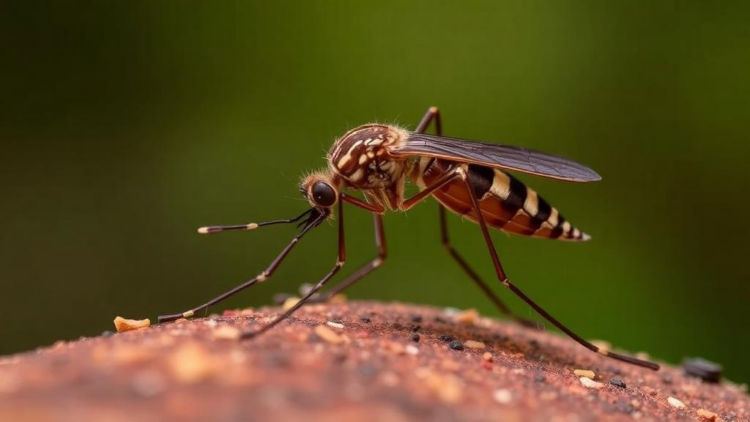
Malaria remains one of the deadliest infectious diseases on the planet, and the mosquitoes that transmit it are proving ever harder to control. Insecticide resistance is spreading, and vector populations are shifting their behaviour to evade the nets and sprays designed to kill them. Against this backdrop, a team of researchers from Burkina Faso, the United Kingdom and Oxford has produced one of the most detailed genomic portraits yet of the country’s principal malaria vectors, sequencing whole genomes of mosquitoes collected across three distinct climatic zones. Their findings, published in BMC Genomics as part of the Anopheles gambiae 1000 Genomes Project, carry weighty implications for how future malaria interventions, including gene drive technologies, might be deployed.
The study focused on the Anopheles gambiae species complex, a group of morphologically identical mosquitoes that includes the most efficient malaria vectors in Africa. Within Burkina Faso, the dominant vectors are Anopheles coluzzii and Anopheles gambiae sensu stricto, alongside Anopheles arabiensis. Understanding whether these populations are genetically divided by geography is far from an academic question. If mosquito populations in different regions are genetically isolated, a control tool introduced in one place may fail to spread or may need to be tailored separately for each region. Conversely, if mosquitoes mix freely across the country, a single intervention could, in principle, ripple outward through the entire population.
To answer this question, the researchers collected mosquito specimens across three ecological settings in Burkina Faso using pyrethroid spray catches, the standard method for sampling indoor-resting mosquitoes. The whole genomes of the captured Anopheles gambiae sensu lato specimens were then sequenced under the Ag1000G framework, a major international effort to catalogue genomic variation in African malaria vectors. The team analysed the resulting data using MalariaGEN resources, applying tools such as principal component analysis, ancestry-informative markers, pairwise genetic differentiation measures and neighbour joining trees to dissect the structure of the populations at single nucleotide polymorphism resolution.
The headline result is striking: neither Anopheles coluzzii nor Anopheles gambiae sensu stricto showed any detectable geographical population structure across the three climatic zones sampled. Mosquitoes from the Soudanian south and the Sahelian north of the country were, genomically speaking, members of the same interbreeding populations. This pattern points to high levels of gene flow within Burkina Faso, meaning mosquitoes are moving, or their genes are moving, across ecological boundaries at a rate sufficient to erase any regional genetic fingerprints. For two species that thrive in such different environments, the absence of differentiation is a powerful testament to their mobility and adaptability.
Anopheles arabiensis told a different story. This species displayed a weak but real structure that separated samples from the Hauts-Bassins region in the Soudanian zone from all other An. arabiensis samples in the study. In other words, while most of the country’s An. arabiensis mosquitoes appear well mixed, a distinct genetic signature sets the Hauts-Bassins population apart. The authors suggest this could reflect a distinct demographic history for that population. Indeed, their diversity analyses revealed evidence that An. arabiensis populations have undergone either a reduction in effective population size or a bottleneck, in contrast to the signals of population expansion observed across An. gambiae sensu lato more broadly.
The genomic toolkit behind these conclusions deserves attention. Nucleotide diversity and Watterson’s theta, two complementary estimators of genetic variation, were computed for each population, alongside Tajima’s D, a statistic sensitive to changes in population size. Heterozygosity was mapped across chromosome 3R in windows of ten thousand base pairs, allowing the team to examine variation at fine scale. Principal component analyses were performed both across the full dataset and per year, and pairwise differentiation was calculated within each species per region. The consistency of these independent lines of evidence strengthens the central claim that the two major vectors are panmictic, or freely interbreeding, across the country while An. arabiensis follows its own demographic trajectory.
One notable absence from the genomic data also caught the researchers’ attention. Two cryptic species, Anopheles goundry and Anopheles tengrela, previously identified within Burkina Faso, were not detected in this study. Cryptic species are lineages that look identical to their relatives but are genetically distinct, and their presence can complicate vector control because they may differ in behaviour, habitat preference or susceptibility to insecticides. Their non-detection in this nationwide sampling suggests these lineages are either rare, locally restricted or no longer circulating at detectable levels, though the authors are careful to frame this as an observation from the sampled specimens rather than proof of absence.
The implications for existing vector control are immediate. Long-lasting insecticidal nets and indoor residual spraying remain the backbone of malaria prevention in Burkina Faso, yet both are threatened by the expansion and persistence of insecticide resistance in vector populations. If resistance-conferring variants can move freely across the country through the same high gene flow documented here, then resistance management strategies, such as rotating insecticide classes or deploying new generation nets, may need to be coordinated nationally rather than regionally. A patchwork of local approaches could be undermined by mosquitoes or their genes arriving from neighbouring districts where a different insecticide is in use.
The implications for gene drive technology are even more profound. Gene drives are engineered genetic systems that bias inheritance so that a chosen trait, such as sterility or susceptibility to parasites, spreads rapidly through a wild population, even if the trait reduces the carrier’s reproductive fitness. The feasibility and safety of such systems depend critically on population structure. A drive released into a fragmented population might stall at genetic boundaries, limiting its effectiveness but also containing any unintended spread. The absence of geographical structure in An. coluzzii and An. gambiae sensu stricto within Burkina Faso suggests, by contrast, that a gene drive construct released in one part of the country could spread rapidly throughout the entire national population of these vectors. That is precisely the efficiency designers hope for, but it also underscores why containment modelling, staged testing and community engagement are central to the gene drive programmes now under development for malaria vector control in Africa.
The study was made possible by an unusually broad coalition. Sampling was carried out by the Institut de Recherche en Sciences de la Santé with the Ministry of Health of Burkina Faso and community health workers, and the work was funded by the Gates Foundation and Wellcome, which also support the safe and sustainable implementation of gene drive technology for malaria vector control in Africa. Genomic sequencing and analysis drew on the MalariaGEN Vector Observatory, an international collaboration building capacity for malaria vector genomic surveillance, with contributions from the Liverpool School of Tropical Medicine, the Broad Institute and the Wellcome Sanger Institute. For a country at the frontline of both malaria and mosquito innovation, the message of this research is clear: its two deadliest vectors behave, genetically, as a single connected population, and any strategy that hopes to outmanoeuvre them must think at national scale, while the more demographically fragile An. arabiensis may require a separate plan of its own.
Subject of Research: Population genomics of Anopheles gambiae complex malaria vectors in Burkina Faso and implications for gene drive implementation
Article Title: No geographical population structure of malaria vectors Anopheles gambiae and Anopheles coluzzii but weak structure in Anopheles arabiensis within Burkina Faso: implications for vector control and gene drive implementation
Article References: Kaboré, H., Brenas, J., Kientega, M., Traoré, N., Pescod, P., Sawadogo, G., Koutoucheva, A. H., Lanfrancotti, A., Namountougou, M., Maiga, H., Nolan, T., Miles, A., Clarkson, C. S., & Diabaté, A. (2026). No geographical population structure of malaria vectors Anopheles gambiae and Anopheles coluzzii but weak structure in Anopheles arabiensis within Burkina Faso: implications for vector control and gene drive implementation. BMC Genomics. https://doi.org/10.1186/s12864-026-13321-6
Image Credits: AI Generated
DOI: 10.1186/s12864-026-13321-6
Keywords: Anopheles gambiae, Anopheles coluzzii, Anopheles arabiensis, malaria vectors, population structure, gene flow, gene drive, vector control, whole-genome sequencing, Burkina Faso, genetic diversity, insecticide resistance
Cite Scienmag News
APA
MLA
Chicago
Juliet Wilcox. (October 4, 2026). Malaria Mosquitoes in Burkina Faso Show No Regional Genetic Boundaries, Paving the Way for Gene Drives. Scienmag. https://scienmag.com/malaria-mosquitoes-in-burkina-faso-show-no-regional-genetic-boundaries-paving-the-way-for-gene-drives/
Juliet Wilcox. “Malaria Mosquitoes in Burkina Faso Show No Regional Genetic Boundaries, Paving the Way for Gene Drives.” Scienmag, 4 October 2026, https://scienmag.com/malaria-mosquitoes-in-burkina-faso-show-no-regional-genetic-boundaries-paving-the-way-for-gene-drives/. Accessed 4 October 2026.
Juliet Wilcox. “Malaria Mosquitoes in Burkina Faso Show No Regional Genetic Boundaries, Paving the Way for Gene Drives.” Scienmag. October 4, 2026. https://scienmag.com/malaria-mosquitoes-in-burkina-faso-show-no-regional-genetic-boundaries-paving-the-way-for-gene-drives/
Copy citation
Download RIS
Tags: Anopheles arabiensisAnopheles coluzziiAnopheles gambiaeAnopheles gambiae genetic diversityBurkina Fasoclimate zones and mosquito geneticsgene drivegene drive technology for malaria controlgene flowgenetic connectivity of malaria vectorsGenetic diversitygenomic analysis of malaria mosquitoesimplications for malaria intervention strategiesinsecticide resistancemalaria transmission in West AfricaMalaria vector genomics in Burkina Fasomalaria vectorsmosquito insecticide resistancemosquito population structure and behaviorpopulation structurepotential for gene drive deployment in malaria hotspotsvector controlvector control challenges due to mosquito adaptationwhole genome sequencing