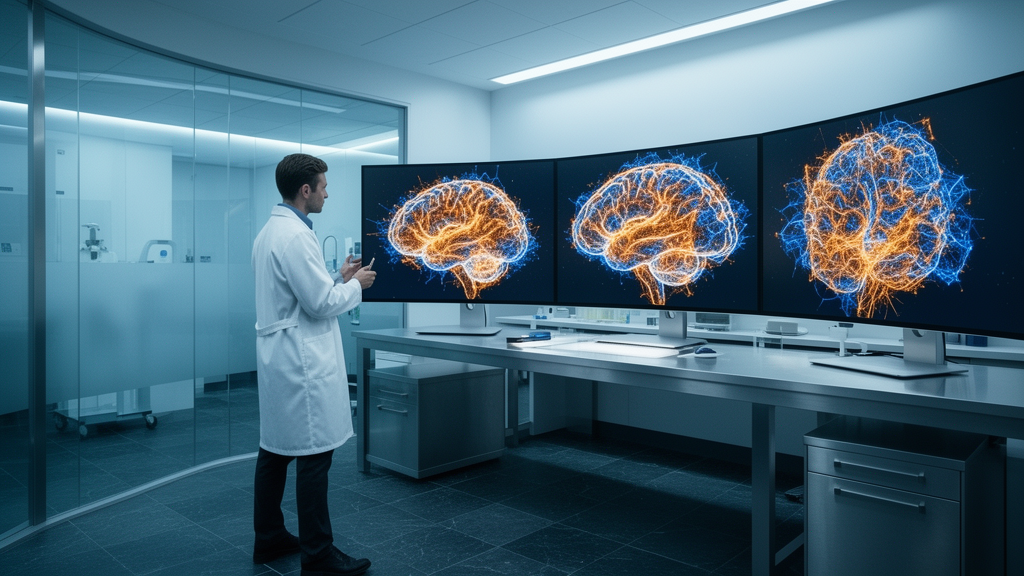
Researchers have developed DEGAS, a machine learning framework that applies functional connectivity to identify network-defined subtypes of Parkinson’s disease. Parkinson’s disease progresses heterogeneously among affected individuals, yet clinicians currently possess no reliable biomarker to stratify patients for individualized medical care. To address this persistent clinical challenge, the new analytical framework establishes baseline network signatures capable of detecting clinically distinct disease subgroups.
The study evaluated baseline functional magnetic resonance imaging scans collected from a cohort of 336 early-stage patients. Investigators stratified these participants by suspected rapid eye movement sleep behavior disorder, a recognized marker of an aggressive disease course. To build classification algorithms, the research team integrated both adjacency matrices and graph theory metrics into computational classifiers and subsequently validated predictions against recorded three-year patient outcomes.
Standard region-of-interest analyses detected no significant group differences in functional connectivity or topological organization between the patient groups. Conversely, machine learning models that incorporated advanced graph theory metrics demonstrated robust classification capabilities, achieving balanced accuracy levels between 0.91 and 0.93 alongside Matthews correlation coefficients spanning 0.61 to 0.78. These comprehensive models clearly outperformed simpler adjacency-only models, which achieved a balanced accuracy of 0.79 and a Matthews correlation coefficient of 0.52.
Detailed model evaluations demonstrated that network metrics reflecting basal ganglia-thalamic, temporal-limbic, and cerebello-cortical neural circuits served as the strongest predictive features. Over three years of clinical observation, patients classified as positive for suspected rapid eye movement sleep behavior disorder demonstrated measurably worse motor outcomes, accelerated autonomic dysfunction, and higher documented rates of hallucinations, dyskinesias, and depression.
Overall, the DEGAS framework establishes that baseline functional magnetic resonance imaging connectivity metrics can reliably define network signatures marking clinically distinct subgroups in Parkinson’s disease. Despite these strong initial findings, the research team emphasized that external validation across independent cohorts is mandatory before clinical implementation can be considered.
Subject of Research: Machine learning network biomarkers for Parkinson’s disease progression and subtype stratification
Article Title: DEGAS, disease endophenotyping through graph and adjacency metrics: network biomarkers for Parkinson’s disease progression
Article References: Martinez-Nunez, A. E., Pontone, G. M., Barmpoutis, A., Okun, M. S., Vaillancourt, D. E., & Wong, J. K. (2026). DEGAS, disease endophenotyping through graph and adjacency metrics: network biomarkers for Parkinson’s disease progression. npj Parkinson's Disease. https://doi.org/10.1038/s41531-026-01602-6
Image Credits: AI Generated
DOI: 10.1038/s41531-026-01602-6
Keywords: Parkinson's disease, DEGAS framework, machine learning, functional MRI, functional connectivity, graph theory, adjacency matrices, network biomarkers, disease progression, REM sleep behavior disorder, basal ganglia-thalamic circuit, temporal-limbic circuit, cerebello-cortical circuit, autonomic dysfunction, subtyping, motor outcomes
News Source: Cassandra Pierce. (November 18, 2026). Machine Learning Network Model Identifies Aggressive Parkinson’s Disease Subtypes at Baseline. Scienmag.