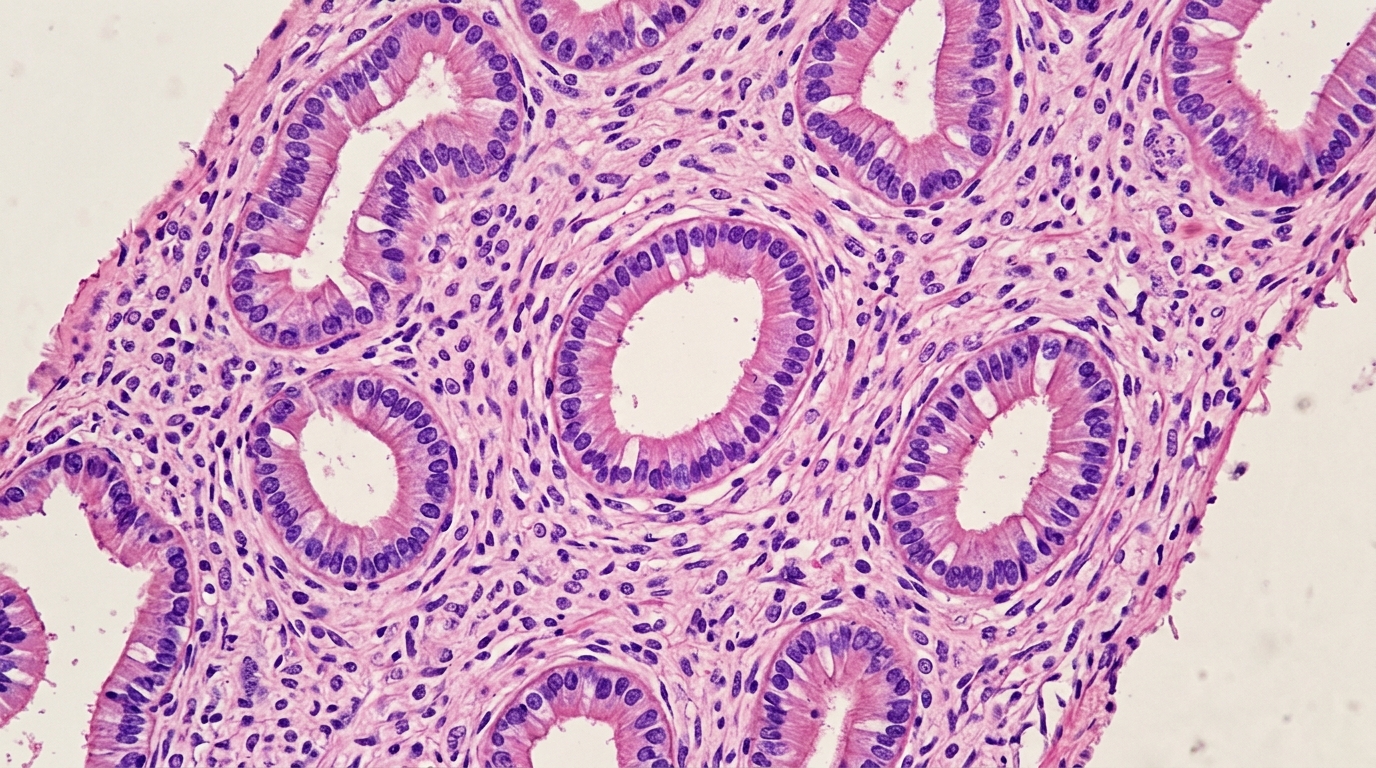
A computational study integrating network toxicology and machine learning has identified six candidate hub genes connecting exposure to the flame retardant tris(1,3-dichloro-2-propyl) phosphate with endometrial cancer. Researchers established a hypothesis-generating bioinformatics framework to explore potential molecular associations between the widespread organophosphate contaminant and the malignancy, identifying candidate biomarkers involved in receptor signaling, oxidative stress, and immune regulation.
Endometrial cancer represents a common gynecological malignancy characterized by an increasing global incidence. While scientific consensus recognizes metabolic disorders, hormonal dysregulation, and genetic alterations as established contributors to the disease, the potential impact of environmental contaminants has remained unclear. Tris(1,3-dichloro-2-propyl) phosphate, commonly known as TDCPP, is an organophosphate flame retardant possessing endocrine-disrupting potential that previous research has linked to cellular proliferation and oxidative stress, though its specific molecular connections to endometrial cancer remained unexplored prior to this investigation.
To investigate these potential connections, the investigators integrated bioinformatics tools and machine learning algorithms using public repositories. TDCPP chemical targets were gathered from the ChEMBL and Comparative Toxicogenomics Database resources, while endometrial cancer transcriptomic profiles were retrieved from the Gene Expression Omnibus and The Cancer Genome Atlas. Differentially expressed genes were subsequently intersected with the TDCPP targets and known endometrial cancer-associated genes to isolate overlapping candidate targets for deeper network evaluation.
The researchers applied functional enrichment analyses, protein-protein interaction networks, and the CytoHubba analytical plugin to identify an initial set of candidate hub genes. These candidates were systematically refined using three distinct machine learning methodologies: least absolute shrinkage and selection operator regression, support vector machine recursive feature elimination, and random forest. Model validation and biological interpretation were conducted using receiver operating characteristic curves, SHapley Additive exPlanations analysis, immune infiltration assessments, and molecular docking simulations.
The data mining pipeline identified 352 TDCPP-related targets and 113 TDCPP-related differentially expressed genes. Pathway enrichment analyses revealed significant representation in cellular senescence, oxidative stress pathways, and endocrine resistance mechanisms. From fourteen initial hub genes evaluated across the computational pipeline, three machine learning algorithms converged on six core genes: ATF2, AURKA, AXIN2, FGFR2, FGFR3, and KPNA2. Feature importance interpretation via SHAP highlighted ATF2, FGFR3, and AXIN2 as particularly influential drivers within the diagnostic models.
The identified six-gene signature demonstrated strong diagnostic performance across both the Gene Expression Omnibus training cohort and The Cancer Genome Atlas validation cohort. Immune infiltration analyses further associated these hub genes with altered infiltration levels of natural killer cells, neutrophils, and T cells. Complementary molecular docking simulations predicted favorable binding affinities between TDCPP and all six encoded proteins, exhibiting the strongest predicted interactions with FGFR3 and FGFR2.
The authors concluded that the bioinformatics workflow provides valuable mechanistic hypotheses and candidate biomarkers linking TDCPP targets to endometrial cancer pathology through receptor signaling, immune modulation, and oxidative stress pathways. However, the researchers emphasized that the findings derive entirely from computational modeling and transcriptomic datasets, noting that rigorous experimental validation in laboratory and clinical settings is required to confirm these biological interactions.
Subject of Research: Bioinformatics and machine learning analysis of TDCPP-related hub genes in endometrial cancer
Article Title: Integrated network toxicology and machine learning reveal potential TDCPP-related hub genes in endometrial cancer
Article References: Li, F., Ge, B., Gong, D., Liu, Y., Wang, D., & Chen, P. (2026). Integrated network toxicology and machine learning reveal potential TDCPP-related hub genes in endometrial cancer. Discover Oncology. https://doi.org/10.1007/s12672-026-06286-1
Image Credits: AI Generated
DOI: 10.1007/s12672-026-06286-1
Keywords: endometrial cancer, TDCPP, machine learning, network toxicology, bioinformatics, flame retardants, gene expression, biomarkers, Integrated, network, toxicology, machine
News Source: Nathaniel Bowman. (November 7, 2026). Machine Learning Links Flame Retardant TDCPP to Endometrial Cancer Genes. Scienmag.