Less than two years after shocking the science world with the discovery of a material capable of room-temperature superconductivity, a team of UNLV physicists has upped the ante once again by reproducing the feat at the lowest pressure ever recorded.
In other words, science is closer than it’s ever been to a usable, replicable material that could one day revolutionize how energy is transported.
UNLV physicist Ashkan Salamat and colleague Ranga Dias, a physicist with the University of Rochester, made international headlines in 2020 by reporting room-temperature superconductivity for the first time. To achieve the feat, the scientists chemically synthesized a mix of carbon, sulfur, and hydrogen first into a metallic state, and then even further into a room-temperature superconducting state using extreme pressure – 267 gigapascals – conditions you’d only find in nature near the center of the Earth.
Fast forward less than two years, and the team is now able to complete the feat at just 91 GPa – roughly one-third the pressure initially reported. The new findings were published this month as an advance article in the journal Chemical Communications.
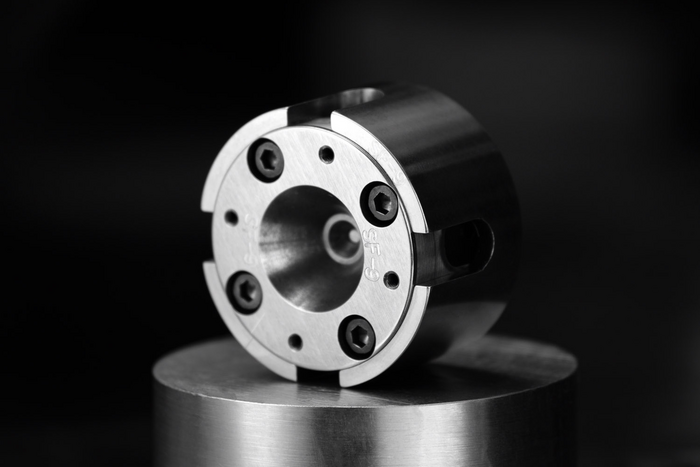
Credit: (Image courtesy of NEXCL)
Less than two years after shocking the science world with the discovery of a material capable of room-temperature superconductivity, a team of UNLV physicists has upped the ante once again by reproducing the feat at the lowest pressure ever recorded.
In other words, science is closer than it’s ever been to a usable, replicable material that could one day revolutionize how energy is transported.
UNLV physicist Ashkan Salamat and colleague Ranga Dias, a physicist with the University of Rochester, made international headlines in 2020 by reporting room-temperature superconductivity for the first time. To achieve the feat, the scientists chemically synthesized a mix of carbon, sulfur, and hydrogen first into a metallic state, and then even further into a room-temperature superconducting state using extreme pressure – 267 gigapascals – conditions you’d only find in nature near the center of the Earth.
Fast forward less than two years, and the team is now able to complete the feat at just 91 GPa – roughly one-third the pressure initially reported. The new findings were published this month as an advance article in the journal Chemical Communications.
A Super Discovery
Through a detailed tuning of the composition of carbon, sulfur, and hydrogen used in the original breakthrough, scientists are able to produce a material at a lower pressure that retains its state of superconductivity.
“These are pressures at a level difficult to comprehend and evaluate outside of the lab, but our current trajectory shows that it’s possible achieve relatively high superconducting temperatures at consistently lower pressures – which is our ultimate goal,” said study lead author Gregory Alexander Smith, a graduate student researcher with UNLV’s Nevada Extreme Conditions Laboratory (NEXCL). “At the end of the day, if we want to make devices beneficial to societal needs, then we have to reduce the pressure needed to create them.”
Though the pressures are still high – about a thousand times higher than you’d experience at the bottom of the Pacific Ocean’s Mariana Trench – they continue to race toward a goal of near-zero. It’s a race that’s gaining steam exponentially at UNLV as scientists gain a better understanding of the chemical relationship between the carbon, sulfur, and hydrogen that make up the material.
“Our knowledge of the relationship between carbon and sulfur is advancing rapidly, and we’re finding ratios that lead to remarkably different, and more efficient, responses than what was initially observed,” said Salamat, who directs UNLV’s NEXCL and contributed to the latest study. “To observe such different phenomena in a similar system just shows the richness of Mother Nature. There’s so much more to understand, and every new advancement brings us closer to the precipice of everyday superconducting devices.”
The Holy Grail of Energy Efficiency
Superconductivity is a remarkable phenomenon first observed more than a century ago, but only at remarkably low temperatures that preempted any thought of practical application. Only in the 1960s did scientists theorize the feat might be possible at higher temperatures. The 2020 discovery by Salamat and colleagues of a room-temperature superconductor excited the science world in part because the technology supports electrical flow with zero resistance, meaning that energy passing through a circuit could be conducted infinitely and with no loss of power. This could have major implications for energy storage and transmission, supporting everything from better cell phone batteries to a more efficient energy grid.
“The global energy crisis shows no signs of slowing, and costs are rising in part due to a U.S. energy grid which loses roughly $30 billion annually because of the inefficiency of current technology,” said Salamat. “For societal change, we need to lead with technology, and the work happening today is, I believe, at the forefront of tomorrow’s solutions.”
According to Salamat, the properties of superconductors can support a new generation of materials that could fundamentally change the energy infrastructure of the U.S. and beyond.
“Imagine harnessing energy in Nevada and sending it across the country without any energy loss,” he said. “This technology could one day make it possible.”
Smith, the lead author, is a former UNLV undergraduate researcher in Salamat’s lab and a current doctoral student in chemistry and research with NEXCL. Additional study authors include Salamat, Dean Smith, Paul Ellison, Melanie White, and Keith Lawler with UNLV; Ranga Dias, Elliot Snider, and Elyse Jones with the University of Rochester; Ines E. Collings with the Swiss Federal Laboratories for Materials Science and Technology, Sylvain Petitgirard with ETH Zurich; and Jesse S. Smith with Argonne National Laboratory.
Publication Details
“Carbon content drives high temperature superconductivity in a carbonaceous sulfur hydride below 100 GPa” was published July 7, 2022 as an advance article in the journal Chemical Communications.
Journal
Chemical Communications
DOI
10.1039/D2CC03170A
Method of Research
Experimental study
Subject of Research
Not applicable
Article Title
Carbon content drives high temperature superconductivity in a carbonaceous sulfur hydride below 100 GPa
Article Publication Date
7-Jul-2022