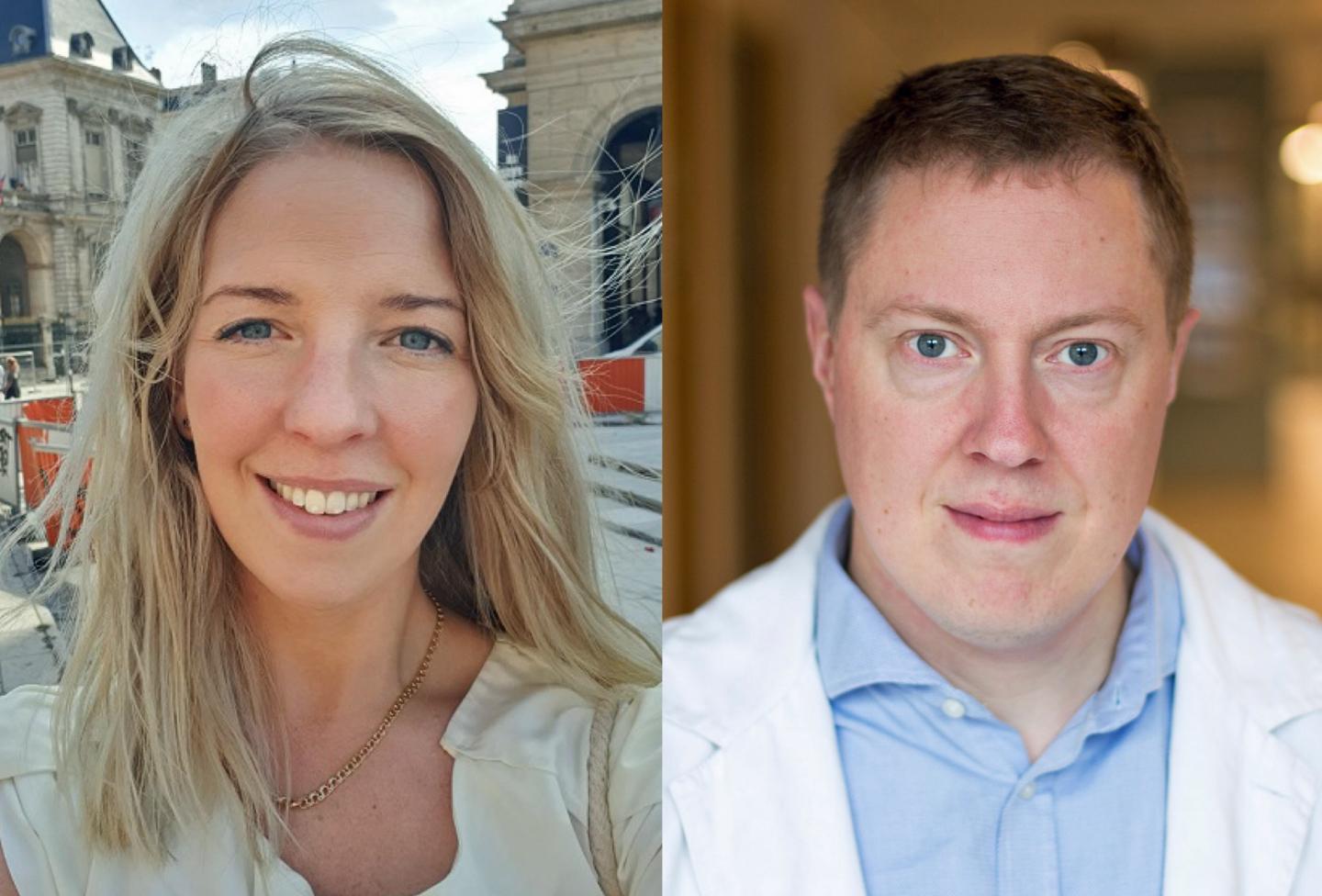
Credit: Photo from University of Gothenburg
One year after the diagnosis of low-grade malignant brain tumor, a University of Gothenburg study shows, just under three people in ten were in full-time employment. Another year later, the proportion remained below half. For this young patient group, returning to work is a key health factor.
Every year, some 100 people in Sweden are diagnosed with low-grade brain tumor (also known as low-grade glioma). This type of tumor is incurable but grows slowly and, thanks to modern treatments, survival expectancy has successively increased.
The study, published in the journal Neurology, comprised 381 patients aged 18-60 with first onset of low-grade glioma in the years 2005-15. Data were retrieved from the Swedish National Quality Registry for Brain Tumors, Swedish Social Insurance Agency, Swedish National Board of Health and Welfare, and Statistics Sweden. The matched control group comprised 1,900 people.
Given the patients’ low age — averaging 40 years when they fell ill — their work capacity is seen as an especially important factor in quality of life. Being able to work again is, for many, a crucial aspect of returning to a normal life.
The results show that 52 percent of the patient group studied were working on some scale, but only 28 percent were in full-time employment, a year after their diagnosis. After a further year, 63 percent of the patients were in work and 45 percent were working full-time.
The researchers were able to show that factors associated with a lower rate of return to work were advanced age, low functional level, other morbidity, previous sick leave irrespective of cause, radiation treatment and chemotherapy. Undergoing surgery involving tumor removal was, on the other hand, associated with a greater likelihood of return to work.
“Brain surgery as such doesn’t seem to be an obstacle. On the other hand, resuming work — especially a full-time job — generally takes a long time. Our interpretation is that, for many people, rehabilitation is a relatively long drawn-out process,” says Isabelle Rydén, lead author and doctoral student in clinical neuroscience at Sahlgrenska Academy, University of Gothenburg.
Asgeir Jakola, associate professor of neurosurgery at Sahlgrenska Academy, who has been heading the research, emphasizes the importance of patients’ return to work, and the variables concerned, now being understood in greater detail. As a result, risk factors and rehabilitation requirements are identifiable at an earlier stage.
“Access to rehabilitation for this group of patients is fairly limited. The explanation given is that the patients have a malignant disease, but we can see that many of them survive for long periods. And we know that work is an important part of normal, healthy life,” Jakola says.
“We’re going to carry on studying these patients. Future studies will focus on cognitive, affective and life-quality factors, and on identifying, and describing more clearly, this patient group’s problems and needs of assistance,” he concludes.
###
Title: Return to work following diagnosis of low-grade glioma: A nationwide matched cohort study, https:/
Contacts:
Isabelle Rydén, 46 765 992 139, [email protected]
Asgeir Jakola, 46 725 559 101, [email protected]
Media Contact
Isabelle Rydén
[email protected]
Related Journal Article
http://dx.