• HOME
  • NEWS
  • EXPLORE
    • CAREER
      • Companies
      • Jobs
    • EVENTS
    • iGEM
      • News
      • Team
    • PHOTOS
    • VIDEO
    • WIKI
  • BLOG
  • COMMUNITY
    • FACEBOOK
    • INSTAGRAM
    • TWITTER
Wednesday, June 24, 2026
BIOENGINEER.ORG
No Result
View All Result
  • Login
  • HOME
  • NEWS
  • EXPLORE
    • CAREER
      • Companies
      • Jobs
        • Lecturer
        • PhD Studentship
        • Postdoc
        • Research Assistant
    • EVENTS
    • iGEM
      • News
      • Team
    • PHOTOS
    • VIDEO
    • WIKI
  • BLOG
  • COMMUNITY
    • FACEBOOK
    • INSTAGRAM
    • TWITTER
  • HOME
  • NEWS
  • EXPLORE
    • CAREER
      • Companies
      • Jobs
        • Lecturer
        • PhD Studentship
        • Postdoc
        • Research Assistant
    • EVENTS
    • iGEM
      • News
      • Team
    • PHOTOS
    • VIDEO
    • WIKI
  • BLOG
  • COMMUNITY
    • FACEBOOK
    • INSTAGRAM
    • TWITTER
No Result
View All Result
Bioengineer.org
No Result
View All Result
Home NEWS Science News

Long search finds grain of hope in the glume

Bioengineer by Bioengineer
May 19, 2021
in Science News
Reading Time: 3 mins read
0
IMAGE
Share on FacebookShare on TwitterShare on LinkedinShare on RedditShare on Telegram

IMAGE

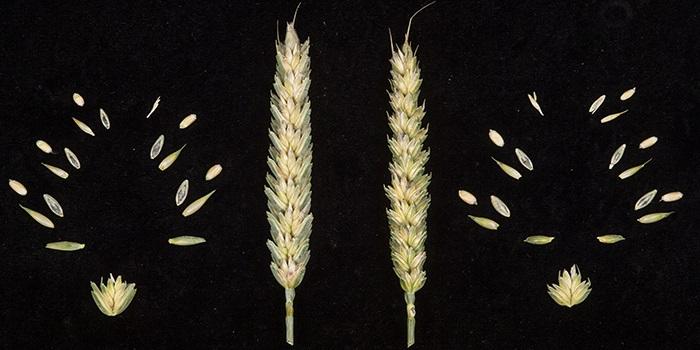
Credit: John Innes Centre

Researchers have found the elusive genetic element controlling the elongated grains and glumes of a wheat variety identified by the renowned botanist Carl Linnaeus more than 250 years ago.

The findings relating to Polish wheat, Triticum polonicum, could translate into genetic improvements and productivity in the field.

Wheat, in bread, pasta, and other forms, is a vital energy and protein source for humans. Each individual grain is nestled within the glumes and other leaf-like organs called lemma and palea which affect the grain’s final size, shape, and weight.

Characterised by Linnaeus in 1762, Polish wheat has long grains, glumes, and lemmas. Previous research showed that all these characteristics were controlled by one gene, but which one among wheat’s complex genome has been unclear.

Researchers at the John Innes Centre used genomic, field-based, and biotechnological approaches to identify the responsible molecular component as VRT-A2, a member of the MADS-box family of transcription factors which act as genetic switches controlling protein synthesis.

Dr Nikolai Adamski, first author of the paper, said: “These results highlight how changes in expression of transcription factors can impact on important agronomic traits for major crops such as wheat. Our goal is to use this knowledge to help deliver genetic solutions to improve wheat productivity.”

The team identified a small sequence rearrangement leading to misexpression of VRT-A2 in different tissues at several growth stages of wheat. This variation is responsible for the longer grains and floral organs found in Polish wheat.

Introducing the VRT-A2 version from Polish wheat into a UK bread wheat cultivar led to higher grain weight, size, and test weight (a measure of the density of the grain) but did not increase yield in UK environments.

Professor Cristobal Uauy, a group leader at the John Innes Centre, explained the broader significance of the research: “Every day, each person on the planet eats the grains of the equivalent of 50 wheat plants. With a growing demand for wheat, and against the backdrop of climate change, it is urgent that we increase wheat production sustainably. As part of this effort, understanding the genetic control of grain size and weight is extremely relevant to deliver genetic solutions.”

The experiments also revealed a strong positive correlation between VRT-A2 expression levels and the magnitude of its effects on grain length and floral organ size.

In Polish wheat, the VRT-A2 gene carries a small rearrangement in its first intron – a genetic sequence that does not code for protein, but instead is important for regulating the gene’s expression. The researchers suggest that this rearrangement was caused by errors in DNA repair following a double strand break.

Next the research team aim to understand how the VRT-A2 expression pattern is controlled by the sequence rearrangement in the first intron of the gene. They also plan to identify the downstream genes affected by VRT-A2 misexpression.

###

Ectopic expression of Triticum polonicum VRT-A2 underlies elongated glumes and grains in hexaploid wheat in a dosage-dependent manner appears in The Plant Cell.

Media Contact
Adrian Galvin
[email protected]

Related Journal Article

http://dx.doi.org/10.1093/plcell/koab119

Tags: Agricultural Production/EconomicsAgricultureBiochemistryBioinformaticsBiomechanics/BiophysicsBiotechnologyFood/Food ScienceGenesPlant Sciences
Share12Tweet8Share2ShareShareShare2

Related Posts

Innovative Speckle-Based Metrology System Advances Precision Measurement of Next-Generation X-Ray Mirrors — Chemistry

Innovative Speckle-Based Metrology System Advances Precision Measurement of Next-Generation X-Ray Mirrors

June 24, 2026

Silencing of TRAIL-R2 Associated with Increased Aggressiveness in Breast Cancer

June 24, 2026

Light-Based Imaging Advances Promise Enhanced Thyroid Cancer Diagnosis and Fewer Surgeries

June 24, 2026

Water-Activated PVA Film Transforms from Bioplastic to High-Performance Wood Adhesive

June 24, 2026
Please login to join discussion

POPULAR NEWS

  • Saying Goodbye to PGY-6: Pediatric Fellowship Realities

    103 shares
    Share 41 Tweet 26
  • Multi-Hospital Study Reveals Long Covid Burden Is Twice as High as Current Estimates

    92 shares
    Share 36 Tweet 23
  • Detection of EDCs in Breast Milk and Infant Urine Up to Six Months Highlights Early Exposure Risks

    77 shares
    Share 31 Tweet 19
  • New Drug Candidate Developed at McMaster Shows Potential for Treating Brain Cancer

    58 shares
    Share 23 Tweet 15

About

We bring you the latest biotechnology news from best research centers and universities around the world. Check our website.

Follow us

Recent News

Innovative Speckle-Based Metrology System Advances Precision Measurement of Next-Generation X-Ray Mirrors

Silencing of TRAIL-R2 Associated with Increased Aggressiveness in Breast Cancer

Light-Based Imaging Advances Promise Enhanced Thyroid Cancer Diagnosis and Fewer Surgeries

Subscribe to Blog via Email

Enter your email address to subscribe to this blog and receive notifications of new posts by email.

Join 82 other subscribers
  • Contact Us

Bioengineer.org © Copyright 2023 All Rights Reserved.

Welcome Back!

Login to your account below

Forgotten Password?

Retrieve your password

Please enter your username or email address to reset your password.

Log In
No Result
View All Result
  • Homepages
    • Home Page 1
    • Home Page 2
  • News
  • National
  • Business
  • Health
  • Lifestyle
  • Science

Bioengineer.org © Copyright 2023 All Rights Reserved.