


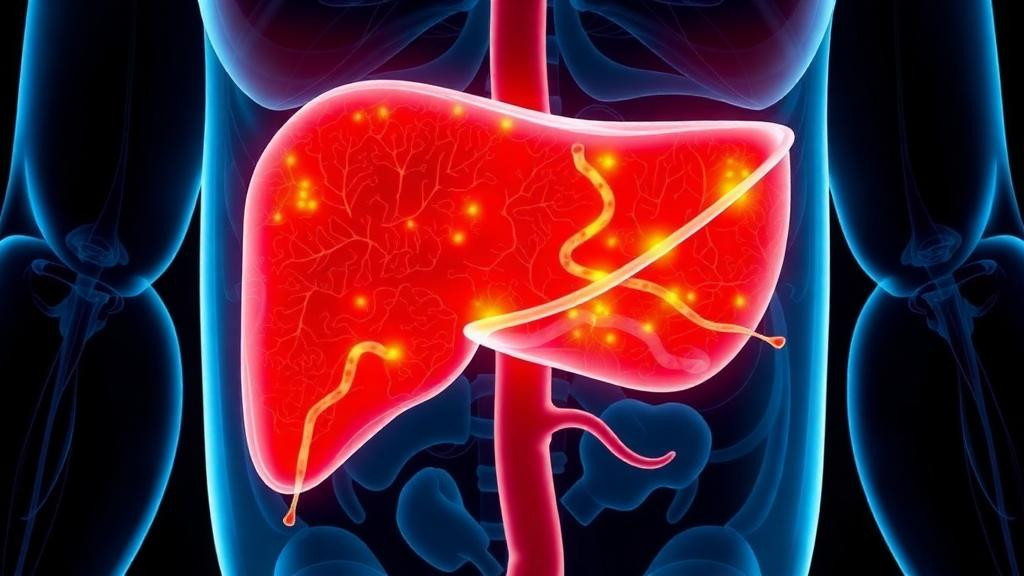
A retrospective cross-sectional study of 605 hospitalized patients with type 2 diabetes mellitus suggests that a non-invasive ultrasound-based measure of liver fat, known as controlled attenuation parameter (CAP), is more closely tied to how quickly the body clears insulin than liver stiffness measurement (LSM), a related FibroScan reading that reflects fibrosis. The work, published in Diabetology & Metabolic Syndrome, addresses a long-standing question in metabolic research: the liver is a major site of endogenous insulin clearance, yet it has remained unclear whether common bedside measures of liver health show differential associations with this process in people with diabetes.
The researchers categorized participants into three body mass index groups — below 24, 24 to below 28, and 28 kg/m² or above — and into four phenotypes based on median CAP and LSM values. Insulin clearance was estimated with a surrogate index calculated as the ratio of C-peptide to insulin area under the curve over the first 120 minutes of a standardized meal test.
The results followed a clear metabolic gradient. Higher BMI was associated with higher CAP and LSM values, greater insulin resistance, lower insulin sensitivity, and a reduced insulin clearance index. Among the four CAP-LSM phenotypes, the group with both high CAP and high LSM had the lowest insulin clearance index, pointing to a combined fatty and stiff liver profile as the least favorable configuration for insulin handling.
The statistical core of the study lies in hierarchical regression. Adding CAP to a model that already included sex, age, diabetes duration, and BMI increased the explained variance in insulin clearance index by 0.032, a change the authors report as statistically significant. In the full model, CAP remained inversely associated with insulin clearance, with a standardized beta of −0.194. Adding LSM after CAP, by contrast, did not improve the model — the key finding behind the claim that CAP shows the more robust association.
Mediation analysis, adjusted for age, sex, and diabetes duration, added a second layer of evidence. The indirect effect running through CAP accounted for 40.4 percent of the total association between BMI and insulin clearance index, while the corresponding indirect effect through LSM was not significant. In plain terms, the statistical link between greater adiposity and reduced insulin clearance appears to pass substantially through hepatic steatosis rather than through liver stiffness.
The authors are careful to frame this as a statistical indirect effect rather than a proven causal pathway. The study is retrospective and cross-sectional, meaning it captures a single time point and cannot establish temporal order. All participants were hospitalized patients with type 2 diabetes, so the findings may not generalize to undiagnosed or community populations. The insulin clearance measure is a surrogate index calculated as C-peptide AUC0–120 over insulin AUC0–120 during a standardized meal test.
For now, the message from the data is measured: in patients with type 2 diabetes, CAP showed a more robust and consistent inverse association with insulin clearance index than LSM, and a steatosis-related liver phenotype may partly account for the association between greater adiposity and reduced insulin clearance.
Subject of Research: Associations of liver fat and stiffness measures with insulin clearance in type 2 diabetes
Article Title: Controlled attenuation parameter (CAP) shows a more robust association with insulin clearance index than liver stiffness measurement (LSM) in type 2 diabetes mellitus: a retrospective cross-sectional study
Article References: Li, Y., Wang, X., Fu, Z., Gong, Y., & Zhou, H. (2026). Controlled attenuation parameter (CAP) shows a more robust association with insulin clearance index than liver stiffness measurement (LSM) in type 2 diabetes mellitus: a retrospective cross-sectional study. Diabetology & Metabolic Syndrome. https://doi.org/10.1186/s13098-026-02308-8
Image Credits: AI Generated
DOI: 10.1186/s13098-026-02308-8
Keywords: type 2 diabetes, insulin clearance, controlled attenuation parameter, liver stiffness measurement, FibroScan, hepatic steatosis, body mass index, C-peptide, mediation analysis, cross-sectional study, Controlled, attenuation
News Source: Ophelia Keating. (October 30, 2026). Liver fat score tracks insulin clearance better than liver stiffness in type 2 diabetes. Scienmag.



