


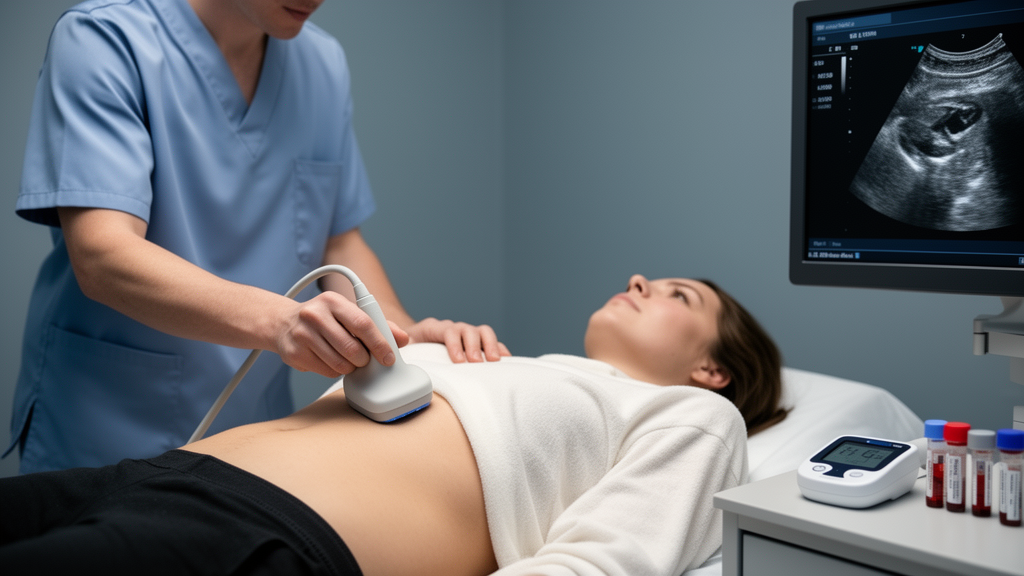
A quantitative ultrasound measure of liver fat is linked to worse blood sugar control in people with type 2 diabetes, according to a retrospective cross-sectional study of 759 hospitalized patients published in Diabetology & Metabolic Syndrome. The imaging marker, called ultrasound-derived fat fraction (UDFF), quantifies hepatic fat content directly, and in this cohort higher values were associated with markedly greater odds of having a glycated hemoglobin level at or above 7.0%, the threshold the researchers used to define poor glycemic control.
The study was conducted at a single center and enrolled hospitalized patients with type 2 diabetes who underwent UDFF assessment between August 2023 and February 2026. Participants had a median age of 63.0 years, with an interquartile range of 54.0 to 71.0 years. Their median UDFF was 8.0%, spanning an interquartile range of 4.0% to 13.0% and a full range of 2.0% to 43.0%. Using UDFF-defined hepatic steatosis, 385 patients—50.7% of the cohort—met the criteria for fatty liver.
The central result came from multivariable regression. Each 5-percentage-point increase in UDFF was associated with higher odds of poor glycemic control, with an odds ratio of 1.253 and a 95% confidence interval of 1.070 to 1.468, and a P value of 0.005. The fully adjusted model accounted for age, sex, diabetes duration, body mass index, and hypertension. Notably, however, when HbA1c was analyzed as a continuous variable rather than a binary threshold, the association disappeared after full adjustment: the coefficient was 0.016 percentage points per 5-point UDFF increase, with a confidence interval spanning −0.101 to 0.133 and a P value of 0.792.
Restricted cubic spline analysis, a technique for detecting nonlinear dose-response patterns, showed an overall association between UDFF and poor glycemic control (P = 0.040) but no evidence of nonlinearity (P = 0.567), suggesting the relationship, where it exists, follows a roughly linear form across the observed range. The association with poor glycemic control remained significant after the researchers additionally adjusted for glucose-lowering medications, and it also held in a liver-related sensitivity analysis, addressing the concern that diabetes drug choices might explain the link.
Beyond glycemic control, UDFF correlated with several markers of metabolic health. Higher UDFF was associated with higher body mass index, higher triglycerides, a higher triglyceride-to-high-density lipoprotein cholesterol ratio, and elevated liver enzyme levels, while correlating inversely with high-density lipoprotein cholesterol. This cluster of correlations is consistent with the broader metabolic disturbance often seen alongside hepatic fat accumulation, though correlation in a cross-sectional design cannot establish causal direction.
An important negative finding concerned chronic diabetes-related complications. After multivariable adjustment, UDFF showed no consistent positive association with these complications, indicating that the imaging marker’s links in this population were confined to glycemic control status and metabolic profile rather than extending to the long-term complications of diabetes.
The authors conclude that higher UDFF was associated with greater odds of poor glycemic control and an unfavorable metabolic profile in hospitalized patients with type 2 diabetes, but not with HbA1c analyzed continuously.
The study’s limitations deserve emphasis. It was retrospective, cross-sectional, and single-center, so it captures one moment in time for hospitalized patients and cannot show that liver fat drives poor glycemic control or vice versa. The authors themselves note that prospective studies with longitudinal treatment information are needed to clarify the relationship. Until such data exist, the finding should be read as an association observed in a specific hospitalized population rather than evidence that measuring liver fat will improve diabetes management.
Subject of Research: The association between ultrasound-derived hepatic fat fraction and glycemic control in patients with type 2 diabetes.
Article Title: Higher ultrasound-derived fat fraction is associated with poor glycemic control in type 2 diabetes mellitus
Article References: Sun, L., Wang, L., Song, D., Wang, P., Han, J., & Li, J. (2026). Higher ultrasound-derived fat fraction is associated with poor glycemic control in type 2 diabetes mellitus. Diabetology & Metabolic Syndrome. https://doi.org/10.1186/s13098-026-02325-7
Image Credits: AI Generated
DOI: 10.1186/s13098-026-02325-7
Keywords: type 2 diabetes, ultrasound-derived fat fraction, hepatic steatosis, HbA1c, glycemic control, quantitative ultrasound, liver fat, metabolic profile, cross-sectional study, triglycerides, Higher, ultrasound-derived
News Source: Ophelia Keating. (October 29, 2026). Liver Fat Measured by Ultrasound Tied to Poor Blood Sugar Control in Type 2 Diabetes. Scienmag.



