• HOME
  • NEWS
  • EXPLORE
    • CAREER
      • Companies
      • Jobs
    • EVENTS
    • iGEM
      • News
      • Team
    • PHOTOS
    • VIDEO
    • WIKI
  • BLOG
  • COMMUNITY
    • FACEBOOK
    • INSTAGRAM
    • TWITTER
Sunday, May 10, 2026
BIOENGINEER.ORG
No Result
View All Result
  • Login
  • HOME
  • NEWS
  • EXPLORE
    • CAREER
      • Companies
      • Jobs
        • Lecturer
        • PhD Studentship
        • Postdoc
        • Research Assistant
    • EVENTS
    • iGEM
      • News
      • Team
    • PHOTOS
    • VIDEO
    • WIKI
  • BLOG
  • COMMUNITY
    • FACEBOOK
    • INSTAGRAM
    • TWITTER
  • HOME
  • NEWS
  • EXPLORE
    • CAREER
      • Companies
      • Jobs
        • Lecturer
        • PhD Studentship
        • Postdoc
        • Research Assistant
    • EVENTS
    • iGEM
      • News
      • Team
    • PHOTOS
    • VIDEO
    • WIKI
  • BLOG
  • COMMUNITY
    • FACEBOOK
    • INSTAGRAM
    • TWITTER
No Result
View All Result
Bioengineer.org
No Result
View All Result
Home NEWS Science News Biology

Little owls on the move

Bioengineer by Bioengineer
March 12, 2019
in Biology
Reading Time: 2 mins read
0
IMAGE
Share on FacebookShare on TwitterShare on LinkedinShare on RedditShare on Telegram

IMAGE

Credit: Ralph Martin

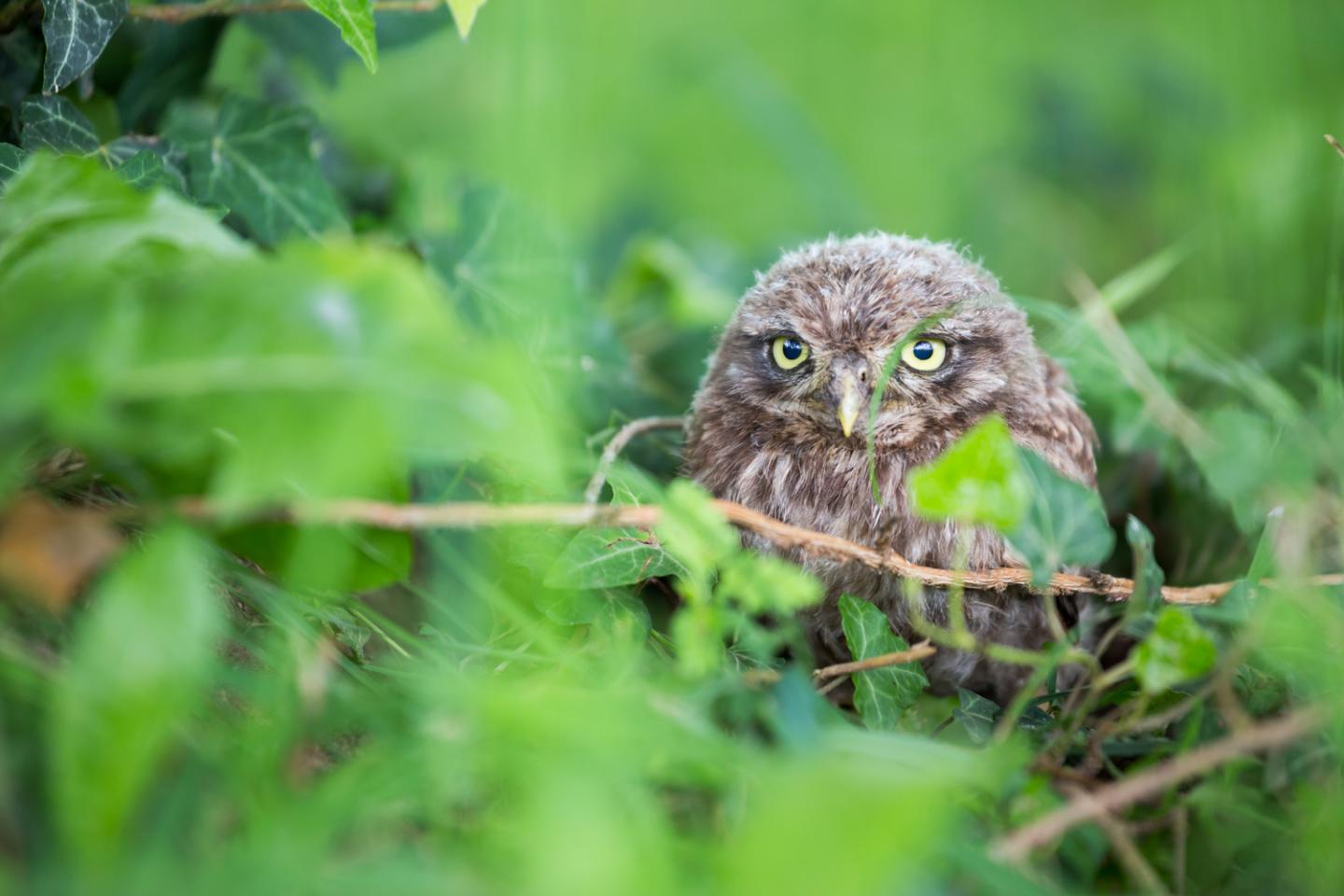
The little owl, Athene noctua, is a small nocturnal owl and is classified as an endangered species on the German Red List. In recent years the existing population of little owls has successfully been stabilized in the south-west of Germany, and in some places numbers are even rising. In neighboring northern Switzerland on the other hand there is still no established population of little owls, even though habitat conditions seem suitable for the species. Now, a team of researchers headed by Severin Hauenstein from the Department of Biometry and Environmental Systems Analysis at the University of Freiburg has researched whether juvenile little owls from Germany could reach and re-colonize northern Switzerland. The scientists have published their results in the peer-reviewed journal Ecological Applications.

“It is difficult to predict how animals will disperse”, says Hauenstein. To explore the dispersal potential of little owls, he and his colleagues from the Swiss Ornithological Institute in Sempach, Switzerland, the German Centre for Integrative Biodiversity Research Halle-Jena-Leipzig (iDiv), the Helmholtz Centre for Environmental Research in Leipzig and the University of Regensburg have developed an individual-based computer model. Using simulations, the researchers are able to assess whether individuals from the currently expanding little owl populations in south-western Germany are able to migrate to suitable habitats in northern Switzerland. Intensive farming and a steady loss of habitat has caused virtual extinction of the little owl in Switzerland.

The movement-behavior parameters in the model were estimated using Bayesian statistical inference based on radio telemetry data of juvenile little owls. Amongst other things, the researchers were able to show plausible inter-individual and -sexual behavioral differences – female juvenile little owls tend to move more directionally and fly longer distances during the dispersal phase, while their male counterparts are characterized by a tendency to take longer rests, and show a greater attachment to suitable habitat.

Hauenstein explains that the findings indicate that the little owl’s natural re-colonization of northern Switzerland is generally possible, however there are restrictions, “Fragmented urban areas in particular, such as those around the tri-border area near Basel, appear to limit the movement of juvenile little owls drastically. Besides that, little owls avoid forested areas because that is where their natural enemy, the tawny owl, can be found; they also avoid higher altitudes such as the Swiss Jura, the Black Forest and the Swabian Alb.” In the study, the scientists highlight existing but narrow dispersal corridors, for example the lower Aare valley or the Fricktal south-east of Basel. By improving the habitat for the birds there, e.g. by agricultural extensification and nest box provision, it may be possible to expedite the re-colonization of northern Switzerland by the little owl.

###

Media Contact
Severin Hauenstein
[email protected]

Original Source

https://www.pr.uni-freiburg.de/pm-en/press-releases-2019/little-owls-on-the-move

Related Journal Article

http://dx.doi.org/10.1002/eap.1873

Tags: BiologyEcology/EnvironmentPets/EthologyPopulation BiologyZoology/Veterinary Science
Share12Tweet8Share2ShareShareShare2

Related Posts

Ancient Plant Populations Reveal Fresh Insights into Climate Resilience — Biology

Ancient Plant Populations Reveal Fresh Insights into Climate Resilience

May 8, 2026
Rare Brain Disorders in Children Linked to Mutations in Lesser-Known Protein Complex — Biology

Rare Brain Disorders in Children Linked to Mutations in Lesser-Known Protein Complex

May 8, 2026

From Odd Insect to Underwater Predator: The Remarkable Evolution of a Bloodthirsty Fruit Fly

May 8, 2026

SNU Professor Sangwoo Seo’s Team Develops Next-Generation CRISPR Biocontainment Technology to Control Microbial Survival Without DNA Cleavage

May 8, 2026
Please login to join discussion

POPULAR NEWS

  • Research Indicates Potential Connection Between Prenatal Medication Exposure and Elevated Autism Risk

    840 shares
    Share 336 Tweet 210
  • New Study Reveals Plants Can Detect the Sound of Rain

    727 shares
    Share 290 Tweet 181
  • Scientists Investigate Possible Connection Between COVID-19 and Increased Lung Cancer Risk

    68 shares
    Share 27 Tweet 17
  • Salmonella Haem Blocks Macrophages, Boosts Infection

    61 shares
    Share 24 Tweet 15

About

We bring you the latest biotechnology news from best research centers and universities around the world. Check our website.

Follow us

Recent News

Evaluating Digoxin Use in Patients with Symptomatic Rheumatic Heart Disease

Evaluating the Effectiveness and Safety of Digitalis Glycosides in Treating Heart Failure

Urdu Fall Risk Questionnaire Adapted for Elderly

Subscribe to Blog via Email

Enter your email address to subscribe to this blog and receive notifications of new posts by email.

Join 82 other subscribers
  • Contact Us

Bioengineer.org © Copyright 2023 All Rights Reserved.

Welcome Back!

Login to your account below

Forgotten Password?

Retrieve your password

Please enter your username or email address to reset your password.

Log In
No Result
View All Result
  • Homepages
    • Home Page 1
    • Home Page 2
  • News
  • National
  • Business
  • Health
  • Lifestyle
  • Science

Bioengineer.org © Copyright 2023 All Rights Reserved.