• HOME
  • NEWS
  • EXPLORE
    • CAREER
      • Companies
      • Jobs
    • EVENTS
    • iGEM
      • News
      • Team
    • PHOTOS
    • VIDEO
    • WIKI
  • BLOG
  • COMMUNITY
    • FACEBOOK
    • INSTAGRAM
    • TWITTER
Friday, July 31, 2026
BIOENGINEER.ORG
No Result
View All Result
  • Login
  • HOME
  • NEWS
  • EXPLORE
    • CAREER
      • Companies
      • Jobs
        • Lecturer
        • PhD Studentship
        • Postdoc
        • Research Assistant
    • EVENTS
    • iGEM
      • News
      • Team
    • PHOTOS
    • VIDEO
    • WIKI
  • BLOG
  • COMMUNITY
    • FACEBOOK
    • INSTAGRAM
    • TWITTER
  • HOME
  • NEWS
  • EXPLORE
    • CAREER
      • Companies
      • Jobs
        • Lecturer
        • PhD Studentship
        • Postdoc
        • Research Assistant
    • EVENTS
    • iGEM
      • News
      • Team
    • PHOTOS
    • VIDEO
    • WIKI
  • BLOG
  • COMMUNITY
    • FACEBOOK
    • INSTAGRAM
    • TWITTER
No Result
View All Result
Bioengineer.org
No Result
View All Result
Home NEWS Science News

‘Listening’ to single cells may uncover cancer origins

Bioengineer by Bioengineer
January 24, 2017
in Science News
Reading Time: 3 mins read
0
Share on FacebookShare on TwitterShare on LinkedinShare on RedditShare on Telegram
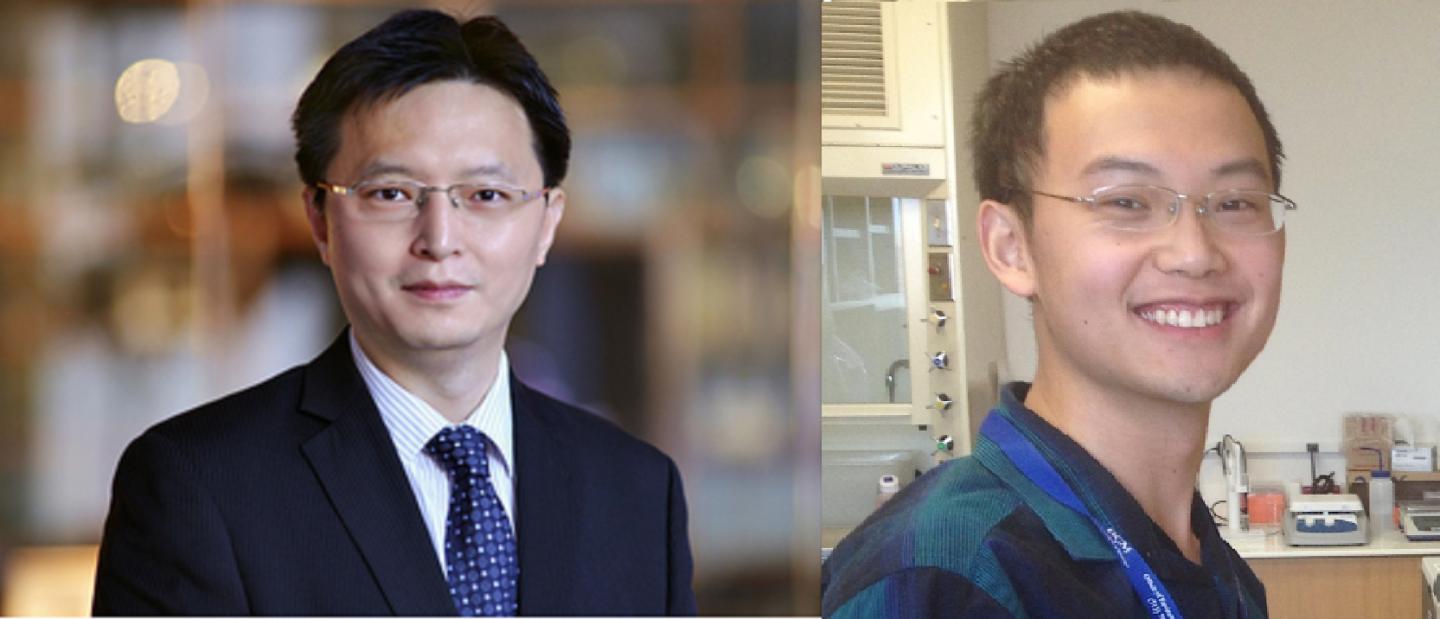
IMAGE

Credit: Baylor College of Medicine

At Baylor College of Medicine, scientists have developed a method that allows them to accurately determine the genes expressed in single cells. Among other applications, this technique can be useful to study how cancerous tumors begin, which could lead to better treatments, diagnosis and prevention in the future. The study appears in Nature Methods.

"Cancer begins with only a few cells changing their gene expression profile from one of normal cells to one of potentially cancerous cells after the cells acquire the driver mutations or genomic variations," said senior author Dr. Chenghang Zong, assistant professor of molecular and human genetics and a McNair Scholar at Baylor. "We thought that if we could have an accurate method for determining gene expression in single cells, we would have a window into examining the early events in cancer progression."

"We wanted to solve a problem of how to measure things that come in very small numbers," said first author Kuanwei Sheng, graduate student in the Zong lab. "The existing methods available were only 50 percent efficient at detecting gene expression in single cells. Our goal was to increase the sensitivity so we could increase the accuracy of single cell analysis."

A method that increases the accuracy of single-cell analysis also can help scientists better understand how cells work in tissues or organs of the body or in tumors. It would be like having the ability to discriminate single voices in a choir and determine single contributions to the whole.

"In a group of normal cells of the same type, say cells of the pancreas, some cells express certain genes while neighboring cells may express other genes in response to the information the cells receive from their environment," Zong said. "Having a method that could detect subtle differences in the genes expressed among single cells would reveal how single cells behave and enhance our understanding of the intricacies of organ function."

Improving the chemistry brings results

"We introduced new chemistry to modify the existing single cell technology to make it more sensitive," Sheng said. "This strategy reduced the technical noise significantly and increased the sensitivity to 90 percent from 50 percent in the detection of all of the expressed genes in a single cell."

"We tested the new, more sensitive technique, called MATQ-seq, in various systems," Zong said. "One of the things we found is that a lot of genes are expressed at low levels, especially those called master regulators, which control the expression of large number of other genes."

The researchers are now applying their new method to more biological systems to try to uncover more details of the inner workings of the living cell.

###

Other contributors of this work include Wenjian Cao, Yichi Niu and Qing Deng of Baylor.

This work is supported by the McNair Scholarship and McNair Single Cell Initiative. The authors are grateful to the McNair family and C. Neblett for their kind support.

Baylor College of Medicine has submitted a patent application on MATQ-seq.

Media Contact

Allison Huseman
[email protected]
713-798-4710
@bcmhouston

https://www.bcm.edu/news

############

Story Source: Materials provided by Scienmag

Share12Tweet8Share2ShareShareShare2

Related Posts

Study identifies digital empowerment profiles linked to how older adults perceive aging

July 31, 2026
MIRACLE Enables Continuous Integration of Multimodal Single-Cell Data

MIRACLE Enables Continuous Integration of Multimodal Single-Cell Data

July 31, 2026

Researchers Challenge Overestimated Cyclization Efficiency in Small Restriction Enzyme-Digested DNA Fragments

July 31, 2026

Epitaxial Interface Engineering Boosts Transconductance in Molybdenum Disulfide Transistors

July 31, 2026
Please login to join discussion

POPULAR NEWS

  • Study identifies digital empowerment profiles linked to how older adults perceive aging

    29 shares
    Share 12 Tweet 7
  • MIRACLE Enables Continuous Integration of Multimodal Single-Cell Data

    29 shares
    Share 12 Tweet 7
  • Researchers Challenge Overestimated Cyclization Efficiency in Small Restriction Enzyme-Digested DNA Fragments

    29 shares
    Share 12 Tweet 7
  • Epitaxial Interface Engineering Boosts Transconductance in Molybdenum Disulfide Transistors

    29 shares
    Share 12 Tweet 7

About

We bring you the latest biotechnology news from best research centers and universities around the world. Check our website.

Follow us

Recent News

Study identifies digital empowerment profiles linked to how older adults perceive aging

MIRACLE Enables Continuous Integration of Multimodal Single-Cell Data

Researchers Challenge Overestimated Cyclization Efficiency in Small Restriction Enzyme-Digested DNA Fragments

Subscribe to Blog via Email

Enter your email address to subscribe to this blog and receive notifications of new posts by email.

Join 85 other subscribers
  • Contact Us

Bioengineer.org © Copyright 2023 All Rights Reserved.

Welcome Back!

Login to your account below

Forgotten Password?

Retrieve your password

Please enter your username or email address to reset your password.

Log In
No Result
View All Result
  • Homepages
    • Home Page 1
    • Home Page 2
  • News
  • National
  • Business
  • Health
  • Lifestyle
  • Science

Bioengineer.org © Copyright 2023 All Rights Reserved.