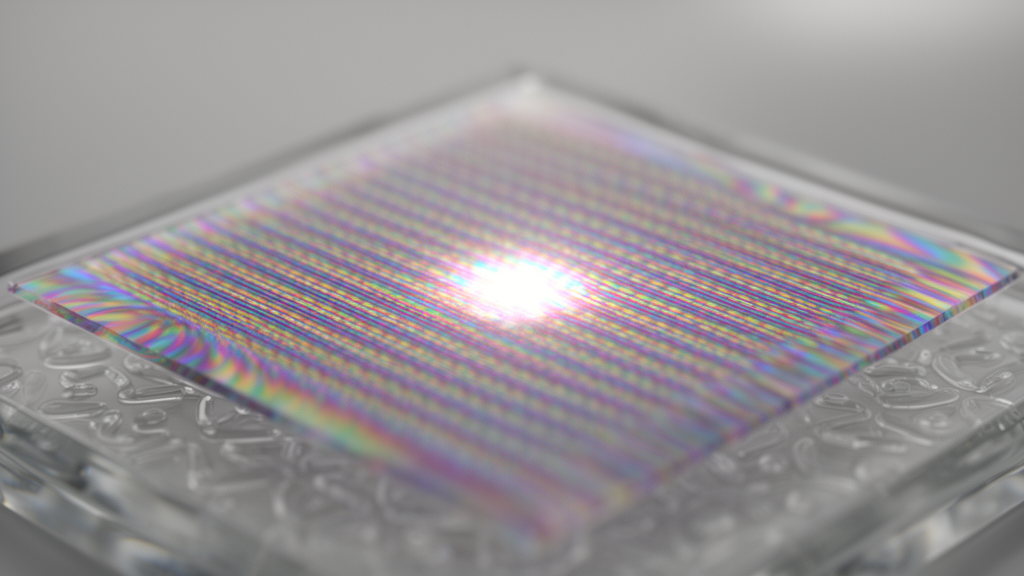
Liquid crystal biosensors offer sensitive, label-free optical detection by converting nanoscale biochemical interactions directly into macroscopic orientational shifts and visible optical responses, according to a comprehensive review published in Discover Electrochemistry. Researchers Manoj M. Mhatre, Santosh Mani, and R. R. Deshmukh analyzed recent technological progress across diverse liquid crystal geometries, detailing how soft anisotropic materials capture molecular binding events. Liquid crystals combine crystal-like long-range orientational order with the fluidity of liquids, possessing low interfacial energies between 10⁻⁶ and 10⁻³ J/m² that render molecular alignment responsive to surface perturbations. When target analytes bind to functionalized interfaces, subtle molecular interactions propagate throughout the bulk fluid over length scales approaching 100 micrometers. This intrinsic signal amplification produces pronounced textures visible under crossed polarizers or distinct color shifts observable in ambient light, providing an alternative to fluorescence labeling, radioactive tracers, and complex electronic instrumentation.
The review systematically tracks the operational mechanisms and physical principles that govern calamitic mesogens in nematic and cholesteric phases. Nematic liquid crystals feature rod-like organic molecules whose average molecular orientation aligns along a unit vector known as the nematic director. Elastic deformations within nematic systems are governed by Frank elastic free energy expressions that incorporate splay, twist, and bend deformation constants denoted as K₁₁, K₂₂, and K₃₃. In contrast, cholesteric liquid crystals display intrinsic supramolecular chirality where the director field rotates continuously throughout the material to create a periodic helical architecture. The helical pitch represents the linear distance across which the director completes a full 360-degree rotation, with identical director orientations repeating every half-pitch. This periodic arrangement acts as an intrinsic Bragg reflector that selectively reflects specific wavelengths matching the product of the average refractive index and the helical pitch, establishing structural coloration that shifts in response to chemical and biological stimuli.
Solid-supported planar films represent the earliest established sensing geometry, where nematic layers such as 4-cyano-4′-pentylbiphenyl are confined between functionalized glass plates or placed at solid-aqueous boundaries. Glass substrates treated with alignment agents like dimethyloctadecyl[3-(trimethoxysilyl)propyl]ammonium chloride induce perpendicular, homeotropic alignment that appears dark under crossed polarizers because transmitted light intensity drops to zero when the phase difference is null. When target biomolecules disrupt this hydrophobic surface ordering, the liquid crystal molecules tilt toward a parallel, planar alignment that permits polarized light transmission and produces bright, birefringent textures. Researchers have deployed these planar systems to achieve cancer biomarker screening, such as detecting the epithelial ovarian cancer biomarker CA125. Early assays achieved detection limits between 0.01 and 0.1 micrograms per milliliter compared to 4 to 5 micrograms per milliliter for conventional fluorescence methods, while high-birefringence eutectic mesogenic mixtures lowered detection limits to 1 to 500 nanograms per milliliter. Similar planar platforms functionalized with ultraviolet-irradiated alignment layers and anti-HER-2 antibodies have demonstrated detection limits down to 1 femtogram per milliliter across broad linear ranges for breast cancer diagnostics.
Beyond solid supports, flat liquid crystal-aqueous interfaces eliminate rigid solid boundaries by suspending liquid crystal films within transmission electron microscopy grids in direct contact with aqueous solutions. These fluid interfaces exploit surfactant monolayers, such as cetyltrimethylammonium bromide or dodecyltrimethylammonium bromide, to direct homeotropic alignment that can be selectively disrupted by specific molecular recognition reactions. Multiplexed cancer biomarker screening platforms have utilized aptamer-functionalized magnetic beads to capture carcinoembryonic antigen, alpha-fetoprotein, and prostate-specific antigen from blood, releasing signal DNA duplexes that hybridize with probe strands at the interface to induce planar-to-homeotropic transitions even in hemolytic samples where standard enzyme-linked immunosorbent assays fail. At similar surfactant-stabilized aqueous boundaries, insulin aptamers folding into G-quadruplex structures upon target binding yielded an insulin detection limit of 0.1 nanomolar. For environmental and food safety monitoring, label-free aptasensors operating at surfactant-modified aqueous interfaces have reliably detected the neurotransmitter dopamine across picomolar concentrations and quantified the fungal toxin ochratoxin A down to 0.1 nanomolar in apple juice and tap water matrices.
Cholesteric liquid crystal platforms introduce colorimetric readouts by translating biomolecular interactions into quantifiable shifts in reflected wavelength or structural transitions between focal conic and planar alignment states. In unperturbed focal conic states, disordered helical domains scatter light non-selectively, whereas analyte-induced anchoring modifications restore uniform planar helical ordering that reflects discrete spectral bands determined by dopant concentration and twisting power. Monodisperse cholesteric droplets generated through microfluidic techniques and functionalized with enzymes demonstrate sensitive metabolic monitoring. Droplets incorporating glucose oxidase exhibited optical transitions from scattered red reflection spots to focused central spots in the presence of glucose, achieving sensitivity around 0.5 micromolar while remaining unaffected by interfering species like hemoglobin, galactose, ascorbic acid, and cholesterol at 100 micromolar concentrations. Parallel cholesterol oxidase droplets detected cholesterol down to 2.5 micromolar. Similarly, capillary flow-focusing microfluidics produced cholesteric droplets stabilized by surfactants to monitor amphiphilic bile acids, where competitive surface adsorption drove chicken-skin homeotropic textures into planar reflections, revealing response times of 13 seconds for deoxycholic acid and detection limits of 0.5 micromolar.
Solid-state photonic scaffolds represent a durable alternative to fluid droplets, utilizing interpenetrating polymer networks to capture metabolic targets through mechanical and electrostatic responsiveness. Researchers synthesized stable photonic scaffolds by photopolymerizing reactive liquid crystal mesogens containing non-polymerizable chiral dopants under ultraviolet light, followed by selective dopant extraction to yield porous photonic matrices. Infiltrating these pores with poly(2-(dimethylamino)ethyl methacrylate) and acrylic acid polyelectrolytes functionalized with glucose oxidase created patterned dot arrays. As the enzyme oxidizes glucose, local enzymatic proton generation lowers the microenvironmental pH, triggering protonation and volumetric hydrogel swelling that expands the cholesteric pitch. This expansion produces a linear redshift in the photonic bandgap wavelength, enabling visual identification of physiological glucose tiers in human serum as green dots for healthy ranges between 1 and 6 millimolar, yellow-orange dots for prediabetic ranges between 8 and 10 millimolar, and red dots for diabetic ranges between 12 and 15 millimolar without external power or complex analytical instrumentation.
Liquid crystal emulsions and reconfigurable multiphase architectures provide elevated surface-to-volume ratios and topological defect structures that concentrate target analytes. Water-in-liquid crystal emulsions containing horseradish peroxidase droplets confined inside nematic phases have been engineered for organophosphorus pesticide monitoring. When the pesticide dichlorvos inhibits acetylcholinesterase, unhydrolyzed myristoylcholine chloride complexes with sodium dodecyl sulfate to release encapsulated peroxidase, triggering a colorimetric reaction with tetramethylbenzidine that exhibits a linear response from 1 to 10,000 nanograms per milliliter, a detection limit of 1.9 nanograms per milliliter, and a quantification limit of 6.3 nanograms per milliliter. In complex fluorocarbon-oil Janus droplets functionalized with dynamic imine polymers and aggregation-induced emission fluorophores, bacterial binding displaces protective antibodies, causing an orientational transition from radial to monopolar configurations that concentrates fluorophores at topological defect cores to detect Salmonella enterica serovar Typhimurium at concentrations down to 100 cells per milliliter without polarized microscopy.
Interfacial stabilization using Pickering particles and lipid coatings further extends the analytical scope of emulsion-based biosensors to proteins, cancer cells, and peptide toxins. Nematic droplets stabilized by poly(N-isopropylacrylamide) microgels and ionic surfactants resist droplet coalescence while capturing protein targets through non-specific interfacial adsorption. The resulting radial-to-bipolar configurational shifts enabled quantitative detection of bovine serum albumin down to 70.8 micrograms per milliliter and lysozyme down to 556.9 micrograms per milliliter. Functionalizing block-copolymer-coated droplets with folic acid permitted selective recognition of folate-receptor-overexpressing KB cancer cells without disturbing benign osteoblasts or fibroblasts. Furthermore, microfluidic platforms trapping lipid-coated nematic droplets modeled microbial membrane interactions, monitoring cationic antimicrobial peptides such as Smp43 through real-time radial-to-bipolar reorientations above 6 micromolar thresholds, while surfactant-coated microdroplets detected cholic acid competitive adsorption down to 5 micromolar detection limits.
Electrochemical liquid crystal biosensors combine the electroactive properties of specialized mesophases with the selectivity of biological recognition elements to achieve quantitative electrical readouts. Lyotropic cubic liquid crystal phases formed from monoolein and aqueous solutions serve as protective matrices for immobilizing enzymes to quantify glucose, lactate, urea, and creatinine through amperometric hydrogen peroxide oxidation or potentiometric proton tracking. Electroactive ionic liquid crystal films deposited on glassy carbon electrodes have similarly detected cardiovascular biomarkers. Functionalized ionic assemblies utilizing anti-myoglobin antibodies detected myoglobin across linear ranges of 9.96 to 72.8 nanograms per milliliter with a detection limit of 6.29 nanograms per milliliter via voltammetric signal suppression. Columnar liquid crystal films modified with gold nanoparticles and polyallylamine hydrochloride captured cardiac troponin I in blood plasma, achieving detection limits of 0.005 nanograms per milliliter using linear sweep voltammetry and 0.01 nanograms per milliliter using electrochemical impedance spectroscopy.
Despite these analytical capabilities, the authors emphasize that substantial technical and environmental hurdles must be resolved before liquid crystal biosensors transition from laboratory prototypes to commercial point-of-care tools. Fluid nematic films remain susceptible to mechanical vibration, hydrodynamic shear stress, and thermal fluctuations that trigger unintended phase transitions, while cholesteric reflection wavelengths shift significantly under ambient temperature variations. Furthermore, reliance on polarizing optical microscopes limits device miniaturization, non-specific binding in complex physiological matrices reduces target selectivity, and manual qualitative texture interpretations hinder reproducible clinical quantification. The review concludes that future progress depends on developing resilient polymer-encapsulated networks, integrating microfluidic handling with automated digital readout systems, validating performance against interfering species in clinical samples, and establishing formal regulatory standards for point-of-care diagnostics.
Subject of Research: Liquid crystal biosensors for biomolecule and toxin detection
Article Title: A review on recent advances in liquid crystal based sensors for detection of biomolecules
Article References: Mhatre, M. M., Mani, S., & Deshmukh, R. R. (2026). A review on recent advances in liquid crystal based sensors for detection of biomolecules. Discover Electrochemistry, 3(1), Article 53. https://doi.org/10.1007/s44373-026-00138-x
Image Credits: AI Generated
DOI: 10.1007/s44373-026-00138-x
Keywords: liquid crystals, biosensors, label-free detection, nematic mesophases, cholesteric liquid crystals, optical birefringence, interfacial phenomena, cancer biomarkers, aptasensors, microfluidics, complex emulsions, Pickering emulsions, photonic bandgap, electrochemical biosensors, point-of-care diagnostics, pathogen detection, environmental toxins, glucose sensing
News Source: Bethany Barker. (November 15, 2026). Liquid Crystal Biosensors Enable Sensitive Label-Free Optical Detection Across Molecular Platforms. Scienmag.