• HOME
  • NEWS
  • EXPLORE
    • CAREER
      • Companies
      • Jobs
    • EVENTS
    • iGEM
      • News
      • Team
    • PHOTOS
    • VIDEO
    • WIKI
  • BLOG
  • COMMUNITY
    • FACEBOOK
    • INSTAGRAM
    • TWITTER
Friday, November 6, 2026
BIOENGINEER.ORG
No Result
View All Result
  • Login
  • HOME
  • NEWS
  • EXPLORE
    • CAREER
      • Companies
      • Jobs
        • Lecturer
        • PhD Studentship
        • Postdoc
        • Research Assistant
    • EVENTS
    • iGEM
      • News
      • Team
    • PHOTOS
    • VIDEO
    • WIKI
  • BLOG
  • COMMUNITY
    • FACEBOOK
    • INSTAGRAM
    • TWITTER
No Result
View All Result
Bioengineer.org
No Result
View All Result
Home NEWS Science News Chemistry

Lipidomics maps oil accumulation and remodeling in oleaginous yeast

by
November 6, 2026
in Chemistry
Reading Time: 2 mins read
0
Lipidomics maps oil accumulation and remodeling in oleaginous yeast

Lipidomics maps oil accumulation and remodeling in oleaginous yeast

Share on FacebookShare on TwitterShare on LinkedinShare on RedditShare on Telegram

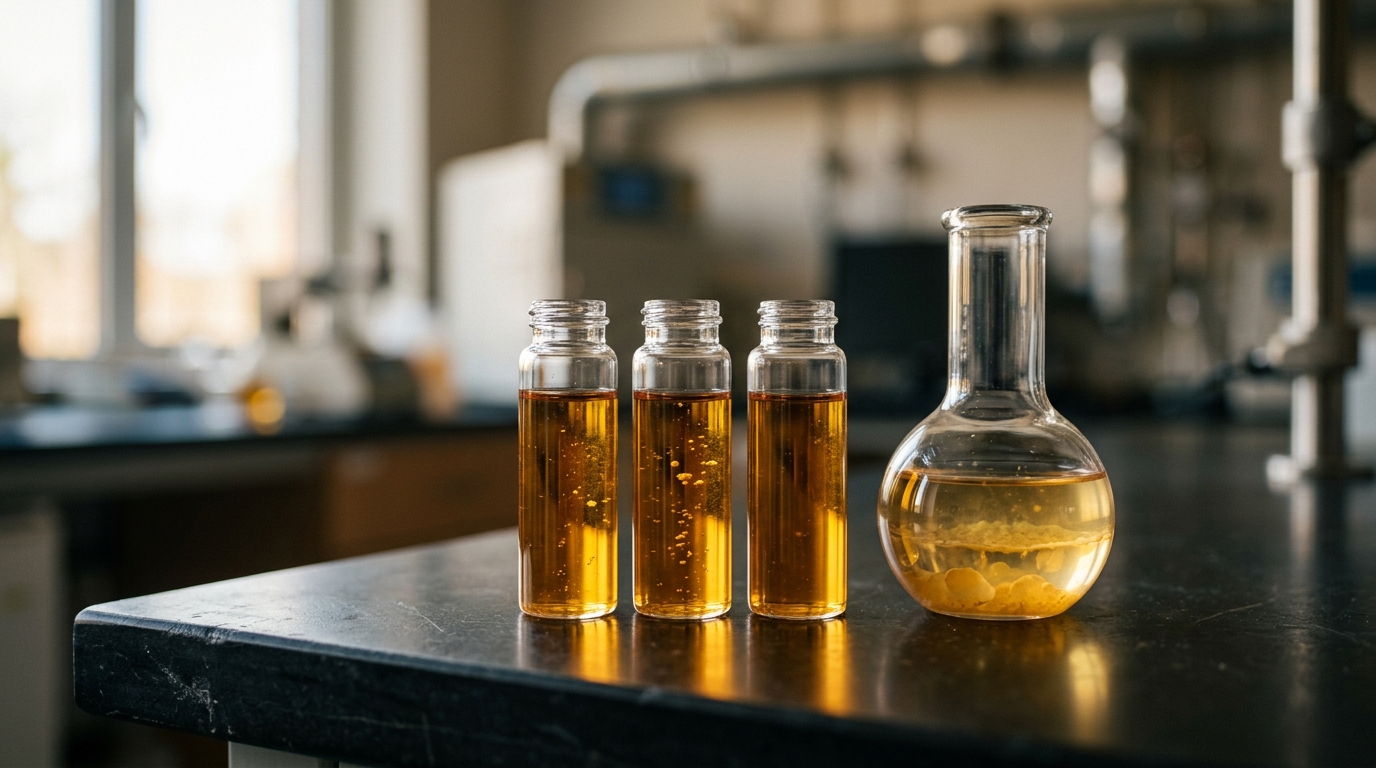
Researchers at the Dalian Institute of Chemical Physics of the Chinese Academy of Sciences, working with colleagues at Dalian University of Technology, have built a high-coverage lipidomics workflow and combined it with transcriptomics to study how the oleaginous yeast Rhodosporidium toruloides builds and remodels its oil under nitrogen limitation. The team was led by Profs. XU Guowang and LIU Xinyu, and the study was published in Food Chemistry.

Microbial oils are considered promising sustainable lipid sources for food and biofuel applications. R. toruloides can accumulate substantial amounts of oil, but earlier work concentrated mainly on total lipid production and overall fatty acid composition. How individual lipid species changed across cultivation stages had been poorly characterized, which limited efforts to control oil quality rather than oil quantity alone.

To close that gap, the researchers established a liquid chromatography–mass spectrometry-based lipidomics workflow that combines quantitative structure–retention relationship modeling with complementary mass-spectral database matching. This pairing allowed the identification and quantification of 1,206 lipid species across 26 subclasses, covering both storage and structural lipids in unusual detail for a microbial oil study.

Using this workflow, the team identified two distinct stages of lipid production under nitrogen limitation. Triacylglycerols, the main storage lipids, accumulated rapidly and peaked at 144 hours of cultivation. During subsequent cultivation, major triacylglycerol and diacylglycerol species declined, while polyunsaturated lipids became relatively enriched, revealing a compositional remodeling process that total lipid measurements had masked.

The compositional shifts carried practical implications. Compared with common edible oils, the microbial oil produced between 48 and 168 hours showed some compositional similarities to palm oil. At 216 hours, the oil contained a higher proportion of polyunsaturated fatty acids, indicating a distinct fatty acid profile with potential nutritional relevance. According to the researchers, these findings suggest that cultivation time could help tailor both oil yield and composition.

The authors state that the study provides a basis for evaluating microbial oil composition and for exploring tailored production strategies, in which fermentation duration becomes a tunable parameter rather than a fixed endpoint.

The work appeared in Food Chemistry under the title Multi-omics analysis revealed oil accumulation and compositional remodeling in Rhodosporidium toruloides under nitrogen limitation, with the DOI 10.1016/j.foodchem.2026.151581. The news release describing the study was issued on 3 November 2026, and the article carried a publication date of 14 October 2026.

Subject of Research: Lipid accumulation and compositional remodeling in the oleaginous yeast Rhodosporidium toruloides under nitrogen limitation

Article Title: Researchers reveal mechanisms of lipid accumulation and compositional remodeling in oleaginous yeast

Article References: Researchers reveal mechanisms of lipid accumulation and compositional remodeling in oleaginous yeast. Original publication (Bibliographic details unavailable.)

Image Credits: AI Generated

DOI: Not provided

Keywords: oleaginous yeast, Rhodosporidium toruloides, lipidomics, microbial oil, nitrogen limitation, triacylglycerols, polyunsaturated fatty acids, transcriptomics, Food Chemistry, Dalian Institute of Chemical Physics, cultivation time, sustainable lipids

News Source: Bethany Barker. (November 6, 2026). Lipidomics maps oil accumulation and remodeling in oleaginous yeast. Scienmag.

Tags: cultivation timeDalian Institute of Chemical Physicsfood chemistryLipidomicsmicrobial oilnitrogen limitationoleaginous yeastpolyunsaturated fatty acidsRhodosporidium toruloidessustainable lipidsTranscriptomicstriacylglycerols
Share12Tweet7Share2ShareShareShare1

Related Posts

New carbon-boosted oxide nanohybrids strip toxic violet dye from wastewater

New carbon-boosted oxide nanohybrids strip toxic violet dye from wastewater

November 6, 2026
Cellulosic Enset Fiber from Agro-Waste Shows High Strength for Industrial Manufacturing

Cellulosic Enset Fiber from Agro-Waste Shows High Strength for Industrial Manufacturing

November 6, 2026

Multi-Omics Study Reveals How Pyrus betulifolia Defends Against Fire Blight

November 6, 2026

Additive adsorption shifts zinc anode work function to steer crystal orientation

November 6, 2026

POPULAR NEWS

  • Passively aerated constructed wetlands turn piggery wastewater into a low-cost success story

    Passively aerated constructed wetlands turn piggery wastewater into a low-cost success story

    29 shares
    Share 12 Tweet 7
  • Prior Head Injury Strongly Predicts New Mental Disorders After Mild Traumatic Brain Injury

    29 shares
    Share 12 Tweet 7
  • Polyaniline-Functionalized Magnetic Activated Carbon Efficiently Removes Methyl Orange From Water

    29 shares
    Share 12 Tweet 7
  • Plant Metabolite Brachycerine Shields Human Skin Samples From UV Damage

    29 shares
    Share 12 Tweet 7

About

We bring you the latest biotechnology news from best research centers and universities around the world. Check our website.

Follow us

Recent News

Public Services Buffer Air Pollution Risks to Perinatal Health in China

Online Health Platform Users Compromise Privacy for Access and Convenience

Ethicists urge continuity of care for children after emergency ostomies in conflict zones

Subscribe to Blog via Email

Enter your email address to subscribe to this blog and receive notifications of new posts by email.

Join 86 other subscribers
  • Contact Us

Bioengineer.org © Copyright 2023 All Rights Reserved.

Welcome Back!

Login to your account below

Forgotten Password?

Retrieve your password

Please enter your username or email address to reset your password.

Log In
No Result
View All Result
  • Homepages
    • Home Page 1
    • Home Page 2
  • News
  • National
  • Business
  • Health
  • Lifestyle
  • Science

Bioengineer.org © Copyright 2023 All Rights Reserved.