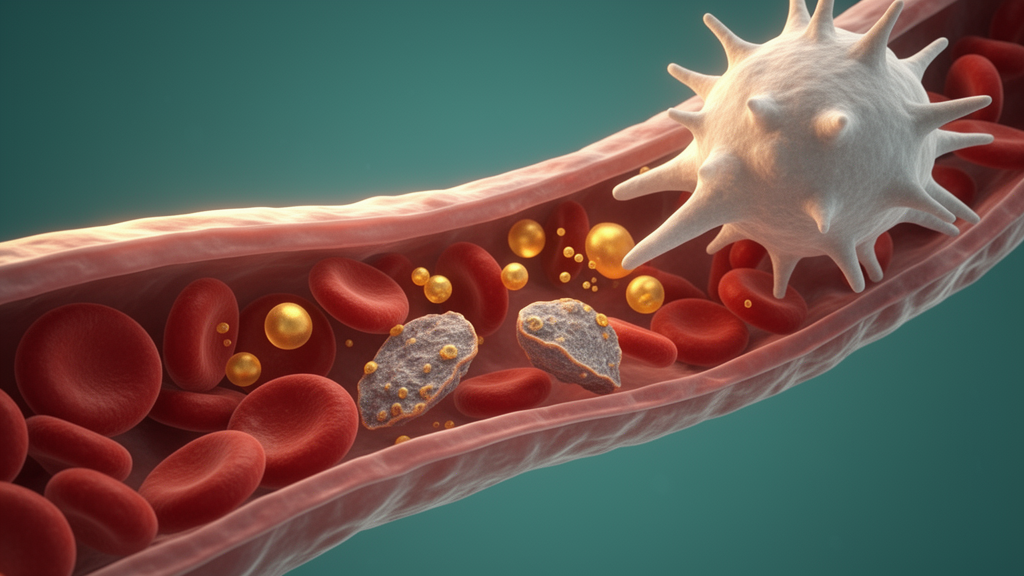
Immune thrombocytopenia, or ITP, has long been understood as a case of mistaken identity within the immune system: antibodies coat platelets, macrophages devour them, and the bone marrow simply cannot churn out replacements fast enough. A new review published in the Journal of Translational Medicine argues that this picture is incomplete. Dan Li, Luer Qiu, Ying Zhang, Li Hong, Sai Zhou and Weiying Feng, hematologists based at Shaoxing People’s Hospital and affiliated with Soochow University, synthesize evidence that lipid metabolism sits at the center of the disease, acting as a metabolic switch that simultaneously fuels autoimmune attack and sabotages platelet production. Their analysis, published open access under DOI 10.1186/s12967-026-08851-2, proposes that altered lipid handling may be the immunometabolic axis linking chronic inflammation to failed thrombopoiesis, and that manipulating this axis could open new treatment options for patients whose disease resists standard therapies.
The technical core of the review is a pattern of metabolic imbalance. In ITP, the authors describe upregulated fatty acid biosynthesis, including enhanced de novo lipogenesis driven by enzymes such as fatty acid synthase and transcriptional control through sterol regulatory element-binding proteins, alongside diminished oxidative metabolism of fatty acids. This shift matters because immune cells do not merely burn fuel; the way they process lipids determines their functional identity. When fatty acid synthesis dominates and oxidation falters, the metabolic program favors effector immunity. Pro-inflammatory T helper cell subsets, particularly Th1 and Th17 cells, expand and produce cytokines such as interferon-gamma, tumor necrosis factor-alpha and interleukin-17, amplifying the inflammatory milieu. At the same time, B cells become activated, promoting the autoantibody production that marks platelets for destruction.
Macrophages, the scavenger cells of the immune system, are equally reshaped by lipid signals. The review describes a polarization away from the anti-inflammatory M2 state and toward the classically activated M1 phenotype, which is more efficient at phagocytosing antibody-coated platelets in the spleen and liver and more prone to secreting inflammatory mediators. Signaling pathways such as mechanistic target of rapamycin complex 1, or mTORC1, and AMP-activated protein kinase, or AMPK, act as metabolic checkpoints governing these fate decisions, and their dysregulation in ITP tilts the balance toward destruction. Meanwhile, the suppressive capacity of regulatory T cells, the immune system’s brakes, is undermined, removing another layer of restraint. The net effect is a self-reinforcing loop in which lipid-driven metabolic reprogramming sustains chronic inflammation, which in turn accelerates platelet elimination.
The second half of the story concerns thrombopoiesis, the production of platelets by megakaryocytes in the bone marrow. Megakaryocytes are extraordinarily lipid-hungry cells: their membranes, and those of the platelets they release, are rich in phospholipids, cholesterol and sphingolipids, and the process of proplatelet extension demands massive membrane synthesis. The review details how disturbances in lipid homeostasis compromise megakaryocyte differentiation and maturation, reducing the yield of functional platelets. Oxidized low-density lipoprotein and other altered lipid species can impair megakaryocyte function, while disruptions of sphingolipid signaling, including the sphingosine-1-phosphate pathway and its receptor S1P1, affect both megakaryocyte behavior and platelet membrane stability. Fragile, poorly formed platelets are cleared more readily, deepening the cytopenia.
Lipid mediators also function as messengers between platelets and immune cells, and the review highlights several of these communication channels. Platelet factor 4, also known as chemokine ligand CXCL4, and chemokines such as CCL5 and CXCL16 link platelet activation to leukocyte recruitment, while lipoxygenase-derived products of polyunsaturated fatty acids shape inflammatory tone. Adhesion and degranulation-promoting adaptor protein signaling and Fc gamma receptor pathways connect lipid-dependent membrane dynamics to the actual clearance machinery. In this framing, ITP is not simply an immune disease with a hematological consequence, nor a platelet disease with an immunological cause, but a systemic disorder of immunometabolism in which lipids are the common currency.
What distinguishes this review is its therapeutic outlook. The authors survey several lipid-targeted intervention strategies that could complement existing immunomodulatory treatments such as corticosteroids, intravenous immunoglobulin and thrombopoietin receptor agonists. One approach is to boost the synthesis of specialized pro-resolving mediators, lipid-derived molecules such as resolvins and protectins that actively terminate inflammation rather than merely suppressing it. Another is to reprogram immune cell metabolism directly, for example by modulating mTORC1 or AMPK activity to restore regulatory T cell function and shift macrophages back toward the M2 phenotype. The authors also raise the possibility of repurposing established lipid-lowering drugs, including statins, for new indications in ITP, and of using dietary modifications to influence disease outcomes through lipidomic profiles.
The statin idea is particularly appealing from a translational standpoint because these drugs are cheap, widely available and carry decades of safety data. By inhibiting HMG-CoA reductase and modulating sterol regulatory element-binding protein signaling, statins could in principle dampen the pro-inflammatory lipid programs that drive Th17 expansion and M1 polarization. Similarly, dietary interventions that alter polyunsaturated fatty acid intake could shift the balance of lipid mediators toward resolution. The review is careful to frame these as potential strategies requiring validation, but the conceptual shift is significant: instead of treating ITP purely as an immunological failure to be suppressed, clinicians could target the metabolic soil in which the disease grows.
The authors are candid about the limits of current evidence. Much of the mechanistic work they cite comes from cellular and animal models, and the lipidomic signatures of ITP patients remain incompletely characterized. Whether the metabolic abnormalities observed in immune cells are causes or consequences of the disease, and whether they are consistent across patient subgroups, are questions that require longitudinal lipidomic studies and intervention trials. The review calls for further research into lipidomic signatures and the underlying molecular mechanisms to advance these findings toward clinical application, and it emphasizes that combining lipid-targeted approaches with standard immunomodulatory treatments is the most promising path, particularly for patients with refractory ITP who exhaust conventional options.
Even so, the framework offers something the field has lacked: a unifying explanation for why platelet destruction and inadequate platelet production coexist in the same patient. By placing lipid metabolism at the junction of immune inflammation and thrombopoiesis, Li and colleagues connect phenomena that were previously studied in isolation, from T cell polarization to megakaryocyte membrane biology. If subsequent studies confirm that lipid pathways can be safely and effectively manipulated in ITP, the disease could join the growing list of autoimmune and inflammatory conditions reclassified as immunometabolic disorders, and a class of drugs already sitting in pharmacy shelves might find an unexpected second career in hematology.
Subject of Research: The role of lipid metabolism in immune thrombocytopenia: new perspectives from immune inflammation and thrombopoiesis
Article Title: The role of lipid metabolism in immune thrombocytopenia: new perspectives from immune inflammation and thrombopoiesis
Article References: Li, D., Qiu, L., Zhang, Y., Hong, L., Zhou, S., & Feng, W. (2026). The role of lipid metabolism in immune thrombocytopenia: new perspectives from immune inflammation and thrombopoiesis. Journal of Translational Medicine. https://doi.org/10.1186/s12967-026-08851-2
Image Credits: AI Generated
DOI: 10.1186/s12967-026-08851-2
Keywords: role, lipid, metabolism, immune, thrombocytopenia, perspectives, inflammation, thrombopoiesis, scientific research
News Source: Daisy Hatcher. (October 9, 2026). Lipid Metabolism Emerges as a Hidden Driver of Immune Thrombocytopenia. Scienmag.