• HOME
  • NEWS
  • EXPLORE
    • CAREER
      • Companies
      • Jobs
    • EVENTS
    • iGEM
      • News
      • Team
    • PHOTOS
    • VIDEO
    • WIKI
  • BLOG
  • COMMUNITY
    • FACEBOOK
    • INSTAGRAM
    • TWITTER
Sunday, June 28, 2026
BIOENGINEER.ORG
No Result
View All Result
  • Login
  • HOME
  • NEWS
  • EXPLORE
    • CAREER
      • Companies
      • Jobs
        • Lecturer
        • PhD Studentship
        • Postdoc
        • Research Assistant
    • EVENTS
    • iGEM
      • News
      • Team
    • PHOTOS
    • VIDEO
    • WIKI
  • BLOG
  • COMMUNITY
    • FACEBOOK
    • INSTAGRAM
    • TWITTER
  • HOME
  • NEWS
  • EXPLORE
    • CAREER
      • Companies
      • Jobs
        • Lecturer
        • PhD Studentship
        • Postdoc
        • Research Assistant
    • EVENTS
    • iGEM
      • News
      • Team
    • PHOTOS
    • VIDEO
    • WIKI
  • BLOG
  • COMMUNITY
    • FACEBOOK
    • INSTAGRAM
    • TWITTER
No Result
View All Result
Bioengineer.org
No Result
View All Result
Home NEWS Science News Biology

Like humans, chimpanzees can suffer for life if orphaned before adulthood

Bioengineer by Bioengineer
September 18, 2020
in Biology
Reading Time: 2 mins read
0
IMAGE
Share on FacebookShare on TwitterShare on LinkedinShare on RedditShare on Telegram

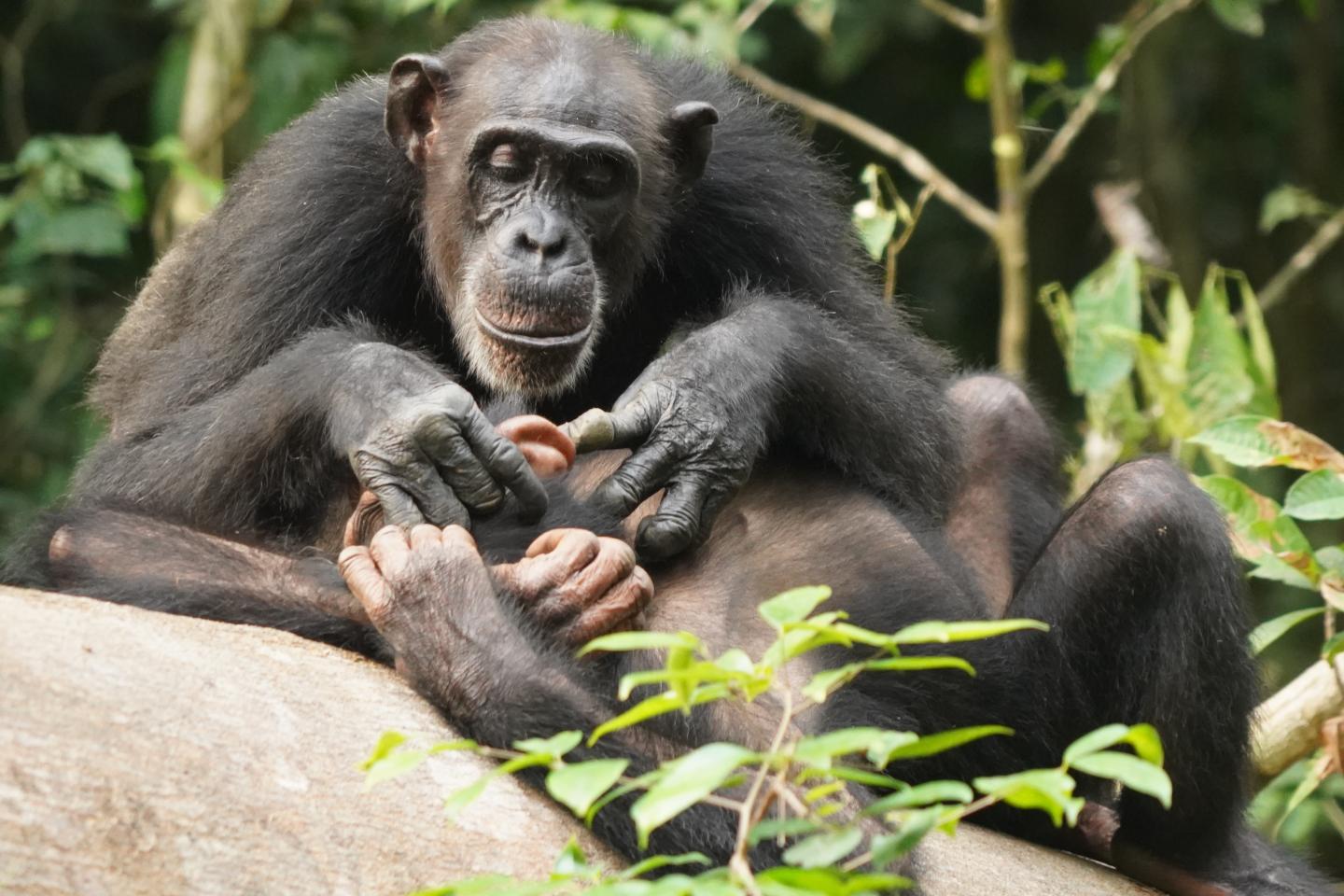
Male chimpanzees who lose their mother early in life are less competitive and have fewer offspring than sons who continue to live with their mothers
IMAGE

Credit: Liran Samuni, Tai Chimpanzee Project

Researchers observed three chimpanzee communities of the Tai National Park. They kept full demographic records and collected fecal samples to conduct paternity tests on all new community members, for up to 30 years. Catherine Crockford, the lead author, says: “When we study our closest living relatives, like chimpanzees, we can learn about the ancient environmental factors that made us human. Our study shows that a mother’s presence and support throughout the prolonged childhood years was also likely a trait in the last common ancestor that humans shared with chimpanzees six to eight million years ago. This trait is likely to have been fundamental in shaping both chimpanzee and human evolution”.

Major theories in human evolution argue that parents continuing to provide food to their offspring until they have grown up has enabled our species to have the largest brains of any species on the planet relative to our body size. Brains are expensive tissue and grow slowly leading to long childhoods. Ongoing parental care through long childhoods allow children time to learn the skills they need to survive in adulthood. Such long childhoods are rare across animals, equaled only by other great apes, like chimpanzees.

Chimpanzees may have long childhoods, but mothers rarely directly provide them with food after ages four to five years when they are weaned. Mostly mothers let their offspring forage for themselves. So then what do chimpanzee mothers provide their sons that gives them a competitive edge over orphaned sons? We do not yet know the answer but scientists do have some ideas.

“One idea is that mothers know where to find the best food and how to use tools to extract hidden and very nutritious foods, like insects, honey and nuts”, Crockford points out. “Offspring gradually learn these skills through their infant and juvenile years. We can speculate that one reason offspring continue to travel and feed close to their mothers every day until they are teenagers, is that watching their mothers helps them to learn.” Acquiring skills which enable them to eat more nutritious foods may be why great apes can afford much bigger brains relative to their body size than other primates.

“Another idea is that mothers pass on social skills”, Roman Wittig, last author on the study and director of the Ta? Chimpanzee Project, adds. “Again a bit like humans, chimpanzees live in a complex social world of alliances and competition. It might be that they learn through watching their mothers when to build alliances and when to fight”.

###

Contact:

Dr. Catherine Crockford

Max Planck Institute for Evolutionary Anthropology, Leipzig

+49 341 3550-220

[email protected]

Dr. Roman Wittig

Max Planck Institute for Evolutionary Anthropology, Leipzig

+49 341 3550-204

[email protected]

Original publication:

Catherine Crockford, Liran Samuni, Linda Vigilant, Roman M. Wittig

Postweaning maternal care increases male chimpanzee reproductive success

Science Advances, 18 September 2020

Media Contact
Sandra Jacob
[email protected]
Tags: BiologyDevelopmental/Reproductive BiologyEcology/EnvironmentEvolutionZoology/Veterinary Science
Share12Tweet8Share2ShareShareShare2

Related Posts

Natural Hallucinogens: Evolution’s Ecological Tools, Not Mere Chemical Byproducts

June 25, 2026

This Famous Butterfly Revealed: Three Distinct Species Hidden in One

June 25, 2026

Scientists Attack Soybean Cyst Nematode by Starving Its Food Source

June 25, 2026

Decoding the Secret Code of a Crucial Immune Sensor

June 24, 2026
Please login to join discussion

POPULAR NEWS

  • Saying Goodbye to PGY-6: Pediatric Fellowship Realities

    103 shares
    Share 41 Tweet 26
  • Multi-Hospital Study Reveals Long Covid Burden Is Twice as High as Current Estimates

    92 shares
    Share 36 Tweet 23
  • Detection of EDCs in Breast Milk and Infant Urine Up to Six Months Highlights Early Exposure Risks

    77 shares
    Share 31 Tweet 19
  • New Drug Candidate Developed at McMaster Shows Potential for Treating Brain Cancer

    58 shares
    Share 23 Tweet 15

About

We bring you the latest biotechnology news from best research centers and universities around the world. Check our website.

Follow us

Recent News

Tracking Lanthanide-Labeled Microplastics in Plants

POSTECH Researchers Slash Cost of Reconstituted Cell-Free Systems by 95%

AI and Physics Collaborate to Design Advanced Hydrogen Storage Materials

Subscribe to Blog via Email

Success! An email was just sent to confirm your subscription. Please find the email now and click 'Confirm' to start subscribing.

Join 82 other subscribers
  • Contact Us

Bioengineer.org © Copyright 2023 All Rights Reserved.

Welcome Back!

Login to your account below

Forgotten Password?

Retrieve your password

Please enter your username or email address to reset your password.

Log In
No Result
View All Result
  • Homepages
    • Home Page 1
    • Home Page 2
  • News
  • National
  • Business
  • Health
  • Lifestyle
  • Science

Bioengineer.org © Copyright 2023 All Rights Reserved.