• HOME
  • NEWS
  • EXPLORE
    • CAREER
      • Companies
      • Jobs
    • EVENTS
    • iGEM
      • News
      • Team
    • PHOTOS
    • VIDEO
    • WIKI
  • BLOG
  • COMMUNITY
    • FACEBOOK
    • INSTAGRAM
    • TWITTER
Thursday, June 25, 2026
BIOENGINEER.ORG
No Result
View All Result
  • Login
  • HOME
  • NEWS
  • EXPLORE
    • CAREER
      • Companies
      • Jobs
        • Lecturer
        • PhD Studentship
        • Postdoc
        • Research Assistant
    • EVENTS
    • iGEM
      • News
      • Team
    • PHOTOS
    • VIDEO
    • WIKI
  • BLOG
  • COMMUNITY
    • FACEBOOK
    • INSTAGRAM
    • TWITTER
  • HOME
  • NEWS
  • EXPLORE
    • CAREER
      • Companies
      • Jobs
        • Lecturer
        • PhD Studentship
        • Postdoc
        • Research Assistant
    • EVENTS
    • iGEM
      • News
      • Team
    • PHOTOS
    • VIDEO
    • WIKI
  • BLOG
  • COMMUNITY
    • FACEBOOK
    • INSTAGRAM
    • TWITTER
No Result
View All Result
Bioengineer.org
No Result
View All Result
Home NEWS Science News Chemistry

Lifelong ill-health after exposure to chemical weapons

Bioengineer by Bioengineer
June 25, 2019
in Chemistry
Reading Time: 3 mins read
0
IMAGE
Share on FacebookShare on TwitterShare on LinkedinShare on RedditShare on Telegram

IMAGE

Credit: Siri Sjolin

People exposed to chemical warfare agents (CWAs) often incur chronic damage to their lungs, skin and eyes, for example. They also frequently succumb to depression, anxiety and suicidal thoughts. This is shown by research on survivors from the 1988 gas attacks against Kurdish Halabja in Iraq.

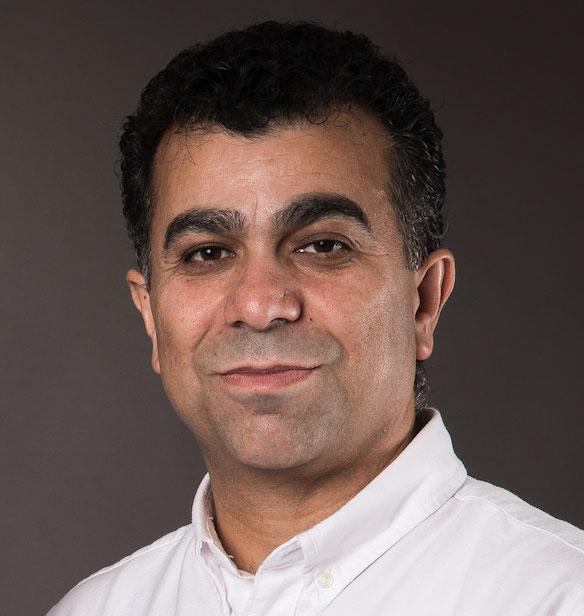
“The findings show that exposure to chemical warfare agents, especially sulfur mustard, results in lifelong physical and mental ill-health,” says Faraidoun Moradi, a doctoral student of occupational and environmental medicine at Sahlgrenska Academy, University of Gothenburg, Sweden.

Faraidoun Moradi is a registered pharmacist, a specialist resident doctor in general medical practice, and the first author of the current article in the journal Plos One.

Sulfur mustard (SM, also known as mustard gas) and other chemical warfare agents (CWAs) remain a threat to human safety. Today, there are tens of thousands of patients, mainly in the Middle East, suffering from lasting damage after exposure to chemical weapons.

In the second half of the 1980s, SM was used on a large scale in Iraq. The most notorious and severe gas attacks were against the city of Halabja, where some 5,000 people died and tens of thousands were injured.

The qualitative study now published is based on in-depth interviews with 16 patients diagnosed with chronic pulmonary complications, aged 34 to 67, in Halabja. The group who conducted the study comprised researchers in medicine, psychology, and anthropology at the University of Gothenburg and Martin Luther University Halle-Wittenberg, Germany.

The victims suffer from severely impaired health, both physical and mental. As well as respiratory problems, insomnia, fatigue and eye problems, they also have depressive symptoms, anxiety, suicidal thoughts and post-traumatic stress disorder (PTSD).

The researchers refer to “chemical contamination anxiety,” a powerful reaction to exposure among these people that has limited their family lives, social relations and work capacity. Unemployment and loss of social capital have, in turn, led to social isolation.

“Our conclusion is that holistic care of the victims and, above all, detection of their somatic and mental ill-health, can minimize the deterioration in their health,” Moradi thinks.

He also emphasizes the fact that hundreds of Kurdish and Syrian victims of gassing with SM have migrated to Sweden, and may need care and monitoring in the Swedish primary care services.

“Studies of SM-exposed patients in Sweden, and their symptoms, experience and care needs, are lacking. We need more knowledge in this area to be able to improve their reception and clinical treatment by the care services, and be prepared to deal with incidents in the future,” Moradi concludes.

###

Title: Health perspectives among Halabja’s civilian survivors of sulfur mustard exposure with respiratory symptoms — A qualitative study; https://journals.plos.org/plosone/article?id=10.1371/journal.pone.0218648

Media Contact
Faraidoun Moradi
[email protected]

Original Source

https://www.gu.se/english/about_the_university/news-calendar/News_detail//lifelong-ill-health-after-exposure-to-chemical-weapons.cid1633723

Related Journal Article

http://dx.doi.org/10.1371/journal.pone.0218648

Tags: Chemical/Biological WeaponsDepression/AngerEnvironmental HealthMedicine/HealthMental HealthPulmonary/Respiratory MedicineSleep/Sleep DisordersStress/AnxietyTrauma/Injury
Share12Tweet8Share2ShareShareShare2

Related Posts

AI and Physics Collaborate to Design Advanced Hydrogen Storage Materials

June 25, 2026

International Team Including Dresden Scientists Develops Novel Designer Proteins for Advanced Study of Living Tissue

June 25, 2026

New Study Uncovers Key Factors Driving Water Chemistry in Nanoscale Environments

June 25, 2026

Plasma Technology Extends Catalyst Lifespan in Hydrogen Production

June 24, 2026
Please login to join discussion

POPULAR NEWS

  • Saying Goodbye to PGY-6: Pediatric Fellowship Realities

    103 shares
    Share 41 Tweet 26
  • Multi-Hospital Study Reveals Long Covid Burden Is Twice as High as Current Estimates

    92 shares
    Share 36 Tweet 23
  • Detection of EDCs in Breast Milk and Infant Urine Up to Six Months Highlights Early Exposure Risks

    77 shares
    Share 31 Tweet 19
  • New Drug Candidate Developed at McMaster Shows Potential for Treating Brain Cancer

    58 shares
    Share 23 Tweet 15

About

We bring you the latest biotechnology news from best research centers and universities around the world. Check our website.

Follow us

Recent News

Tracking Lanthanide-Labeled Microplastics in Plants

POSTECH Researchers Slash Cost of Reconstituted Cell-Free Systems by 95%

AI and Physics Collaborate to Design Advanced Hydrogen Storage Materials

Subscribe to Blog via Email

Enter your email address to subscribe to this blog and receive notifications of new posts by email.

Join 82 other subscribers
  • Contact Us

Bioengineer.org © Copyright 2023 All Rights Reserved.

Welcome Back!

Login to your account below

Forgotten Password?

Retrieve your password

Please enter your username or email address to reset your password.

Log In
No Result
View All Result
  • Homepages
    • Home Page 1
    • Home Page 2
  • News
  • National
  • Business
  • Health
  • Lifestyle
  • Science

Bioengineer.org © Copyright 2023 All Rights Reserved.