

• HOME
  • NEWS
  • EXPLORE
    • CAREER
      • Companies
      • Jobs
    • EVENTS
    • iGEM
      • News
      • Team
    • PHOTOS
    • VIDEO
    • WIKI
  • BLOG
  • COMMUNITY
    • FACEBOOK
    • INSTAGRAM
    • TWITTER
Saturday, October 31, 2026
BIOENGINEER.ORG
No Result
View All Result
  • Login
  • HOME
  • NEWS
  • EXPLORE
    • CAREER
      • Companies
      • Jobs
        • Lecturer
        • PhD Studentship
        • Postdoc
        • Research Assistant
    • EVENTS
    • iGEM
      • News
      • Team
    • PHOTOS
    • VIDEO
    • WIKI
  • BLOG
  • COMMUNITY
    • FACEBOOK
    • INSTAGRAM
    • TWITTER
No Result
View All Result
Bioengineer.org
No Result
View All Result
Home NEWS Science News Biology

Leaf traits of two alpine grassland species diverge under different land uses

by
October 29, 2026
in Biology
Reading Time: 2 mins read
0
Leaf traits of two alpine grassland species diverge under different land uses

Leaf traits of two alpine grassland species diverge under different land uses

Share on FacebookShare on TwitterShare on LinkedinShare on RedditShare on Telegram

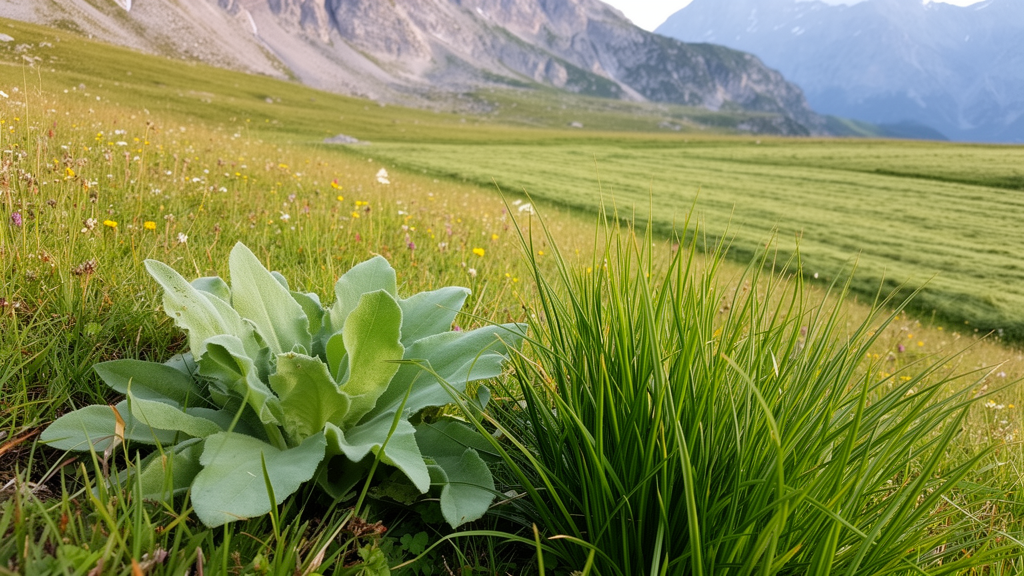
Leaf functional traits in two common alpine grassland species respond in distinctly different ways to land-use history, according to a study of sites in Guinan County, Qinghai Province, China. The study investigated leaf functional traits in Elymus nutans Griseb. and Medicago archiducis-nicolai Å irj. across four sites with contrasting land-use histories in Guinan County, Qinghai Province, China: grazing, enclosure, restoration of farmland to forest, and restoration of farmland to grassland. The work, published in BMC Ecology and Evolution as an open-access article, was designed to reveal adaptive variation and resource acquisition strategies of grassland plants in alpine ecosystems.

The team measured 13 structural and chemical leaf traits together with 11 soil properties at the study sites. To analyse the data, they used linear mixed-effects models to evaluate differences in leaf traits among species and land-use histories, Spearman correlation analysis to examine relationships among leaf traits and soil variables, principal component analysis to identify the major factors behind leaf trait variation, and redundancy analysis to explore associations between leaf traits and soil properties.

The results showed significant variation in leaf functional traits both among species and among land-use histories. In E. nutans, the traits exhibiting relatively high variation were leaf density, leaf thickness, leaf dry matter content, leaf area and leaf phosphorus content. In M. archiducis-nicolai, by contrast, the traits showing greater variation were leaf area, leaf length and leaf thickness.

Correlation analysis revealed strong associations among the structural traits, the chemical traits and soil-related variables. The authors conclude that the two species exhibit contrasting, species-specific patterns of leaf trait variation and associations with soil properties across the contrasting land-use histories, contributing to a better understanding of plant functional ecology in alpine grasslands.

Subject of Research: Leaf functional trait variation and soil associations in two alpine grassland species across contrasting land-use histories

Article Title: Contrasting patterns of leaf trait variation and soil associations in two alpine grassland species across land-use histories

Article References: Wang, Y., Li, N., Wei, L., Guo, T., Zhang, Q., Wang, X., Xu, X., Xu, T., Luo, C., Zhao, N., Liu, H., & Xu, S. (2026). Contrasting patterns of leaf trait variation and soil associations in two alpine grassland species across land-use histories. BMC Ecology and Evolution. https://doi.org/10.1186/s12862-026-02598-6

Image Credits: AI Generated

DOI: 10.1186/s12862-026-02598-6

Keywords: alpine grassland, leaf functional traits, land-use history, soil properties, Elymus nutans, Medicago archiducis-nicolai, Qinghai, redundancy analysis, plant ecology, grazing, farmland restoration, Contrasting

News Source: Drew Townsend. (October 29, 2026). Leaf traits of two alpine grassland species diverge under different land uses. Scienmag.


Tags: alpine grasslandContrastingElymus nutansfarmland restorationgrazingland-use historyleaf functional traitsMedicago archiducis-nicolaiplant ecologyQinghairedundancy analysissoil properties
Share12Tweet7Share2ShareShareShare1

Related Posts

Microbial Sources and Stress Shape the Hidden Endophytes of an Invasive Plant

Microbial Sources and Stress Shape the Hidden Endophytes of an Invasive Plant

October 30, 2026
Firebreaks Leave Lasting Scars in Grasslands While Wildfire Heals Fast

Firebreaks Leave Lasting Scars in Grasslands While Wildfire Heals Fast

October 30, 2026

Hidden Peptides in Non-Coding RNAs Reshape Cardiovascular Biology

October 30, 2026

Phage K Holin’s C-Terminal Region Shapes Antibacterial Activity, Study Finds

October 30, 2026

POPULAR NEWS

  • Microbial Sources and Stress Shape the Hidden Endophytes of an Invasive Plant

    Microbial Sources and Stress Shape the Hidden Endophytes of an Invasive Plant

    29 shares
    Share 12 Tweet 7
  • Firebreaks Leave Lasting Scars in Grasslands While Wildfire Heals Fast

    29 shares
    Share 12 Tweet 7
  • ZNF207 shields glutamine transporter ASCT2 from degradation to fuel liver cancer growth

    29 shares
    Share 12 Tweet 7
  • Systematic review maps sustainability tensions in offshore wind development

    29 shares
    Share 12 Tweet 7

About

We bring you the latest biotechnology news from best research centers and universities around the world. Check our website.

Follow us

Recent News

Microbial Sources and Stress Shape the Hidden Endophytes of an Invasive Plant

Firebreaks Leave Lasting Scars in Grasslands While Wildfire Heals Fast

ZNF207 shields glutamine transporter ASCT2 from degradation to fuel liver cancer growth

Subscribe to Blog via Email

Enter your email address to subscribe to this blog and receive notifications of new posts by email.

Join 86 other subscribers
  • Contact Us

Bioengineer.org © Copyright 2023 All Rights Reserved.

Welcome Back!

Login to your account below

Forgotten Password?

Retrieve your password

Please enter your username or email address to reset your password.

Log In
No Result
View All Result
  • Homepages
    • Home Page 1
    • Home Page 2
  • News
  • National
  • Business
  • Health
  • Lifestyle
  • Science

Bioengineer.org © Copyright 2023 All Rights Reserved.
