Credit: Peter Barta / St. Jude Children's Research Hospital
In the first study of its kind, St. Jude Children's Research Hospital investigators have found that more than half of pediatric central nervous system tumor survivors do not achieve complete independence as adults.
The findings, published online today in the Journal of Clinical Oncology, show that cognitive impairment and physical performance limitations are strong predictors of non-independence in survivors.
The study also means survivorship is at a level where late effects can be studied.
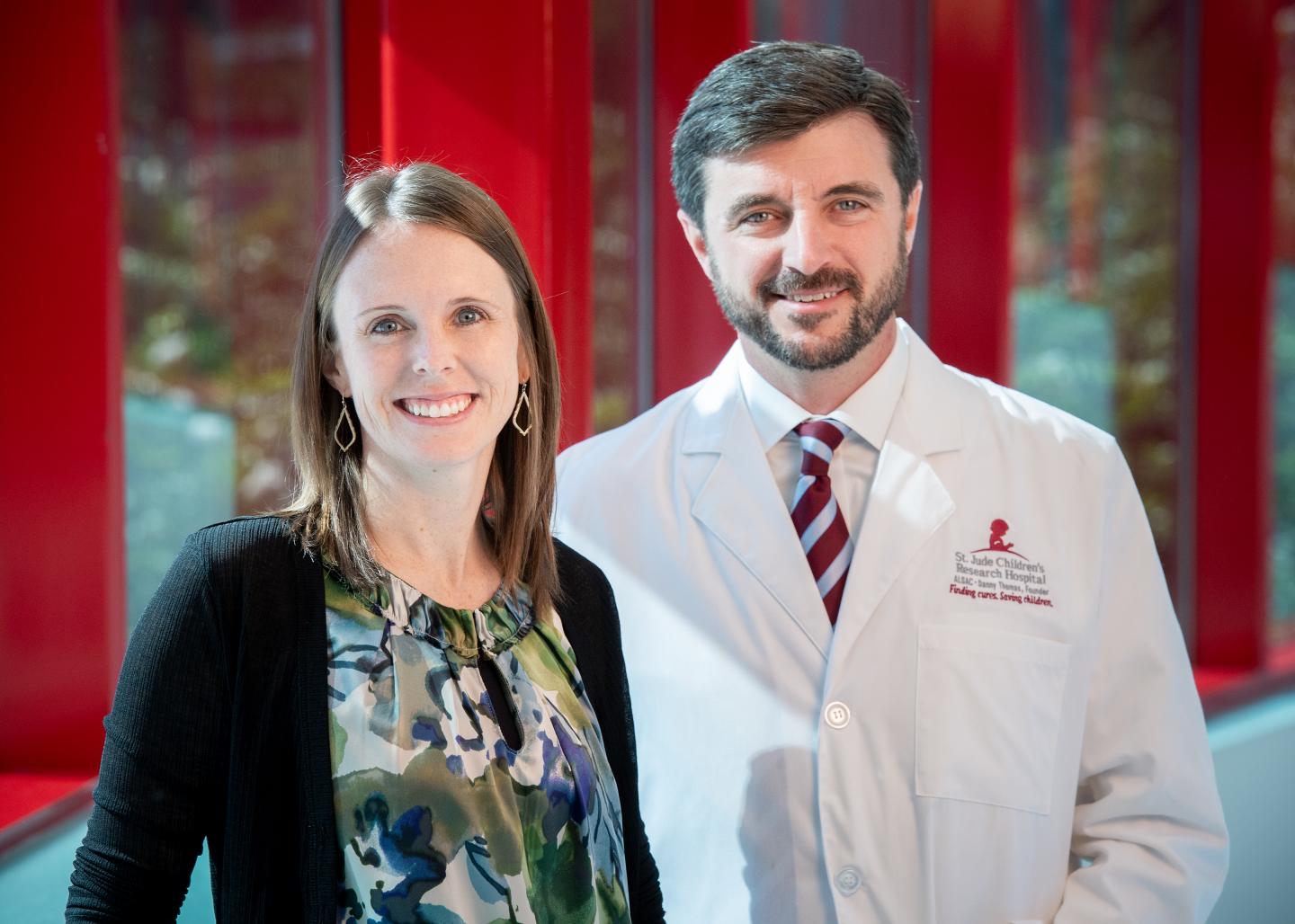
"Survival rates have improved dramatically over the past several decades," said corresponding author Tara Brinkman, PhD, an assistant member of the St. Jude Department of Epidemiology and Cancer Control and the Department of Psychology. "Unfortunately, we know that survivors are not achieving personal and professional milestones consistent with what we would expect healthy young or middle-aged adults to attain."
Brinkman looked at six aspects of independence in more than 300 survivors, including employment, independent living, marital status, assistance with routine or personal care needs, and the ability to drive.
"We wanted to see how these markers clustered together among survivors to generate different profiles of independence," Brinkman said. "Three groups emerged."
About 40 percent of survivors were classified as independent, which means they've achieved independence consistent with societal expectations. Another third was non-independent and required the most assistance. Brinkman categorized the remaining survivors as moderately independent, indicating they were able to do some things an adult is expected to do, but were not fully independent.
"We then looked at predictors of group membership," Brinkman said, "specifically, treatments that could predict the group of survivors who weren't able to achieve independence."
Aggressive therapies including cranial spinal radiation, younger age at diagnosis, and hydrocephalus with shunt placement were strong predictors of non-independence. Cognitive impairment was the strongest predictor of non-independence.
Conversely, in the moderately independent group, physical performance limitations, including problems with strength, aerobic capacity, and the ability to perform adaptive physical functions were associated with non-independence. Cognitive impairment was not a factor.
"For several decades with this population, we've focused on optimizing survival rates," Brinkman said. "Now that five- and 10-year survival is being realized, we want to maximize that and promote survivors' independence."
Intervening with survivors earlier may help them achieve the highest possible physical and mental levels.
"Screening for cognitive and physical performance deficits earlier in the course of survivorship will help us identify patients who may be on this trajectory toward non-independence," Brinkman said. "Identifying survivors at-risk early on would then allow us to intervene and potentially mitigate the adverse outcomes in adulthood."
###
The other St. Jude authors were Kirsten Ness, Zhenghong Li, I-Chan Huang, Kevin Krull, Amar Gajjar, Thomas Merchant, James Klosky, Robyn Partin, Ingrid Tonning Olsson, Frederick Boop, Paul Klimo Jr., Wassim Chemaitilly, Raja Khan, Deokumar Srivastava, Leslie Robison, Melissa Hudson and Gregory Armstrong.
The research was supported by grants (CA195547, CA21765) from the National Cancer Institute, part of the National Institutes of Health; and ALSAC, the fundraising and awareness organization of St. Jude.
Media Contact
Corey Carmichael
[email protected]
901-595-0222
@StJudeResearch
http://www.stjude.org
Original Source
http://www.stjude.org/independence-brain-tumor-survivors http://dx.doi.org/10.1200/JCO.2018.77.9454