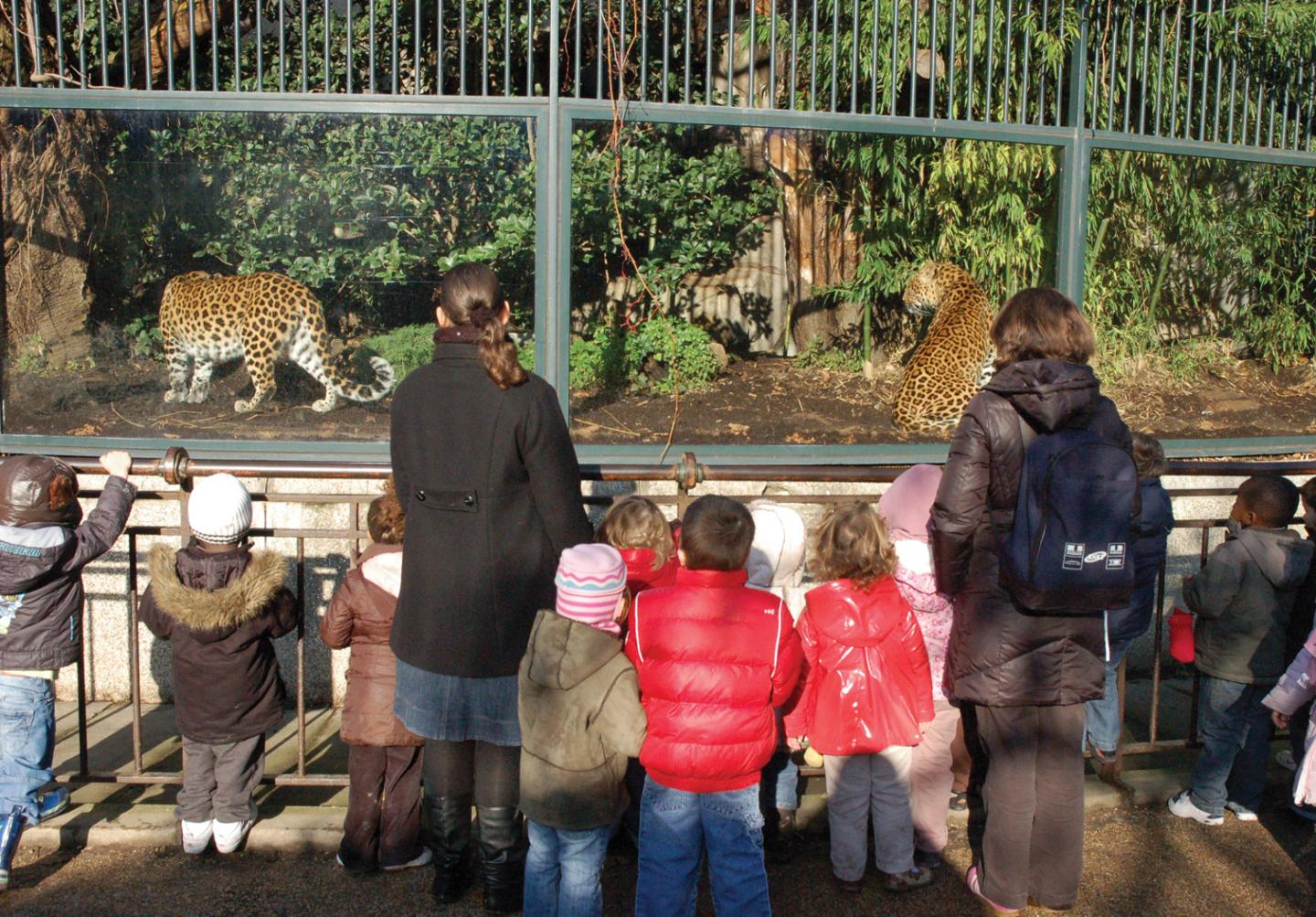
Credit: M. Saint Jalme
Large carnivores (e.g. bears, big cats, wolves and elephant seals) and zoos should be utilised as powerful catalysts for public engagement with nature and pro-environmental behaviour, suggests a paper published in the scholarly open-access journal Nature Conservation by an international multidisciplinary team, led by Dr Adriana Consorte-McCrea, Canterbury Christ Church University, UK.
The paper, which offers a synthesis of contributions, presented at the symposium “Large carnivores and zoos as catalysts for biodiversity conservation: how do we engage the public in the protection of biodiversity?” at the 5th European Congress for Conservation Biology (ECCB), Finland 2018, highlights the wide-reaching influence of the institutions visited by over 700 million people a year worldwide and combining knowledge with emotions and social values. Bringing together natural and social sciences, as well as psychology and education, it provides a rich multifaceted approach to the conservation of biodiversity by exploring the connections between people, large carnivores and zoos.
“[Zoos] may provide a space where field conservation and human dimensions can combine
to foster a commitment between people, from all backgrounds, and the rest of the living world, and break down key barriers to biodiversity conservation, catalysed by
the charismatic keystone species housed within their facilities,” concludes the team.
According to the scientists, large carnivores are essential to engage the public in the urgent need to arrest biodiversity loss due to the many links between wild predators and enhanced biodiversity. They acknowledge that the interactions between people and carnivores are complex and can give rise to conflicts such as concerns related to fears for own safety, fear of loss of other favoured species, material interests, or socio-economic tensions formed by an urban-rural divide.
Due to continuous changes in land use, areas of healthy habitat and protected areas are usually small and fragmented and cannot sustain wild carnivores, the paper explains, so it is necessary to coexist with large carnivores. Large carnivores show capabilities to adapt to different human-dominated ecosystems across the world which supports the idea that separation is not a necessary condition for large carnivore conservation. The bigger challenge remains whether human societies can accept and adapt to non-predator-free landscapes.
“Considering that the occurrence of predator attacks on humans is rare, tolerance of risks is affected by norms, culture, spiritual beliefs, cognitive and emotional factors, including risk perception,” elaborated the specialists and added that, “[p]eople’s progressive amnesia of what the landscapes were like before large carnivores disappeared may result in acceptance of natural spaces devoid of carnivore species.”
Research also points to the lack of interest in nature and reduced commitment to biodiversity conservation as being linked cognitive elements such as misconceptions and negative messages about wildlife in formative years and declining opportunities to engage with nature from childhood. This phenomenon has been described as the extinction of experience.
“Support for the conservation of large carnivores and for biodiversity is more likely when people have an emotional appreciation for diverse species, not just understanding. Both aspects are likely to be enhanced by direct experiences, such as visits to zoos and aquariums that provide an increasingly important opportunity for contact with other species,” add the scientists.
Recognising the role of zoos as a catalyst for conservation for their contributions in skills and expertise that span animal care and husbandry, public engagement, education and research, is vital for biodiversity conservation. Though education programmes based on knowledge gain are not enough to change people’s perceptions, opportunities for emotional engagement and reduction of fear, combined with social context provided by the zoo are great assets in promoting tolerance of large carnivores and biodiversity among visitors who are typically estranged from the wildlife.
###
Original source:
Consorte-McCrea A, Fernandez A, Bainbridge A, Moss A, Prévot A-C, Clayton S, Glikman JA, Johansson M, López-Bao JV, Bath A, Frank B, Marchini S (2019) Large carnivores and zoos as catalysts for engaging the public in the protection of biodiversity. Nature Conservation 37: 133-150. https:/
Media Contact
Adriana Consorte-McCrea
[email protected]
Related Journal Article
http://dx.