Whether an animal is flying, running or swimming, its traveling speed is limited by how effectively it sheds the excess heat generated by its muscles, according to a new study led by Alexander Dyer from the German Centre for Integrative Biodiversity Research (iDiv) and the Friedrich Schiller University Jena, Germany published April 18th in the open access journal PLOS Biology.
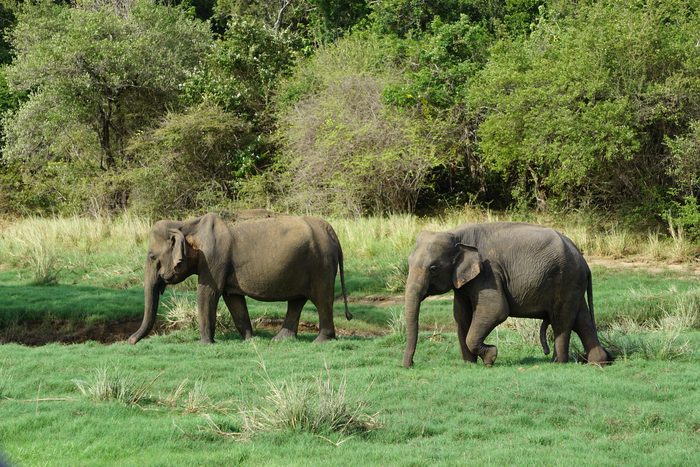
Credit: Ulrich Brose (CC-BY 4.0, https://creativecommons.org/licenses/by/4.0/)
Whether an animal is flying, running or swimming, its traveling speed is limited by how effectively it sheds the excess heat generated by its muscles, according to a new study led by Alexander Dyer from the German Centre for Integrative Biodiversity Research (iDiv) and the Friedrich Schiller University Jena, Germany published April 18th in the open access journal PLOS Biology.
An animal’s capacity to travel is a crucial part of its survival and dictates where – and how far – it can migrate, find food and mates, and spread into new territories. This becomes even more challenging in a human-dominated world characterized by increasingly fragmented habitats and limited food and water resources under climate change.
Dyer and his colleagues developed a model to look at the relationship between animal size and traveling speed, using data from 532 species. While larger animals should be able to travel faster due to their longer wings, legs or tails, the researchers found that medium-sized animals typically have the fastest sustained speeds. The researchers attribute this to the fact that larger animals require more time to dissipate the heat that their muscles produce while moving, and therefore, they must travel more slowly to avoid overheating. They conclude that any animal’s traveling speed can be explained by jointly considering how efficiently it uses energy and sheds heat.
“The new study provides a way to understand animal movement capacities across species and can be used to estimate any animal’s traveling speed based on its size,” says Dyer. “For example, this approach can be applied to predict whether an animal might be able to move between habitats fragmented by human development, even when the details of its biology are unknown.”
Last author Dr. Myriam Hirt from iDiv and the University of Jena adds, “We anticipate that large animals are potentially more susceptible to the effects of habitat fragmentation in a warming climate than previously thought and therefore more prone to extinction. But this needs further investigation.”
#####
In your coverage, please use this URL to provide access to the freely available paper in PLOS Biology: http://journals.plos.org/plosbiology/article?id=10.1371/journal.pbio.3001820
Citation: Dyer A, Brose U, Berti E, Rosenbaum B, Hirt MR (2023) The travel speeds of large animals are limited by their heat-dissipation capacities. PLoS Biol 21(4): e3001820. https://doi.org/10.1371/journal.pbio.3001820
Author Countries: Germany
Funding: Funding for AD and UB was provided by the German Research Foundation (DFG) within the research unit DynaCom (DFG, FOR 2716). UB, EB, BR and MRH acknowledge the support of the German Centre for Integrative Biodiversity Research (iDiv) Halle-Jena-Leipzig funded by the by the German Research Foundation (FZT 118, 202548816). The funders had no role in study design, data collection and analysis, decision to publish, or preparation of the manuscript.
Journal
PLoS Biology
DOI
10.1371/journal.pbio.3001820
Method of Research
Meta-analysis
Subject of Research
Animals
COI Statement
Competing interests: The authors have declared that no competing interests exist.