Researchers at the National Research Centre in Egypt have developed a novel co-microencapsulation system combining krill oil and the probiotic bacterium Streptococcus thermophilus to address the challenges of oral delivery in inflammatory bowel disease. Published in Food Production, Processing and Nutrition, the study demonstrates that this engineered delivery platform significantly attenuates colonic inflammation, apoptosis, and oxidative stress in a rat model of ulcerative colitis. The findings suggest that co-encapsulating these bioactive agents within a whey protein isolate and gum arabic matrix can enhance their stability and synergistic therapeutic effects compared to administering them separately.
Ulcerative colitis is a chronic autoimmune condition characterized by inflammation of the colonic mucosal lining, leading to symptoms such as abdominal pain, diarrhea, and bloody stools. Current standard therapies, including aminosalicylates, corticosteroids, and immunomodulators, often suffer from incomplete effectiveness, high relapse rates, and adverse effects ranging from opportunistic infections to organ toxicity. Consequently, there is a growing need for therapeutic options that target the underlying pathophysiological mechanisms, such as gut dysbiosis and intestinal barrier dysfunction, with fewer side effects.
A major obstacle in utilizing probiotics and omega-3 fatty acids for oral delivery is their inherent instability. Probiotic bacteria experience severe viability losses during gastric transit due to low pH and bile salts, while polyunsaturated fatty acids are highly susceptible to oxidative degradation. Microencapsulation technology offers a solution by entrapping sensitive compounds within a protective wall matrix. In this study, the researchers used whey protein isolate and gum arabic to form stable complex coacervates, which are biocompatible and effective at shielding bioactive compounds from environmental stressors.
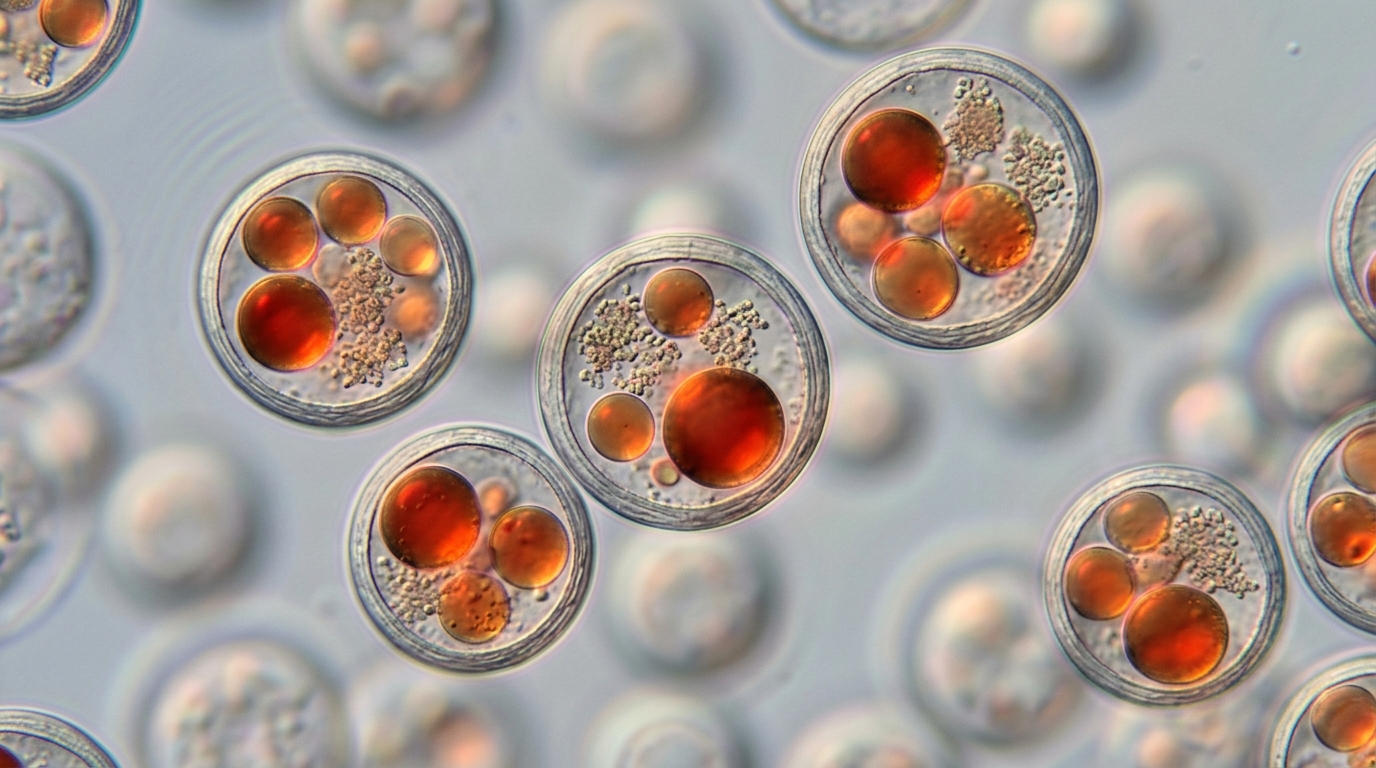
The study team prepared the co-microcapsules by dispersing krill oil into a whey protein isolate solution and homogenizing the mixture to create a stable oil-in-water emulsion. They then incorporated the harvested Streptococcus thermophilus cells and added gum arabic to induce electrostatic complex coacervation at pH 5. The resulting suspension was freeze-dried to produce a stable powder. Physicochemical characterization revealed that the co-microcapsules had an average particle size of 1223 nm and a zeta potential of −32.6 mV, indicating a stable colloidal suspension. The microencapsulation efficiency for krill oil was calculated at 72.9%, and the probiotic viability remained high at 90.91% after the freeze-drying process.
To evaluate the protective efficacy of the formulation, the researchers induced ulcerative colitis in female Sprague-Dawley rats via intrarectal infusion of 3% acetic acid. Fifty rats were divided into five groups of ten: a negative control group receiving saline, an untreated acetic acid group, a group treated with the reference drug sulfasalazine, a group receiving free krill oil and Streptococcus thermophilus, and a group receiving the co-microencapsulated formulation. All treatment groups received their respective interventions orally for 14 days prior to the induction of colitis on the 15th day.
The induction of colitis with acetic acid resulted in a significant increase in the Disease Activity Index and pronounced shortening of colon length in the untreated animals compared to healthy controls. Treatment with both the free krill oil/probiotic mixture and the co-microcapsules resulted in significantly reduced Disease Activity Index scores and effectively prevented colon shortening. These macroscopic findings demonstrate a marked protective effect of both formulations against acetic acid-induced colitis, with performance approximately comparable to that of the reference drug sulfasalazine.
Systemic inflammation was assessed by measuring serum levels of C-reactive protein, Interleukin-6, and Tumor Necrosis Factor-alpha. While serum TNF-alpha levels remained comparable to the acetic acid group across treatments, the sulfasalazine, free krill oil/probiotic, and co-microencapsulated groups showed significantly decreased mRNA expression levels of C-reactive protein and Interleukin-6 compared to the untreated colitis group. This suggests that the treatments effectively dampen the systemic acute-phase response triggered by colonic tissue damage, potentially preventing systemic complications associated with ulcerative colitis.
Oxidative stress in colonic tissue was evaluated by measuring malondialdehyde levels and superoxide dismutase activity. The acetic acid group exhibited a significant increase in malondialdehyde, a marker of lipid peroxidation, and a decrease in superoxide dismutase activity. Treatment with sulfasalazine, free krill oil/probiotic, and the co-microcapsules significantly reduced malondialdehyde levels and increased superoxide dismutase activity compared to the untreated group. These biochemical changes indicate that the formulations mitigate oxidative damage to the colonic mucosa and restore antioxidant defense mechanisms.
Histopathological examination revealed distinct architectural changes across the experimental groups. The untreated acetic acid group showed severe damage, including mucosal necrosis, extensive hemorrhage, submucosal edema, and massive inflammatory cell infiltration. In contrast, the co-microencapsulated group exhibited the most pronounced protection, with minimal mucosal necrosis and inflammatory infiltration, closely resembling the histological appearance of the negative control group. Immunohistochemical analysis further confirmed these observations, showing that the co-microencapsulated formulation resulted in the lowest expression levels of inducible nitric oxide synthase and caspase-3, markers of inflammation and apoptosis, respectively.
Quantitative reverse transcription PCR analysis of colonic tissue provided molecular insights into the protective mechanisms. The co-microencapsulated formulation significantly lowered the mRNA levels of pro-apoptotic genes Bax and caspase-3, as well as the pro-inflammatory cytokine TNF-alpha, compared to the free formulation. Notably, the co-microencapsulated group showed a significant increase in the expression of Claudin-1, a tight junction protein, compared to the acetic acid group. This upregulation suggests that the formulation reinforces the intestinal epithelial seal, shifting the colonic environment from a pro-inflammatory state toward mucosal healing and homeostasis.
The authors acknowledge several limitations in the study design. The acetic acid model represents an acute chemically induced injury rather than a chronic immune-mediated model, so it may not fully replicate the complex pathophysiology of chronic human ulcerative colitis. Additionally, the wall materials used for microencapsulation, whey protein isolate and gum arabic, have documented intrinsic anti-inflammatory properties. Since the study did not include a control group receiving the blank microcapsule matrix alone, it is difficult to definitively discriminate the therapeutic contribution of the active agents from that of the delivery system. The study was also conducted exclusively in female rats, and findings should be validated in male cohorts to account for sex-specific differences in drug metabolism and immune response.
In conclusion, this study demonstrates that co-microencapsulation of krill oil and Streptococcus thermophilus within a whey protein isolate and gum arabic matrix is a highly effective strategy for managing ulcerative colitis in preclinical models. The engineered microcapsules outperformed conventional non-encapsulated mixtures in protecting colonic health by suppressing inflammatory and apoptotic pathways and reinforcing the epithelial barrier. These findings highlight the potential of specialized delivery systems to maximize the clinical utility of nutraceuticals, offering a promising multi-target alternative to standard pharmacological interventions for chronic intestinal inflammation.
The study team selected female Sprague-Dawley rats for the experimental model based on the higher reported incidence of ulcerative colitis in women and to minimize aggression-related stress among males, which can influence inflammatory responses. The animals were housed in the animal facility of the National Research Centre in Egypt under a 12-hour light/dark cycle at 22 degrees Celsius and 55% humidity. All experimental procedures were approved by the Ethics of Medical Research Committee at the National Research Centre and conducted in accordance with the NIH Guide for the Care and Use of Laboratory Animals. The colitis model was prepared according to established protocols, involving the transrectal infusion of 2 mL of 3% acetic acid through a polyurethane tube inserted into the rectum to a depth of 4.5 cm. The rats were kept in a Trendelenburg position during and for one minute after instillation to prevent leakage of the solution, ensuring consistent induction of the inflammatory condition across the experimental groups.
Before the in vivo evaluation, the researchers characterized the physicochemical properties of the co-microcapsules to confirm their stability and integrity. Scanning electron microscopy revealed that the freeze-dried co-microcapsules exhibited a flake-like, porous structure, a morphology characteristic of freeze-dried materials resulting from the sublimation of ice crystals during lyophilization. Importantly, no bacterial cells were observed on the surface of the microcapsules, confirming that the Streptococcus thermophilus cells were successfully embedded within the protective wall matrix of the whey protein isolate and gum arabic coacervate. This encapsulation strategy is designed to shield the probiotic bacteria from the harsh conditions of the gastrointestinal tract, such as low pH and bile salts, which typically cause severe viability losses during gastric transit.
The choice of whey protein isolate and gum arabic as wall materials was informed by their documented biological properties beyond mere structural support. Whey protein has been shown to exhibit anti-inflammatory properties, producing a therapeutic effect against colonic inflammation induced by acetic acid through the Nrf2/HO-1 and NF-κB pathways. Similarly, gum arabic has been associated with anti-inflammatory effects by increasing the anti-inflammatory cytokine IL-10 and decreasing TNF-α and C-reactive protein levels.
The study also highlighted the broader context of ulcerative colitis management, noting that the epidemiology of the disease has seen a significant shift with a rapid increase in incidence in newly industrialized regions, such as Egypt. This trend is often attributed to the Westernization of lifestyle and diet. The long-term consequence of chronic, uncontrolled colonic inflammation is a substantially increased risk of developing colitis-associated colorectal cancer, which is a major cause of mortality among patients.
Future research directions identified by the authors include the use of chronic models, such as dextran sulfate sodium or trinitrobenzenesulfonic acid-induced colitis, to confirm the findings in a chronic, immune-mediated context. Additionally, the authors suggested that measuring fecal colony-forming units post-treatment would further validate the mechanism of action by directly confirming enhanced probiotic survival and colonization in the gut. These steps are considered valuable for bridging the gap between the acute chemically induced injury model used in this study and the complex pathophysiology of chronic human ulcerative colitis, potentially offering a more robust framework for evaluating the long-term efficacy of such nutraceutical delivery systems.
Subject of Research: Preclinical evaluation of co-microencapsulated krill oil and Streptococcus thermophilus in a rat model of ulcerative colitis.
Article Title: Microencapsulation-driven synergy of krill oil and Streptococcus thermophilus in attenuating of colonic inflammation, apoptosis and oxidative stress in a murine model of ulcerative colitis
Article References: Mabrouk, D. M., Abdel‑Aziem, S. H., Eweida, S. M., Ahmed, K. A., Sleem, A. A., Hamed, A. A., Youssef, D. A., & makawy, A. I. E. (2026). Microencapsulation-driven synergy of krill oil and Streptococcus thermophilus in attenuating of colonic inflammation, apoptosis and oxidative stress in a murine model of ulcerative colitis. Food Production, Processing and Nutrition, 8(1), Article 50. https://doi.org/10.1186/s43014-026-00398-5
Image Credits: AI Generated
DOI: 10.1186/s43014-026-00398-5
Keywords: ulcerative colitis, krill oil, Streptococcus thermophilus, microencapsulation, inflammation, oxidative stress, probiotics, gut barrier, preclinical study, rat model, Microencapsulation-driven, synergy
News Source: Alan Morgan. (November 13, 2026). Krill Oil and Probiotic Microcapsules Reduce Colitis in Rats. Scienmag.