• HOME
  • NEWS
  • EXPLORE
    • CAREER
      • Companies
      • Jobs
    • EVENTS
    • iGEM
      • News
      • Team
    • PHOTOS
    • VIDEO
    • WIKI
  • BLOG
  • COMMUNITY
    • FACEBOOK
    • INSTAGRAM
    • TWITTER
Monday, October 5, 2026
BIOENGINEER.ORG
No Result
View All Result
  • Login
  • HOME
  • NEWS
  • EXPLORE
    • CAREER
      • Companies
      • Jobs
        • Lecturer
        • PhD Studentship
        • Postdoc
        • Research Assistant
    • EVENTS
    • iGEM
      • News
      • Team
    • PHOTOS
    • VIDEO
    • WIKI
  • BLOG
  • COMMUNITY
    • FACEBOOK
    • INSTAGRAM
    • TWITTER
  • HOME
  • NEWS
  • EXPLORE
    • CAREER
      • Companies
      • Jobs
        • Lecturer
        • PhD Studentship
        • Postdoc
        • Research Assistant
    • EVENTS
    • iGEM
      • News
      • Team
    • PHOTOS
    • VIDEO
    • WIKI
  • BLOG
  • COMMUNITY
    • FACEBOOK
    • INSTAGRAM
    • TWITTER
No Result
View All Result
Bioengineer.org
No Result
View All Result
Home NEWS Science News Biology

Killing remains a threat to Bornean orangutans

Bioengineer by Bioengineer
October 11, 2023
in Biology
Reading Time: 2 mins read
0
Orangutan
Share on FacebookShare on TwitterShare on LinkedinShare on RedditShare on Telegram

University of Queensland research has found despite considerable conservation efforts, the illegal killing of critically endangered orangutans on Borneo may be an ongoing threat to the species.  
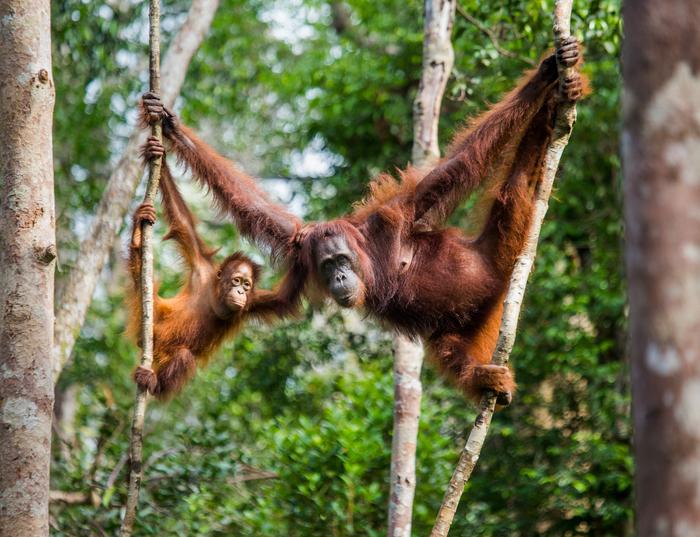
Orangutan

Credit: The University of Queensland

University of Queensland research has found despite considerable conservation efforts, the illegal killing of critically endangered orangutans on Borneo may be an ongoing threat to the species.  

PhD candidate Emily Massingham from UQ’s Faculty of Science managed a team of researchers which visited 79 villages across the Bornean orangutan range in Kalimantan, conducting face to face interviews with 431 people.

“Our study builds on previous research which indicated killing was one of the key reasons for orangutan population decline, alongside habitat loss,” Ms Massingham said.

“The aim of our project was to understand whether orangutans have been killed in recent times, to look at whether conservation projects are effectively preventing killing, and to gain insights into community perceptions and the motivations behind it.

“It has been almost 15 years since the previous study, and we did not find a clear decrease in killings despite Indonesia’s commendable efforts to reduce habitat loss.

“Thirty per cent of villages reported orangutans had been killed in the last 5 -10 years, despite the practice being both illegal and taboo – which also makes it hard to get an accurate picture of the true scale.”

Ms Massingham said Borneo’s orangutan population had decreased by 100,000 in recent decades, with current estimates suggesting fewer than 100,000 animals remain.

“Our findings did not indicate that conservation projects are reducing killing, highlighting an urgent need to improve the collective approach to orangutan conservation,” she said.

“Killing by humans needs to be addressed, as our findings suggest it may still be occurring and poses a real threat to the species.”

Ms Massingham said orangutans have long lifespans and breed slowly, so are particularly vulnerable to population declines driven by the death of adult apes.  

“Our interviews revealed some of the situations which lead to the killing or displacement of individual orangutans,” she said.

“They include protecting crops and taking infant apes to keep as pets.”

The researchers outlined recommendations that could improve future conservation efforts.

“Working with communities and collaborating across disciplines and projects will be key,” Ms Massingham said.

“Conservationists need to work closely with individual villages to understand their needs and perspectives, identify the social drivers of killing of orangutans and implement solutions that reduce human-orangutan conflict.”

The research was conducted under a RISTEK permit, with the engagement of a local social development organisation to facilitate fieldwork.

This research is published in Conservation Science and Practice. 


Journal

Conservation Science and Practice

DOI

10.1111/csp2.13025

Method of Research

Survey

Subject of Research

Animals

Article Title

Killing of orangutans in Kalimantan – Community perspectives on incidence and drivers

Article Publication Date

10-Oct-2023

Share12Tweet8Share2ShareShareShare2

Related Posts

Epigenetics Beyond the Clinic: A New Journal Charts the Field's Next Frontier

Epigenetics Beyond the Clinic: A New Journal Charts the Field’s Next Frontier

October 5, 2026
Hidden Bark Fungus Turns Deadly Accomplice in Smoke Tree Wilt Epidemic

Hidden Bark Fungus Turns Deadly Accomplice in Smoke Tree Wilt Epidemic

October 5, 2026

Inside the cilium: how dynein motors are tuned by a web of regulatory signals

October 5, 2026

COVID Vaccines Cut Infection and Death Risk Sharply in Dialysis Patients, Nationwide Study Finds

October 5, 2026

POPULAR NEWS

  • Alloys That Shrink Their Own Grains: New PIX Mechanism Refines Metals With Heat Alone

    Alloys That Shrink Their Own Grains: New PIX Mechanism Refines Metals With Heat Alone

    29 shares
    Share 12 Tweet 7
  • Endurance Exercise Reshapes the Liver in Males and Females Through Distinct Molecular Routes

    29 shares
    Share 12 Tweet 7
  • Single Transcription Factor PU.1 Rapidly Converts Fibroblasts into Macrophage-Lineage Cells

    29 shares
    Share 12 Tweet 7
  • New Scale Measures How Ready Nurse Educators Really Are for the AI Era

    29 shares
    Share 12 Tweet 7

About

We bring you the latest biotechnology news from best research centers and universities around the world. Check our website.

Follow us

Recent News

Alloys That Shrink Their Own Grains: New PIX Mechanism Refines Metals With Heat Alone

Endurance Exercise Reshapes the Liver in Males and Females Through Distinct Molecular Routes

Single Transcription Factor PU.1 Rapidly Converts Fibroblasts into Macrophage-Lineage Cells

Subscribe to Blog via Email

Success! An email was just sent to confirm your subscription. Please find the email now and click 'Confirm' to start subscribing.

Join 85 other subscribers
  • Contact Us

Bioengineer.org © Copyright 2023 All Rights Reserved.

Welcome Back!

Login to your account below

Forgotten Password?

Retrieve your password

Please enter your username or email address to reset your password.

Log In
No Result
View All Result
  • Homepages
    • Home Page 1
    • Home Page 2
  • News
  • National
  • Business
  • Health
  • Lifestyle
  • Science

Bioengineer.org © Copyright 2023 All Rights Reserved.