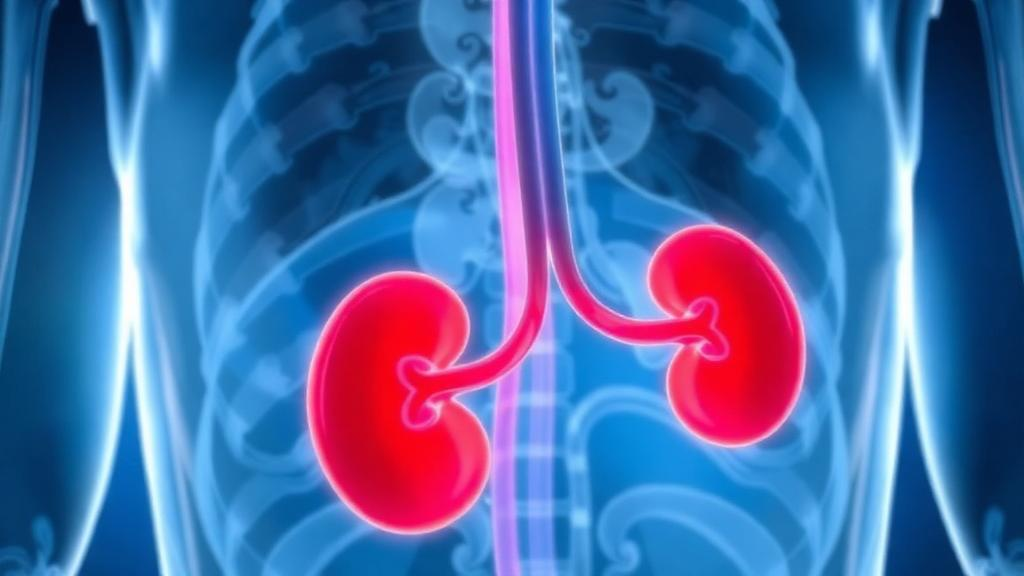
For decades, the story of beta-thalassemia major has been one of medicine’s quiet triumphs. A severe inherited hemoglobinopathy first described in 1925, the disease once claimed lives in early childhood. Today, thanks to regular transfusions and powerful iron-chelating drugs, patients survive well into adulthood. But a new clinical study from a single treatment center suggests that this extended survival is unmasking a previously underappreciated threat: progressive kidney damage, driven by a combination of iron overload, chronic anemia, and possibly the very drugs used to control it.
The research, published in the journal Pharmacia, examined 44 patients with transfusion-dependent beta-thalassemia major and compared them with 30 healthy individuals matched for age and sex. Rather than relying on conventional serum markers alone, the investigators focused on two sensitive urinary indicators of early glomerular injury: the albumin-to-creatinine ratio, known as ACR, and the protein-to-creatinine ratio, or PCR. Both were measured in first-morning urine samples, a standard approach that minimizes day-to-day variation and captures the earliest signs of protein leaking through damaged kidney filters.
The results were statistically significant and clinically striking. Patients with beta-thalassemia major showed markedly higher ACR values than controls, averaging 6.94 compared with 0.63, a difference that reached significance at p = 0.015. PCR values followed the same pattern, averaging 20.46 in patients versus 9.38 in controls, significant at p = 0.023. In practical terms, this means that albumin and total protein were escaping into the urine of thalassemia patients at levels several-fold above normal, a hallmark of glomerular barrier dysfunction that often precedes overt chronic kidney disease by years.
Perhaps most revealing was the age-related pattern. Urinary ACR and PCR climbed steadily with patient age, peaking in the 48-to-57-year group, where ACR reached 20.9 and PCR reached 42.0. Children and adolescents aged 7 to 17 showed values roughly three times lower for ACR and about twice as low for PCR. This gradient supports a cumulative model of renal injury, in which decades of transfusional iron exposure, chronic chelator use, and persistent oxidative stress gradually erode the structural integrity of the kidney’s filtering units.
The pathophysiology is multifactorial. In beta-thalassemia major, ineffective erythropoiesis and chronic hemolysis stem from a critical imbalance between alpha and beta globin chains. Regular transfusions, while life-sustaining, introduce iron faster than the body can safely store it, and suppressed hepcidin worsens systemic iron loading. Excess non-transferrin-bound iron catalyzes the formation of reactive oxygen species, driving lipid peroxidation, mitochondrial dysfunction, and apoptosis in renal tubular and glomerular cells. Histopathologic studies have documented hemosiderin accumulation in proximal tubular epithelial cells, accompanied by tubulointerstitial injury and fibrosis. Persistent oxidative stress also reduces nitric oxide bioavailability, favoring intraglomerular hypertension and protein leakage across the glomerular barrier.
Chronic anemia adds another layer of stress. Reduced oxygen delivery triggers a hyperdynamic circulation and glomerular hyperfiltration, which over time can independently damage the delicate capillary networks of the kidney. Combined with direct iron deposition and inflammatory injury, these mechanisms create a perfect storm for progressive renal dysfunction in long-term survivors.
But the study’s most provocative finding concerns the chelation drugs themselves. When patients were grouped by regimen, those treated with deferasirox, marketed as Exjade, showed the highest levels of proteinuria, followed by those on deferiprone, or Ferriprox, and then deferoxamine, or Desferal. Combination therapy with deferiprone plus deferoxamine produced the lowest urinary values of all. Deferasirox was also the most commonly used chelator in the cohort, accounting for 24 of 44 patients, typically dosed at 20 milligrams per kilogram per day orally.
These observations align with prior literature describing deferasirox-associated proximal tubular dysfunction, reversible rises in serum creatinine, and mild proteinuria. Although deferasirox is primarily excreted through the hepatobiliary route, its systemic iron-chelate complexes may reach the kidney and transiently impair glomerular filtration through interference with prostaglandin-mediated autoregulation. Deferoxamine, administered by subcutaneous infusion, tends to cause fewer renal complications but is linked to auditory, visual, and growth-related adverse events that limit long-term adherence. Deferiprone, an oral bidentate chelator, may induce mild transient proteinuria but is more often associated with agranulocytosis and hepatotoxicity than with nephrotoxicity.
The apparent protective effect of combination therapy is intriguing. Patients receiving both deferiprone and deferoxamine showed the lowest ACR and PCR values while maintaining adequate iron clearance, echoing previous reports suggesting that alternating or combined regimens may optimize the balance between efficacy and safety. If confirmed in larger prospective studies, this pattern could reshape how clinicians individualize chelation strategies for patients at elevated renal risk.
The investigators emphasize that kidney damage in beta-thalassemia is a dynamic, multifactorial process requiring multidisciplinary management. They recommend that regular monitoring of renal function, including assessment of ACR, PCR, and early tubular biomarkers, become an integral part of long-term care for transfusion-dependent patients. Timely detection of subclinical renal dysfunction allows individualized chelation adjustment, optimization of transfusion protocols, and the introduction of nephroprotective measures. As survival continues to improve, preserving kidney function may prove as important as controlling iron itself in this expanding population of long-term thalassemia survivors.
Subject of Research: Renal dysfunction and chelation therapy in beta-thalassemia major
Article Title: Proteinuria and chelator-associated renal dysfunction in β-thalassemia major: insights from a single-center clinical study
Article References: Stoyanova, L., Benkova-Petrova, M., Petrov, A., Abushev, P., Marinov, S., Stoeva, M., & Petrov, Y. (2026). Proteinuria and chelator-associated renal dysfunction in β-thalassemia major: insights from a single-center clinical study. Pharmacia, 73, Article e184854. https://doi.org/10.3897/pharmacia.73.e184854
Image Credits: AI Generated
DOI: 10.3897/pharmacia.73.e184854
Keywords: beta-thalassemia major, proteinuria, albuminuria, iron chelation, deferasirox, deferiprone, deferoxamine, kidney disease, iron overload, renal monitoring, hemoglobinopathy, nephrotoxicity
News Source: Ophelia Keating. (October 19, 2026). Kidney Damage Emerges as Hidden Complication in Beta-Thalassemia Survivors. Scienmag.