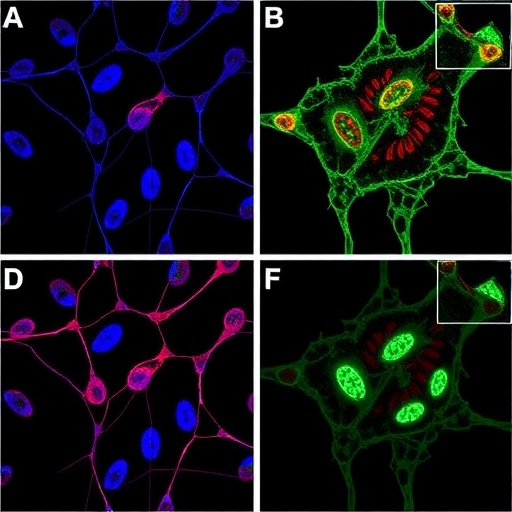
In recent years, the field of oncology has witnessed remarkable advancements, yet certain malignancies, such as Ewing sarcoma, continue to pose significant therapeutic challenges. A recent study by Yang et al. has shed light on the potential of a compound known as KC1036, which has emerged as a promising avenue in the fight against this rare and aggressive cancer. Their exploration not only reveals mechanistic insights but also opens up future directions for a multi-targeted therapeutic strategy that could revolutionize treatment paradigms.
Ewing sarcoma primarily affects children and young adults, characterized by small round cells that typically emerge in the bones or soft tissues. Despite its rarity, Ewing sarcoma is notoriously aggressive, often metastasizing to lungs and bones. Conventional treatment methods, including surgery, chemotherapy, and radiation, have yielded limited success, prompting the need for innovative therapeutic approaches. The study conducted by Yang and his team represents a pivotal shift towards understanding how specific molecular targets can be utilized in treating this formidable cancer.
The researchers focused on KC1036, which operates through a novel mechanism that targets multiple pathways involved in tumor progression. By disrupting these pathways, KC1036 has the potential to inhibit the proliferation of Ewing sarcoma cells and induce apoptosis, or programmed cell death, in these cancerous cells. The multi-targeted nature of this compound is particularly important, as it allows for a comprehensive approach to combatting the complex biology underlying Ewing sarcoma, which often shows resistance to traditional therapies.
Moreover, Yang et al. conducted an extensive series of in vitro experiments that demonstrated KC1036’s ability to effectively reduce cell viability and lead to favorable outcomes in preclinical models. These promising results lay the groundwork for future clinical trials and suggest that this compound could serve as a cornerstone of novel therapeutic regimens for patients suffering from this devastating disease. Importantly, the study highlights the need for personalized medicine approaches that consider the genetic makeup of individual tumors, which could further optimize treatment strategies and improve patient outcomes.
In addition to elucidating the therapeutic potential of KC1036, the study delves into the underlying biological mechanisms at play. By employing advanced molecular biology techniques, the researchers dissected the interactions between KC1036 and key proteins involved in Ewing sarcoma pathogenesis. For instance, they identified that KC1036 could significantly downregulate the activity of oncoproteins that are typically upregulated in Ewing sarcoma, indicating its capacity to revert the malignancy’s aggressive phenotype.
Another significant aspect of this research is its emphasis on the tumor microenvironment, which plays a crucial role in cancer progression and treatment response. The study found that KC1036 might also influence the surrounding stromal cells and immune system activity, suggesting that its therapeutic effects extend beyond targeting cancer cells alone. This holistic approach could enhance the effectiveness of treatment while minimizing adverse effects associated with conventional therapies, which often result in collateral damage to healthy tissues.
In light of these findings, the authors advocate for further research into the pharmacokinetics and toxicological profiles of KC1036, emphasizing the importance of understanding dosage dynamics and potential side effects. This rigorous evaluation will be crucial in determining the compound’s viability for clinical use. Additionally, the implications of combining KC1036 with existing therapies could offer synergistic benefits, potentially transforming Ewing sarcoma treatment from a last-resort to a first-line approach.
The acknowledgment of Ewing sarcoma as a multifaceted disease underscores the necessity of interdisciplinary collaboration among scientists, clinicians, and pharmaceutical experts. Yang et al.’s research not only advances the understanding of Ewing sarcoma at a molecular level but also calls for a concerted effort to translate these findings into actionable clinical strategies. Such collaborative efforts could pave the way for developing targeted combination therapies that address both the tumor and its microenvironment.
Moreover, this study serves as a reminder of the urgent need for increased funding and support for research into rare cancers like Ewing sarcoma. While more common cancers often dominate the research landscape, investing in less prevalent malignancies holds the potential for discovering groundbreaking therapies that can benefit a disproportionate number of patients. The hope is that with continued research and validation, KC1036 will eventually make its way into standard treatment protocols.
As we reflect on the aggressive nature of Ewing sarcoma, it is essential to remain optimistic about the future of cancer treatments. Innovations like KC1036, as presented by Yang et al., exemplify the promise of targeted therapies that can yield significant improvements in patient survival and quality of life. With a foundation laid by comprehensive research, the pathway to clinical application appears increasingly viable.
Anticipating the future, the scientific community must maintain a commitment to examining the intricacies of Ewing sarcoma and other hard-to-treat malignancies. By harnessing advanced technologies and fostering a culture of collaboration, researchers stand poised to unravel the complexities of these diseases and devise effective strategies that ultimately lead to better patient outcomes.
Engagement with patients and advocacy groups throughout this research journey is also invaluable. Greater awareness of Ewing sarcoma will not only rally support for research funding but also provide patients with essential information regarding emerging treatments. Thus, the efforts of Yang et al. may catalyze a broader movement advocating for earlier diagnoses, improved research, and enhanced treatment modalities.
In summary, Yang et al.’s exploration of KC1036 represents a significant leap forward in understanding and potentially treating Ewing sarcoma through a multi-targeted approach. By disrupting the pathways that Ewing sarcoma cells rely on, KC1036 stands as a beacon of hope within an otherwise challenging landscape. Continued research and collaborative efforts will be essential in transforming this hope into reality, ultimately leading to more effective and less toxic treatment options for patients afflicted by this terrible disease.
Subject of Research: Ewing sarcoma and the therapeutic potential of KC1036.
Article Title: KC1036 in Ewing Sarcoma: Mechanistic Insights and Future Directions for a Multi-Targeted Therapeutic Strategy.
Article References:
Yang, D.J., Yang, L., Yang, J. et al. KC1036 in ewing sarcoma: mechanistic insights and future directions for a multi-targeted therapeutic strategy. Angiogenesis 28, 59 (2025). https://doi.org/10.1007/s10456-025-10016-6
Image Credits: AI Generated
DOI: https://doi.org/10.1007/s10456-025-10016-6
Keywords: Ewing sarcoma, KC1036, targeted therapy, cancer research, Ewing sarcoma treatment, multi-targeted strategy, mechanistic insights, tumor biology, oncology.