The Knight Alzheimer Research Imaging dataset, or KARI, provides an extensive collection of brain-imaging, clinical and biological data from 1,645 participants aged 42 to 97 across 6,217 imaging acquisitions. Established by the Washington University Knight Alzheimer Disease Research Center, the resource covers the Alzheimer disease spectrum from healthy aging through preclinical disease to symptomatic illness. Its authors describe KARI as a research dataset intended to support investigation of Alzheimer disease’s prolonged preclinical phase, early detection, disease trajectories and intervention research.
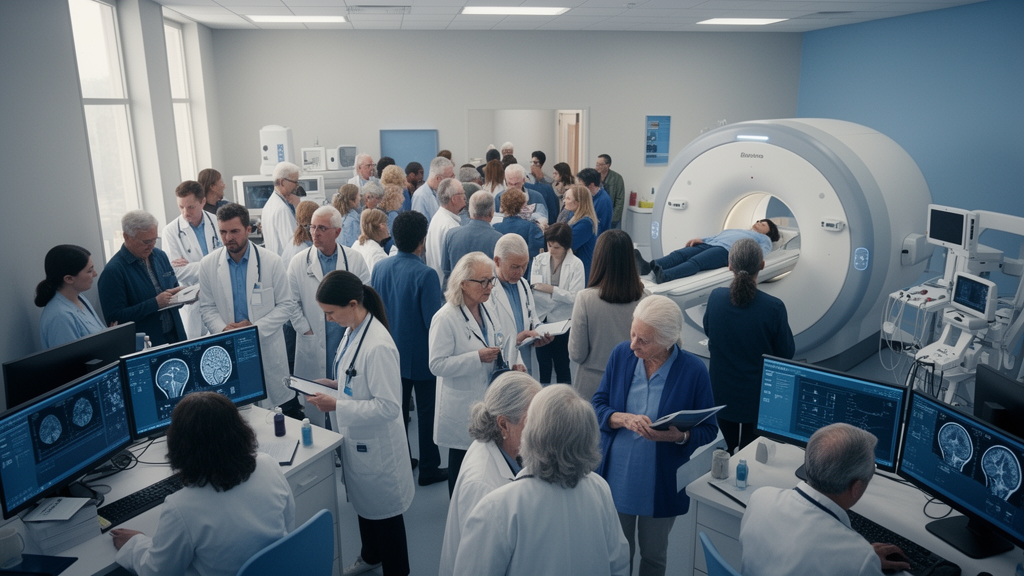
The imaging collection combines structural and functional magnetic resonance imaging with positron emission tomography using tracers for amyloid and tau pathology. Structural and functional MRI provide complementary views of the brain, while the PET scans target two pathological features associated with Alzheimer disease. The cohort also includes clinical, cognitive, genetic and biomarker data, allowing investigators to examine imaging measures alongside other participant-level information. The source does not present the dataset as a single test or diagnostic procedure; it is a collection designed to address questions that require multiple kinds of data.
A major feature of KARI is its longitudinal scope. Participants undergo extensive imaging over time, providing repeated acquisitions rather than a one-time snapshot of the cohort. That structure is intended to help researchers investigate how different measurements relate within individuals and how imaging and biomarker findings may evolve across the disease spectrum. The 6,217 acquisitions encompass 1,645 participants spanning a 55-year age range, from ages 42 to 97, and include people representing healthy aging, preclinical Alzheimer disease and symptomatic disease.
Alongside raw imaging data, KARI provides quality-controlled processed outputs, including anatomical segmentations and biomarker quantification. These derivatives give researchers standardized outputs for the kind of measurements described in the resource, while the raw data preserve the opportunity to apply other analytical approaches. The dataset is also described as open access, with the stated aim of making the material available to the wider scientific community for work on pathophysiology, biomarker identification and therapeutic development. Access to a combined collection, however, does not itself demonstrate that any particular biomarker, diagnostic method or intervention will improve clinical outcomes.
KARI should therefore be understood as a data resource and an invitation to conduct further analyses, not as the report of a completed trial or a demonstrated clinical advance. Its value lies in the scale, multimodal design, longitudinal coverage and processed outputs, while interpretation of any resulting association will depend on the specific question, sample, analysis and limitations of the data used. By linking MRI, PET, clinical, cognitive, genetic and biomarker information across the Alzheimer disease spectrum, the Knight ADRC aims to give researchers a foundation for studies of early detection and disease progression. The resource does not by itself resolve those questions, but it makes them testable with a common and broadly accessible dataset.
Subject of Research: A multimodal neuroimaging and biomarker dataset spanning the Alzheimer disease spectrum
Article Title: Exploring healthy aging through preclinical Alzheimer disease in the Knight Alzheimer Research Imaging dataset
Article References: Hoagey, D. A., McKay, N. S., Joseph-Mathurin, N., Flores, S., Doering, S., Keefe, S. J., Tiemann Powles, S., Hornbeck, R. C., Smith, T. H., Scott, J., Chen, G., Massoumzadeh, P., LaMontagne, P. J., Wang, Q., Hassenstab, J., Ponisio, M. R., Denny, A., Balls-Berry, J. E., Snider, B. J., … Benzinger, T. L. S. (2026). Exploring healthy aging through preclinical Alzheimer disease in the Knight Alzheimer Research Imaging dataset. Nature Communications. https://doi.org/10.1038/s41467-026-78439-3
Image Credits: AI Generated
DOI: 10.1038/s41467-026-78439-3
Keywords: Alzheimer disease, brain imaging, MRI, PET, amyloid pathology, tau pathology, preclinical dementia, healthy aging, longitudinal imaging, biomarkers, Exploring, healthy
News Source: Cassandra Pierce. (October 20, 2026). KARI dataset opens multimodal Alzheimer imaging resource for 1,645 adults. Scienmag.