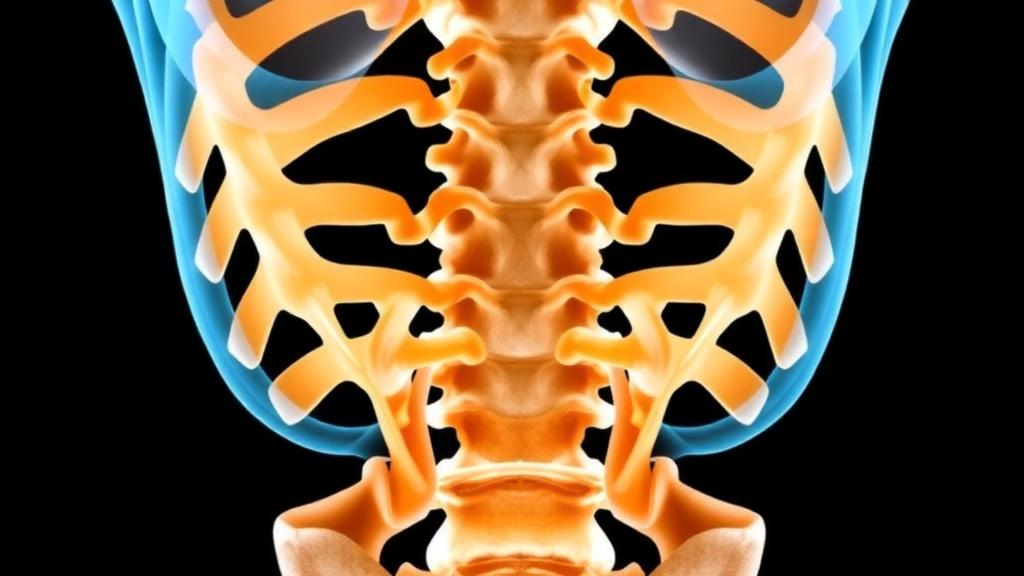
Older patients with spinal deformity who fracture a vertebra through osteoporosis often present surgeons with a difficult choice: the standard route into the broken bone may be blocked by the very deformity that complicates their condition. A retrospective comparative study now published in BMC Surgery examines an alternative access path, percutaneous vertebroplasty delivered through Kambin’s triangle, and reports preliminary associations with shorter operations and fewer X-ray acquisitions compared with the conventional transpedicular approach.
The research, led by Zehua Jiang, Xin Tan and Maosen Zhang with colleagues including Rusen Zhu, reviewed the records of 31 patients treated between January 2019 and December 2022. All had osteoporotic vertebral compression fractures together with spinal deformity. The cohort included 13 men and 18 women aged between 60 and 84 years, with a mean age of 70 years, and symptoms had been present for one to six weeks, averaging 3.5 weeks. In total, 35 vertebrae were treated.
Patients were divided into two groups according to the surgical route used.
The study measured outcomes at two levels. Patient-level outcomes included pain measured on the visual analogue scale, disability measured with the Oswestry Disability Index, and complications. Vertebra-level outcomes included operative time, the number of fluoroscopic acquisitions, cement leakage, and how uniformly the bone cement spread within the fractured vertebra.
On the technical measures, the Kambin’s triangle group fared notably better. Mean operative time was 25 minutes per vertebra in that group, against 33 minutes per vertebra in the transpedicular group, with standard deviations of 5.7 and 7.2 minutes respectively. Surgeons needed an average of 6.2 fluoroscopic acquisitions per vertebra via Kambin’s triangle compared with 9.3 via the transpedicular route. After the researchers applied a Bonferroni correction to account for multiple comparisons, both differences remained statistically significant, with an adjusted P value of 0.019 for operative time and an adjusted P value below 0.001 for fluoroscopic acquisitions.
Cement leakage, a recognised complication of vertebroplasty in which bone cement escapes beyond the vertebral body, occurred in none of the 17 vertebrae treated through Kambin’s triangle and in 2 of the 18 vertebrae treated transpedicularly. Uniform cement dispersion was observed in 12 of 17 vertebrae, or 70.59 percent, in the Kambin’s triangle group, and in 6 of 18 vertebrae, or 33.33 percent, in the transpedicular group. The researchers emphasised, however, that this difference in cement distribution was not statistically significant after Bonferroni correction, with an adjusted P value of 0.437, and they classified it as exploratory.
Both approaches were associated with improvement in pain and disability, and the study’s conclusion is deliberately cautious. In selected patients with L1 to L3 osteoporotic vertebral compression fractures and spinal deformity, in whom conventional transpedicular access is anatomically difficult, the authors write that PVP via Kambin’s triangle may be a feasible alternative. Preliminary findings suggest associations with shorter operative time and fewer fluoroscopic acquisitions, but larger prospective studies are required.
The authors are explicit that these exploratory associations do not establish that the Kambin’s triangle trajectory itself confers a technical advantage. Because the study was retrospective, anatomical case selection and baseline differences between the groups may have contributed to the observed results. Patients were not randomly assigned to one route or the other, and the choice of approach may have reflected the individual anatomy of each fracture and deformity.
For readers, the practical message is one of cautious promise rather than established practice. This retrospective study suggests that in carefully selected older patients, a corridor through Kambin's triangle can reach the fractured vertebra with less time in the operating room and fewer radiation exposures, and both approaches were associated with improvement in pain and disability. Whether those advantages hold up when patients are randomised, and across a broader range of fracture levels, will depend on the larger prospective studies the authors call for.
Subject of Research: A retrospective comparison of two surgical access routes for vertebroplasty in older patients with osteoporotic vertebral compression fractures and spinal deformity.
Article Title: Percutaneous vertebroplasty via Kambin’s triangle for osteoporotic vertebral compression fractures in patients with spinal deformity: a retrospective comparative study
Article References: Jiang, Z., Tan, X., Zhang, M., Cui, H., Du, W., & Zhu, R. (2026). Percutaneous vertebroplasty via Kambin’s triangle for osteoporotic vertebral compression fractures in patients with spinal deformity: a retrospective comparative study. BMC Surgery. https://doi.org/10.1186/s12893-026-04285-1
Image Credits: AI Generated
DOI: 10.1186/s12893-026-04285-1
Keywords: percutaneous vertebroplasty, Kambin's triangle, osteoporotic vertebral compression fracture, spinal deformity, transpedicular approach, bone cement, fluoroscopy, cement leakage, retrospective study, BMC Surgery, spine surgery, older patients
News Source: Ophelia Keating. (October 28, 2026). Kambin’s Triangle Route for Vertebroplasty Shows Shorter Operations in Retrospective Study. Scienmag.