• HOME
  • NEWS
  • EXPLORE
    • CAREER
      • Companies
      • Jobs
    • EVENTS
    • iGEM
      • News
      • Team
    • PHOTOS
    • VIDEO
    • WIKI
  • BLOG
  • COMMUNITY
    • FACEBOOK
    • INSTAGRAM
    • TWITTER
Monday, May 18, 2026
BIOENGINEER.ORG
No Result
View All Result
  • Login
  • HOME
  • NEWS
  • EXPLORE
    • CAREER
      • Companies
      • Jobs
        • Lecturer
        • PhD Studentship
        • Postdoc
        • Research Assistant
    • EVENTS
    • iGEM
      • News
      • Team
    • PHOTOS
    • VIDEO
    • WIKI
  • BLOG
  • COMMUNITY
    • FACEBOOK
    • INSTAGRAM
    • TWITTER
  • HOME
  • NEWS
  • EXPLORE
    • CAREER
      • Companies
      • Jobs
        • Lecturer
        • PhD Studentship
        • Postdoc
        • Research Assistant
    • EVENTS
    • iGEM
      • News
      • Team
    • PHOTOS
    • VIDEO
    • WIKI
  • BLOG
  • COMMUNITY
    • FACEBOOK
    • INSTAGRAM
    • TWITTER
No Result
View All Result
Bioengineer.org
No Result
View All Result
Home NEWS Science News Biology

Just two weeks’ inactivity can trigger diabetic symptoms in vulnerable patients: Research

Bioengineer by Bioengineer
July 31, 2018
in Biology
Reading Time: 2 mins read
0
Share on FacebookShare on TwitterShare on LinkedinShare on RedditShare on Telegram
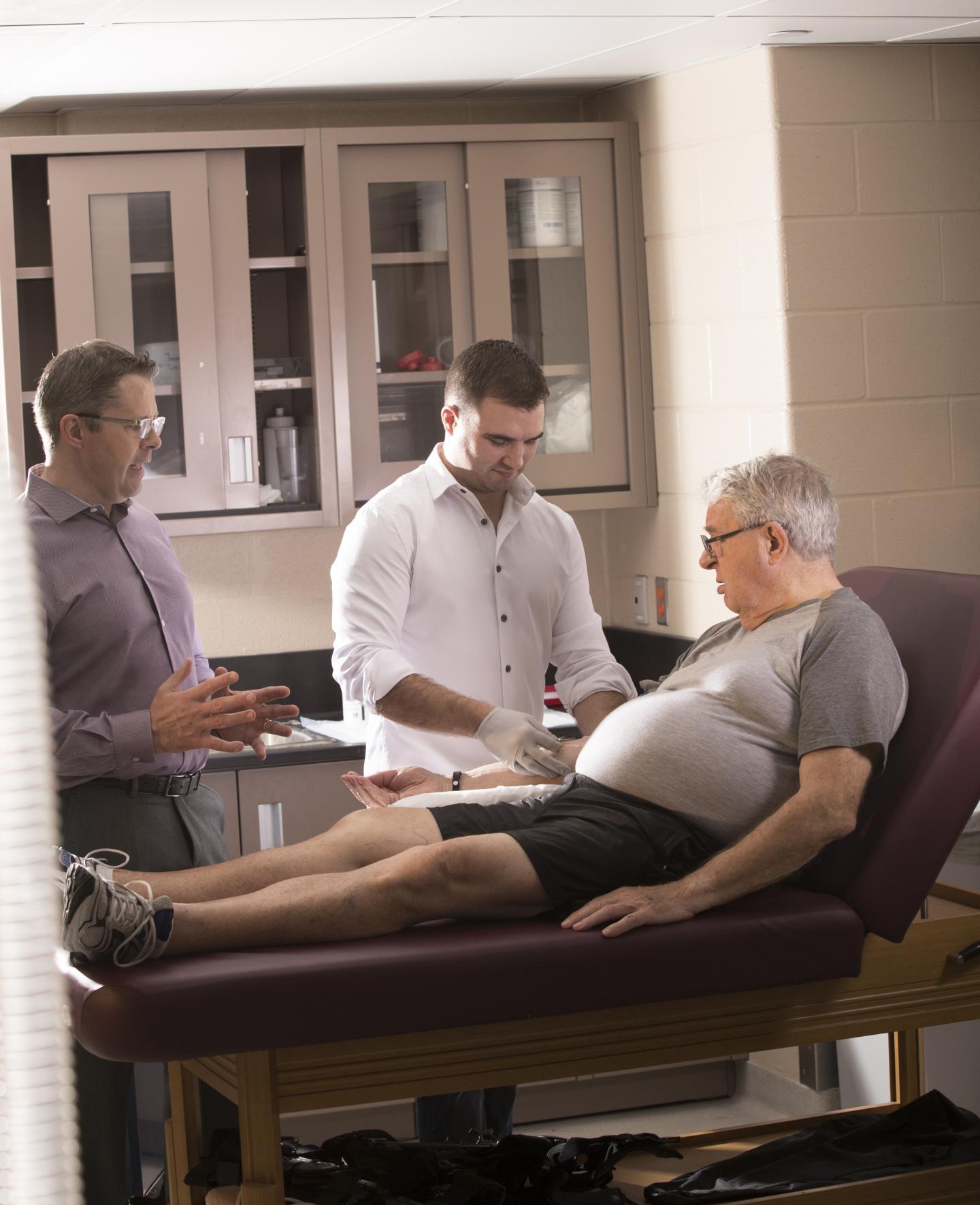
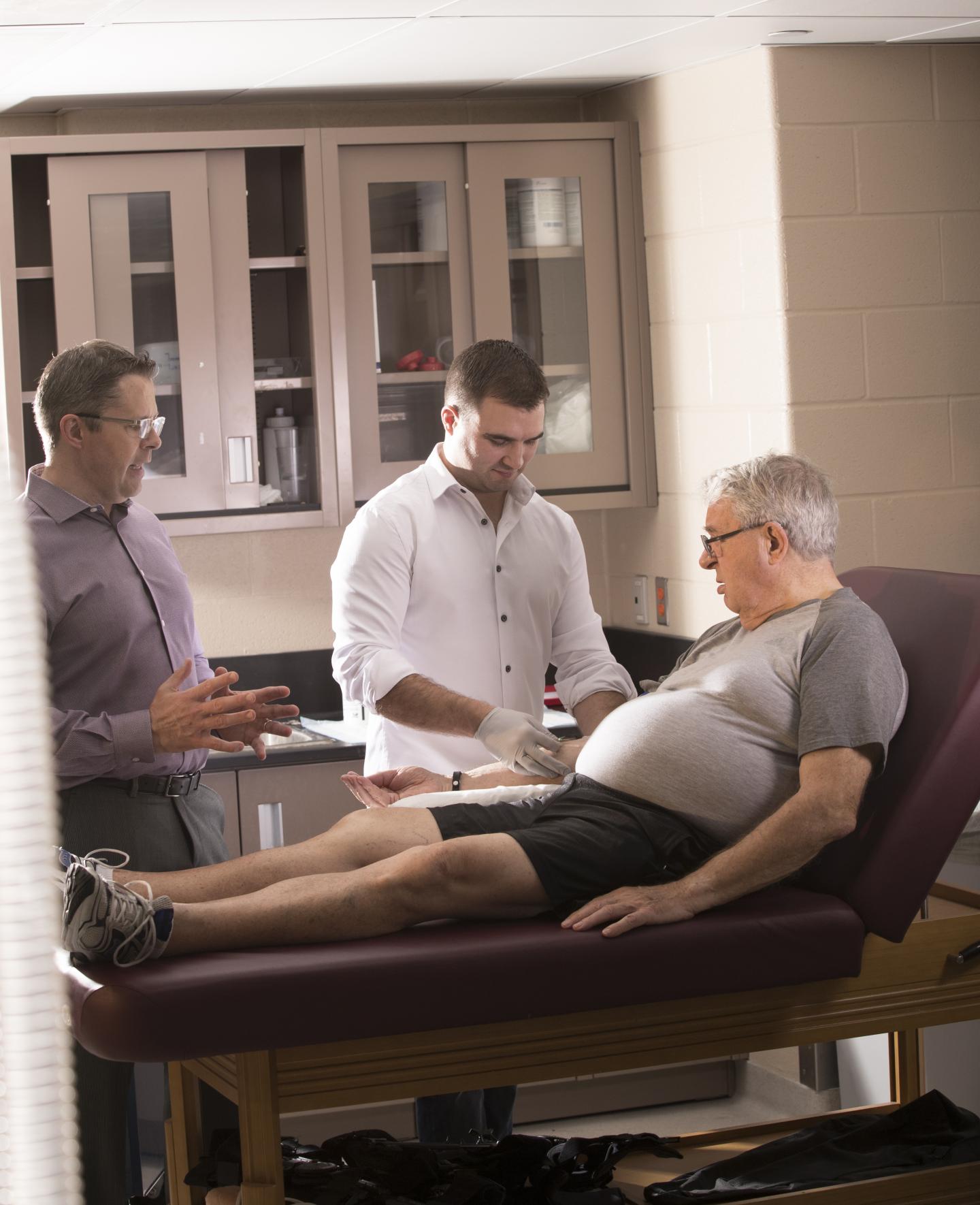
IMAGE

Credit: JD Howell, McMaster University

HAMILTON, ON, July 31, 2018 – Just two weeks without much activity can have a dramatic impact on health from which it is difficult to recover, according to researchers who studied overweight older adults at risk of developing Type 2 diabetes.

Not only did an abrupt, brief period of inactivity hasten the onset of the disease and elevate blood sugar levels among pre-diabetic patients, but researchers reported that some study participants did not fully recover when they returned to normal activity for two weeks.

The findings are published online in The Journals of Gerontology.

"We expected to find that the study participants would become diabetic, but we were surprised to see that they didn't revert back to their healthier state when they returned to normal activity," says Chris McGlory, a Diabetes Canada Research Fellow in the Department of Kinesiology at McMaster University and lead author of the study.

Participants were asked to reduce their daily steps to no more than 1000 steps per day, the equivalent of being housebound due to, for example, illness. Their steps and activity were measured using pedometers and specialized activity monitors, while researchers tested their blood sugar levels and took blood samples during the two-week period.

The results imply that seniors who experience periods of physical inactivity from illness, hospitalization and bed rest, for example, are more likely to suffer harmful consequences to their overall health.

"Treatment of type 2 diabetes is expensive and often complicated," explains Stuart Phillips, the professor in the Department of Kinesiology at McMaster who oversaw the research.

"If people are going to be off their feet for an extended period they need to work actively to recover their ability to handle blood sugar," he says.

According to the most recent statistics from the Centres for Disease Control and Prevention, more than 30 million Americans have diabetes and more than 84 million are prediabetic.

In Canada, Type 2 diabetes is one of the fastest growing diseases, with nearly 60,000 new cases reported each year, according to the Public Health Agency of Canada. It is the sixth leading cause of death and the leading cause of adult blindness and adult amputation.

"In order for pre-diabetic older adults to recover metabolic health and prevent further declines from periods of inactivity, strategies such as active rehabilitation, dietary changes and perhaps medication might be useful," says McGlory.

Research has shown that within days of the onset of ina

ctivity, there are notable reductions in skeletal muscle mass, strength and a rapid onset of insulin resistance, a common feature of type 2 diabetes.

###

The work was funded by the Canadian Diabetes Association.

Attention editors: High resolution photos and a downloadable video are available at: https://adobe.ly/2NI1Mnx. Photo credit: McMaster University

Media Contact

Wade Hemsworth
[email protected]
905-525-9140 x27988
@mcmasteru
Home

Share12Tweet8Share2ShareShareShare2

Related Posts

Uncovering C. elegans Immunity via Genetic Screens — Biology

Uncovering C. elegans Immunity via Genetic Screens

May 16, 2026
Single mother must adapt swiftly — the survival of her colony depends on it — Biology

Single mother must adapt swiftly — the survival of her colony depends on it

May 15, 2026

Why Are Nearly Everyone Right-Handed? It Might Be Linked to How We Learned to Walk

May 15, 2026

Excessive Neuronal Activity Initiates Severe Autoimmune Brain Disorder

May 15, 2026
Please login to join discussion

POPULAR NEWS

  • Research Indicates Potential Connection Between Prenatal Medication Exposure and Elevated Autism Risk

    844 shares
    Share 338 Tweet 211
  • New Study Reveals Plants Can Detect the Sound of Rain

    730 shares
    Share 291 Tweet 182
  • Salmonella Haem Blocks Macrophages, Boosts Infection

    62 shares
    Share 25 Tweet 16
  • Breastmilk Balances E. coli and Beneficial Bacteria in Infant Gut Microbiomes

    58 shares
    Share 23 Tweet 15

About

We bring you the latest biotechnology news from best research centers and universities around the world. Check our website.

Follow us

Recent News

AI Tool in Radiotherapy Advances Global Fight to Eradicate Cervical Cancer

Detecting Illicit Bitcoin Transactions with Temporal Graph Learning

New Study Reveals the Massive Economic Impact of Tuberculosis

Subscribe to Blog via Email

Enter your email address to subscribe to this blog and receive notifications of new posts by email.

Join 82 other subscribers
  • Contact Us

Bioengineer.org © Copyright 2023 All Rights Reserved.

Welcome Back!

Login to your account below

Forgotten Password?

Retrieve your password

Please enter your username or email address to reset your password.

Log In
No Result
View All Result
  • Homepages
    • Home Page 1
    • Home Page 2
  • News
  • National
  • Business
  • Health
  • Lifestyle
  • Science

Bioengineer.org © Copyright 2023 All Rights Reserved.