• HOME
  • NEWS
  • EXPLORE
    • CAREER
      • Companies
      • Jobs
    • EVENTS
    • iGEM
      • News
      • Team
    • PHOTOS
    • VIDEO
    • WIKI
  • BLOG
  • COMMUNITY
    • FACEBOOK
    • INSTAGRAM
    • TWITTER
Thursday, July 2, 2026
BIOENGINEER.ORG
No Result
View All Result
  • Login
  • HOME
  • NEWS
  • EXPLORE
    • CAREER
      • Companies
      • Jobs
        • Lecturer
        • PhD Studentship
        • Postdoc
        • Research Assistant
    • EVENTS
    • iGEM
      • News
      • Team
    • PHOTOS
    • VIDEO
    • WIKI
  • BLOG
  • COMMUNITY
    • FACEBOOK
    • INSTAGRAM
    • TWITTER
  • HOME
  • NEWS
  • EXPLORE
    • CAREER
      • Companies
      • Jobs
        • Lecturer
        • PhD Studentship
        • Postdoc
        • Research Assistant
    • EVENTS
    • iGEM
      • News
      • Team
    • PHOTOS
    • VIDEO
    • WIKI
  • BLOG
  • COMMUNITY
    • FACEBOOK
    • INSTAGRAM
    • TWITTER
No Result
View All Result
Bioengineer.org
No Result
View All Result
Home NEWS Science News Health

Jumping genes help make neurons in a dish

Bioengineer by Bioengineer
March 26, 2020
in Health
Reading Time: 2 mins read
0
IMAGE
Share on FacebookShare on TwitterShare on LinkedinShare on RedditShare on Telegram

IMAGE

Credit: © 2020 Della Valle et al.


The process of making functional brain cells in a lab dish requires the precise activation of selfish genetic elements known as LINE-1 (L1) retrotransposons. The finding, from researchers at KAUST, could lead to safer and more effective regenerative therapies for Parkinson’s disease and other brain conditions.

The genomes of humans, mice and other mammals have hundreds of thousands of L1 elements. Most are inactive, yet some retain the ability to make copies of themselves and jump into different segments of DNA, with impacts on gene regulation that can be both harmful and beneficial. Sometimes, the jumping genes can trigger disease. In early brain development, however, L1 activity is needed for neurons to form properly–although the reason had been unclear.

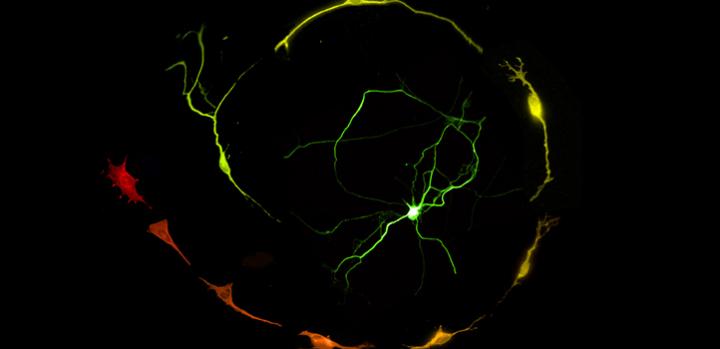
To address this question, Valerio Orlando and colleagues turned to a cellular model of neuronal development. Working with scientists in Italy, they engineered skin cells taken from mouse embryos to express various “reprogramming factors'” that converted them into dopamine-producing neurons, similar to those found in the substantia nigra, a small structure located deep in the brain. In the process, the researchers observed L1 activation.

They treated the cells with two kinds of drugs that block L1 dynamics. Both treatments dramatically impaired the efficiency of cell conversion, demonstrating that “activation is required for successful reprogramming of skin cells into neuronal cells,” according to Francesco Della Valle, a postdoc in Orlando’s lab group, and the first author of the new study.

The researchers then sequenced all the DNA inside the cells, both before and after their conversion, to determine where the L1 elements had newly inserted themselves into the genome. They found insertional hotspots around the genes involved in neuronal lineage commitment and neuron function. Consequently, the DNA at these sites was less densely packaged, allowing for higher levels of relevant gene expression.

“Our work boosts the concept that repetitive elements play an important, unprecedented role in cell differentiation and tissue specific developmental programs,” Della Valle says.

Those insights could prove invaluable as researchers design new kinds of cell therapies to replace the dopamine-producing neurons lost in people with Parkinson’s disease and related disorders. “Aberrant L1 activity could threaten the viability or safety of any such product,” notes Della Valle, “while optimizing L1 function could enhance the manufacturing and consistency of this type of regenerative treatment.”

###

Media Contact
Carolyn Unck
[email protected]

Original Source

https://discovery.kaust.edu.sa/en/article/950/jumping-genes-help-make-neurons-in-a-dish

Related Journal Article

http://dx.doi.org/10.1016/j.stemcr.2019.12.002

Tags: BiologyBiotechnologyCell BiologyDevelopmental/Reproductive BiologyGeneticsneurobiologyParkinson
Share12Tweet8Share2ShareShareShare2

Related Posts

Unlocking the Mysteries of Alzheimer’s Disease

July 2, 2026

Linking Single-Cell Transcriptomes to Mouse Visual Circuits

July 2, 2026

Cross-Stage, Cross-Species Malaria CD8+ T Cell Antigens Identified

July 2, 2026

Food Web Complexity Drives Biodiversity Impact

July 2, 2026
Please login to join discussion

POPULAR NEWS

  • Detection of EDCs in Breast Milk and Infant Urine Up to Six Months Highlights Early Exposure Risks

    77 shares
    Share 31 Tweet 19
  • Saying Goodbye to PGY-6: Pediatric Fellowship Realities

    103 shares
    Share 41 Tweet 26
  • New Drug Candidate Developed at McMaster Shows Potential for Treating Brain Cancer

    58 shares
    Share 23 Tweet 15
  • KTU Researchers Explore Ultrasound’s Role in Enhancing Blood Flow Beyond Diagnostics

    53 shares
    Share 21 Tweet 13

About

BIOENGINEER.ORG

We bring you the latest biotechnology news from best research centers and universities around the world. Check our website.

Follow us

Recent News

Steatosis Drives Liver Metastasis Diversity in CRC

Unlocking the Mysteries of Alzheimer’s Disease

Pensoft Introduces New Peer-Reviewed Journal of Regeneration to Advance Restorative Biology Across Species

Subscribe to Blog via Email

Enter your email address to subscribe to this blog and receive notifications of new posts by email.

Join 83 other subscribers
  • Contact Us

Bioengineer.org © Copyright 2023 All Rights Reserved.

Welcome Back!

Login to your account below

Forgotten Password?

Retrieve your password

Please enter your username or email address to reset your password.

Log In
No Result
View All Result
  • Homepages
    • Home Page 1
    • Home Page 2
  • News
  • National
  • Business
  • Health
  • Lifestyle
  • Science

Bioengineer.org © Copyright 2023 All Rights Reserved.