


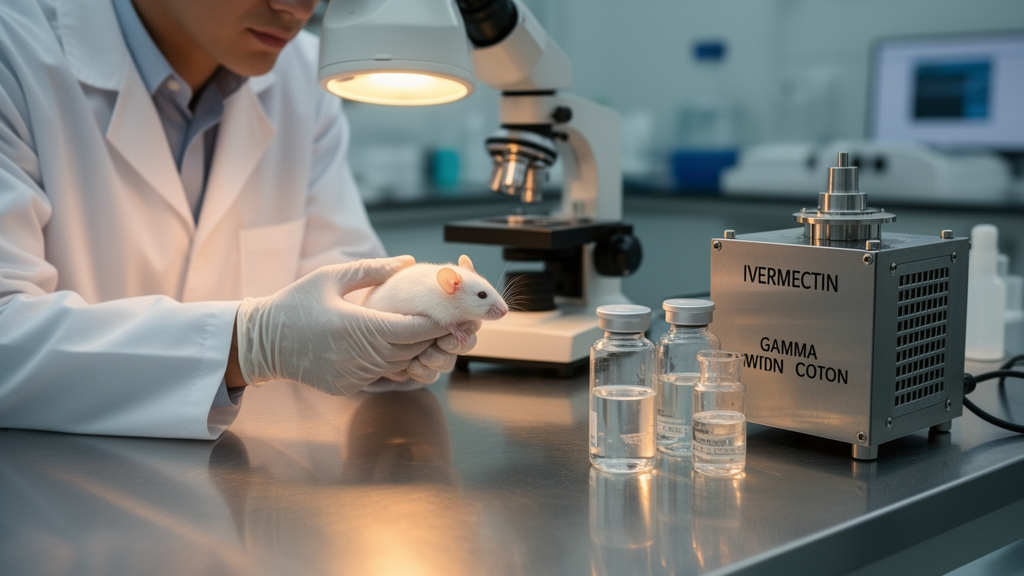
A combination of ivermectin and low-dose gamma-radiation has outperformed either intervention alone in mice infected with the parasitic worm Schistosoma mansoni, according to a controlled experimental study published in the Egyptian Liver Journal. Researchers at Egypt’s National Center for Radiation Research and Technology treated infected laboratory mice with oral ivermectin, whole-body exposure to 0.25 Gy of gamma-radiation, or both, and found that the combined regimen produced the largest reductions in parasite egg burden, liver injury, oxidative stress and inflammatory signaling. The work addresses a pressing need, because schistosomiasis remains a major helminthic infection worldwide and the current mainstay drug, praziquantel, faces rising concerns about resistance.
Schistosoma mansoni is one of the principal parasite species infecting humans and causes hepatointestinal schistosomiasis, a disease characterized by granulomatous inflammation and tissue damage driven by egg deposition in the liver and intestines. During infection, the larval stage known as schistosomula migrates through host tissues to reach the mesenteric vasculature, where the worms mature into adults. The parasites are notable for their ability to modulate the host immune system, often downregulating pro-inflammatory responses. While this immunomodulation helps the parasite survive, it can also contribute to chronic pathology including fibrosis, hepatosplenomegaly and portal hypertension. With praziquantel as the cornerstone of treatment but concerns over potential drug-resistant strains growing, the search for alternative or adjunct strategies has intensified.
Ivermectin is a broad-spectrum antiparasitic agent with well-established efficacy against nematodes and ectoparasites, and emerging evidence suggests possible activity against trematodes, the class of flatworms that includes schistosomes. Recent in vitro studies have demonstrated tegumental disruption in trematodes following ivermectin exposure, hinting at applications against Schistosoma mansoni. In parallel, experimental studies have shown that gamma-irradiation can impair the development and maturation of the parasite, reducing parasite burden, while low-dose gamma-radiation has attracted attention for its modulatory effects on immune responses and inflammation. The Egyptian team set out to evaluate the molecular, immunological and histopathological effects of the two interventions, alone and together, in experimentally infected mice.
The study was an experimental, controlled, laboratory-based investigation using forty male CD-1 albino mice aged six to eight weeks, obtained from the Schistosome Biological Supply Program at Theodor Bilharz Research Institute in Giza. The animals were confirmed free of prior intestinal parasitic infections before the work began. Infection was established by subcutaneous injection of 70 ± 5 newly shed cercariae released from Biomphalaria alexandrina snails carrying the human Egyptian strain of the parasite. Because some mice died during the experiment, the final analysis included thirty mice, randomly allocated into five groups of six: an uninfected control group, an infected untreated group, and three infected treated groups receiving ivermectin, low-dose gamma-radiation, or the combination. Ivermectin tablets were ground and suspended in distilled water and delivered by oral gavage at 25 mg/kg/day over two consecutive days. Radiation came from a Gamma Cell-40 biological irradiator with a cesium-137 source, with mice whole-body exposed to 0.25 Gy twice, one week apart, at a dose rate of 0.363 Gy/min. In the combination group, irradiation followed one hour after ivermectin administration. All animals were sacrificed twenty-four hours after the final radiation dose, six weeks after infection.
The parasitological results showed a clear hierarchy of effect. Untreated infected mice carried markedly high hepatic and intestinal ova counts, reflecting a heavy parasite burden. Ivermectin alone produced a moderate but significant reduction, decreasing hepatic ova by approximately 32.8 percent and intestinal ova by 33.9 percent compared with the infected control group. Low-dose gamma-radiation alone achieved a more pronounced reduction, cutting hepatic ova counts by 65.5 percent and intestinal counts by 62.0 percent. The combined treatment was the most effective of all, reducing ova counts by 81.33 percent in the liver and 72.63 percent in the intestine. Crucially, direct statistical comparison between the treatment groups confirmed that the combined therapy reduced both hepatic and intestinal egg counts significantly more than either ivermectin alone or radiation alone, with P values below 0.05. Oogram analysis, which categorizes eggs by developmental stage, revealed that infection was associated with a predominance of mature ova, while all treated groups showed a shift toward immature and dead ova, a change most pronounced in the combination group.
Biochemical measurements reinforced the pattern. Infected untreated mice showed significantly elevated activity of the liver enzymes aspartate aminotransferase, alanine aminotransferase and alkaline phosphatase, along with elevated hepatic malondialdehyde, a marker of lipid peroxidation, and marked reductions in the antioxidant markers superoxide dismutase and reduced glutathione, indicating hepatic injury and oxidative stress. Ivermectin treatment improved these measures, with the percentage reduction in alanine aminotransferase reaching 40.3 percent, which the authors interpret as a hepatoprotective effect. Gamma-radiation alone produced even greater reductions in liver enzyme activities and malondialdehyde levels, and the combination group showed the lowest enzyme and malondialdehyde values among the treated groups, with near-normal superoxide dismutase and glutathione values. Statistical analysis confirmed that the combined regimen improved aspartate aminotransferase, alanine aminotransferase, alkaline phosphatase and malondialdehyde significantly more than either monotherapy.
The immunological findings followed the same direction. Infected mice displayed significant splenic lymphocytosis, an elevated splenic lymphocyte count, and a markedly suppressed proliferative response when their splenic lymphocytes were stimulated with phytohaemagglutinin in culture. All three treatments attenuated the splenic lymphocytosis, with reductions of 65.2 percent for ivermectin, 67.5 percent for radiation and 71.1 percent for the combination. Lymphocyte proliferation recovered substantially: ivermectin enhanced the phytohaemagglutinin-induced response by 90.4 percent relative to infected mice, radiation alone by 232.8 percent, and the combination by 343.2 percent, the greatest enhancement, suggesting a substantial recovery of T-cell functional responsiveness. The combination group’s proliferative response was also significantly superior to either monotherapy by post-hoc testing. On the cytokine front, hepatic interleukin-18 levels, significantly elevated by infection, fell by 12.6 percent with ivermectin, 16.6 percent with radiation and 28.3 percent with the combination. Interleukin-10 gene expression, downregulated by infection, rose by 11.1, 23.8 and 44.4 percent respectively, while interferon-gamma gene expression, markedly elevated by infection, was reduced by 32.6, 40.9 and 52.7 percent, with the combination again showing the strongest effect.
Histopathology corroborated the biochemical and immunological picture. Liver sections from infected untreated mice showed multiple granulomas composed of central ova surrounded by condensed fibrous laminated layers and inflammatory cells, mainly lymphocytes, macrophages and eosinophils, while ileal sections revealed non-fibrotic granulomas in the mucosa and submucosa and thickening of the lamina muscularis propria. Infected control mice exhibited large hepatic granulomas with a mean diameter of 388.67 ± 70.32 micrometers. Ivermectin treatment reduced granuloma diameter to 263.33 ± 29.08 micrometers, low-dose radiation to 157.5 ± 19.99 micrometers, and the combination to 105.5 ± 15.36 micrometers, the smallest recorded, reflecting substantial suppression of granuloma formation. In the combination group, liver and ileum sections showed few non-fibrotic granulomas with centrally located ova surrounded by inflammatory cells, and the radiation-only group showed small cellular granulomas with no fibrous connective tissue proliferation.
The authors propose that the synergy arises from complementary mechanisms. Ivermectin’s classical targets, glutamate-gated chloride channels, are absent in mammals but essential in invertebrate nerve and muscle cells, where binding increases membrane permeability to chloride ions, paralyzing and killing the parasite. However, these channels are not well characterized in trematodes, so ivermectin may exert limited or alternative antiparasitic effects, potentially involving indirect mechanisms such as modulation of parasite physiology and host responses. Gamma-radiation, meanwhile, has been shown to increase the proportion of nonviable eggs and may stimulate host immunity, and low-dose radiation likely acts by inducing mild oxidative stress that activates protective cellular pathways, including upregulation of antioxidant enzymes and modulation of cytokine profiles. The team suggests the combination integrates these antiparasitic and immunomodulatory pathways, and the authors frame the findings as evidence that ivermectin and low-dose gamma-radiation exhibit promising synergistic effects that could offer a potential adjunct strategy to improve schistosomiasis outcomes and counteract drug resistance.
Important caveats temper the enthusiasm. The study was conducted entirely in a murine model of laboratory CD-1 albino mice, which may not fully recapitulate the complexity of human Schistosoma mansoni infection and the host immune response. The radiation protocols and ivermectin dosages were optimized for this specific experimental setting, and further research is required to determine the most effective and safe dosing regimens for any potential clinical application. Although the treated mice showed significant improvements in immunological, molecular and biochemical markers, the authors note that long-term follow-up studies are needed to evaluate the potential for parasite recrudescence and the durability of the therapeutic effect. For now, the results stand as an early-stage experimental signal: in this mouse model, pairing a common antiparasitic drug with carefully dosed low-dose radiation produced the strongest measured response across parasite burden, liver chemistry, oxidative stress, cytokine balance and tissue pathology, and the field will be watching to see whether the synergy survives translation.
Subject of Research: Testing ivermectin and low-dose gamma-radiation, alone and combined, against Schistosoma mansoni infection in mice
Article Title: Molecular and immunological effects of ivermectin and/or low dose gamma-radiation on Schistosoma Mansoni infected mice
Article References: Saif-Elnasr, M., Bayomi, A. I., & Elmalawany, A. M. (2026). Molecular and immunological effects of ivermectin and/or low dose gamma-radiation on Schistosoma Mansoni infected mice. Egyptian Liver Journal, 16(1), Article 64. https://doi.org/10.1186/s43066-026-00549-w
Image Credits: AI Generated
DOI: 10.1186/s43066-026-00549-w
Keywords: schistosomiasis, Schistosoma mansoni, ivermectin, gamma-radiation, combination therapy, praziquantel resistance, liver injury, oxidative stress, cytokines, granulomas, mouse model, immunomodulation
News Source: Ophelia Keating. (October 30, 2026). Ivermectin Plus Low-Dose Gamma-Radiation Shows Synergy Against Schistosomiasis in Mice. Scienmag.



