• HOME
  • NEWS
  • EXPLORE
    • CAREER
      • Companies
      • Jobs
    • EVENTS
    • iGEM
      • News
      • Team
    • PHOTOS
    • VIDEO
    • WIKI
  • BLOG
  • COMMUNITY
    • FACEBOOK
    • INSTAGRAM
    • TWITTER
Sunday, May 10, 2026
BIOENGINEER.ORG
No Result
View All Result
  • Login
  • HOME
  • NEWS
  • EXPLORE
    • CAREER
      • Companies
      • Jobs
        • Lecturer
        • PhD Studentship
        • Postdoc
        • Research Assistant
    • EVENTS
    • iGEM
      • News
      • Team
    • PHOTOS
    • VIDEO
    • WIKI
  • BLOG
  • COMMUNITY
    • FACEBOOK
    • INSTAGRAM
    • TWITTER
  • HOME
  • NEWS
  • EXPLORE
    • CAREER
      • Companies
      • Jobs
        • Lecturer
        • PhD Studentship
        • Postdoc
        • Research Assistant
    • EVENTS
    • iGEM
      • News
      • Team
    • PHOTOS
    • VIDEO
    • WIKI
  • BLOG
  • COMMUNITY
    • FACEBOOK
    • INSTAGRAM
    • TWITTER
No Result
View All Result
Bioengineer.org
No Result
View All Result
Home NEWS Science News Chemistry

It’s spring already? Physics explains why time flies as we age

Bioengineer by Bioengineer
March 20, 2019
in Chemistry
Reading Time: 2 mins read
0
IMAGE
Share on FacebookShare on TwitterShare on LinkedinShare on RedditShare on Telegram

A slowdown in image processing speeds up our perception of time passing as we age
IMAGE

Credit: Duke University

DURHAM, N.C. — A Duke University researcher has a new explanation for why those endless days of childhood seemed to last so much longer than they do now–physics.

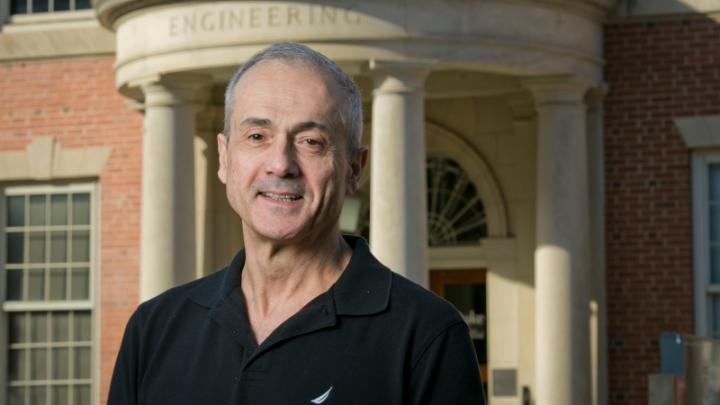
According to Adrian Bejan, the J.A. Jones Professor of Mechanical Engineering at Duke, this apparent temporal discrepancy can be blamed on the ever-slowing speed at which images are obtained and processed by the human brain as the body ages.

The theory was published online on March 18 in the journal European Review.

“People are often amazed at how much they remember from days that seemed to last forever in their youth,” said Bejan. “It’s not that their experiences were much deeper or more meaningful, it’s just that they were being processed in rapid fire.”

Bejan attributes this phenomenon to physical changes in the aging human body. As tangled webs of nerves and neurons mature, they grow in size and complexity, leading to longer paths for signals to traverse. As those paths then begin to age, they also degrade, giving more resistance to the flow of electrical signals.

These phenomena cause the rate at which new mental images are acquired and processed to decrease with age. This is evidenced by how often the eyes of infants move compared to adults, noted Bejan–because infants process images faster than adults, their eyes move more often, acquiring and integrating more information.

The end result is that, because older people are viewing fewer new images in the same amount of actual time, it seems to them as though time is passing more quickly.

“The human mind senses time changing when the perceived images change,” said Bejan. “The present is different from the past because the mental viewing has changed, not because somebody’s clock rings. Days seemed to last longer in your youth because the young mind receives more images during one day than the same mind in old age.”

###

“Why the Days Seem Shorter as We Get Older.” Adrian Bejan. European Review, 2019. DOI: 10.1017/S1062798718000741

Media Contact
Ken Kingery
[email protected]

Original Source

https://pratt.duke.edu/about/news/its-spring-already-physics-explains-why-time-flies-we-age

Related Journal Article

http://dx.doi.org/10.1017/S1062798718000741

Tags: AgingBiologyBiomechanics/BiophysicsChemistry/Physics/Materials SciencesMedicine/HealthneurobiologyNeurochemistry
Share14Tweet8Share2ShareShareShare2

Related Posts

Miniature Sensor Uses Light to Detect Touch — Chemistry

Miniature Sensor Uses Light to Detect Touch

May 8, 2026
Iron Minerals Determine Whether Dissolved Organic Matter Fuels Microbes or Becomes Long-Term Carbon Storage — Chemistry

Iron Minerals Determine Whether Dissolved Organic Matter Fuels Microbes or Becomes Long-Term Carbon Storage

May 8, 2026

Kate Evans Appointed Associate Lab Director for Biological and Environmental Systems Science at ORNL

May 8, 2026

Advancing Multiscale Modeling and Overcoming Operational Challenges in Autothermal COâ‚‚-to-Methanol Reactors

May 8, 2026
Please login to join discussion

POPULAR NEWS

  • Research Indicates Potential Connection Between Prenatal Medication Exposure and Elevated Autism Risk

    840 shares
    Share 336 Tweet 210
  • New Study Reveals Plants Can Detect the Sound of Rain

    727 shares
    Share 290 Tweet 181
  • Scientists Investigate Possible Connection Between COVID-19 and Increased Lung Cancer Risk

    68 shares
    Share 27 Tweet 17
  • Salmonella Haem Blocks Macrophages, Boosts Infection

    61 shares
    Share 24 Tweet 15

About

We bring you the latest biotechnology news from best research centers and universities around the world. Check our website.

Follow us

Recent News

Evaluating Digoxin Use in Patients with Symptomatic Rheumatic Heart Disease

Evaluating the Effectiveness and Safety of Digitalis Glycosides in Treating Heart Failure

Urdu Fall Risk Questionnaire Adapted for Elderly

Subscribe to Blog via Email

Success! An email was just sent to confirm your subscription. Please find the email now and click 'Confirm' to start subscribing.

Join 82 other subscribers
  • Contact Us

Bioengineer.org © Copyright 2023 All Rights Reserved.

Welcome Back!

Login to your account below

Forgotten Password?

Retrieve your password

Please enter your username or email address to reset your password.

Log In
No Result
View All Result
  • Homepages
    • Home Page 1
    • Home Page 2
  • News
  • National
  • Business
  • Health
  • Lifestyle
  • Science

Bioengineer.org © Copyright 2023 All Rights Reserved.