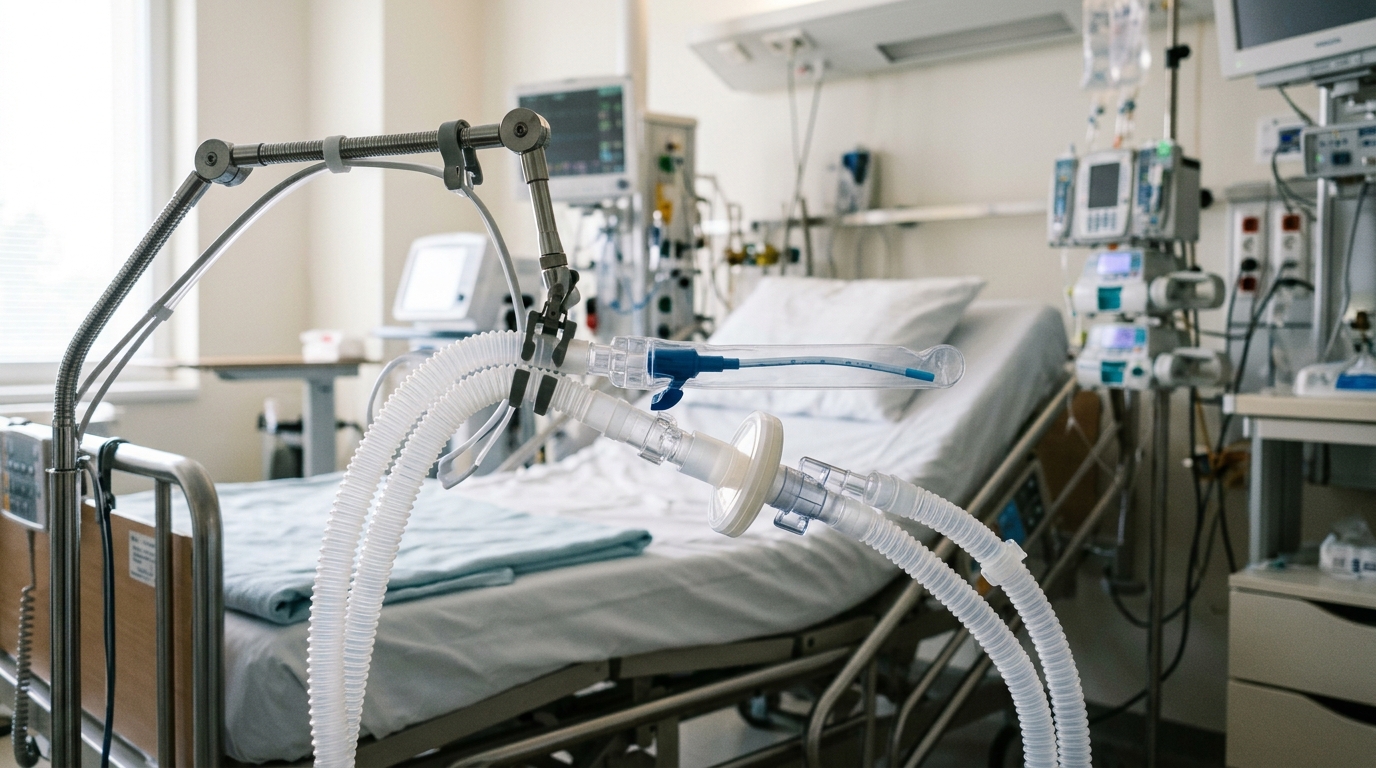
A multidisciplinary expert panel convened by the Italian Society of Anaesthesia, Analgesia, Resuscitation and Intensive Care (SIAARTI) has issued updated pragmatic consensus recommendations evaluating four key clinical strategies designed to reduce ventilator-associated pneumonia among critically ill adults receiving invasive mechanical ventilation. Published in the Journal of Anesthesia, Analgesia and Critical Care, the consensus guidance provides structured clinical direction concerning subglottic secretion drainage, endotracheal cuff pressure monitoring, oral chlorhexidine decontamination, and selective digestive decontamination. Ventilator-associated pneumonia represents one of the most frequent pulmonary infections encountered in intensive care units, developing in approximately 50 percent of critically ill mechanically ventilated patients admitted with lower respiratory tract infections. The condition has repeatedly been linked with increased morbidity, prolonged intensive care unit and hospital lengths of stay, and an elevated risk of patient mortality.
The consensus statement was formulated using formal SIAARTI consensus methodology following an initial determination by the society’s Executive Council that ventilator-associated pneumonia prevention represents an urgent priority across critical care practice. The panel consisted of ten expert members selected for their professional competencies and clinical curriculum vitae, coordinated by an anaesthetist-intensivist with dedicated expertise in clinical research methodology. Rather than utilizing a conventional PICO framework, the panel applied rapid literature review principles combined with a modified Delphi consensus process. Initial items were proposed during a virtual scoping workshop and subsequently rated through blinded online voting using a nine-point ordinal Likert scale. Consensus was predefined as agreement by at least 75 percent of experts within the same interquartile rating range, spanning scores 1 to 3 for disagreement, 4 to 6 for uncertainty, and 7 to 9 for agreement and priority.
Following structured systematic literature searches across PubMed conducted by dedicated search specialists, multidisciplinary subgroups drafted formal statements and supporting rationales for items achieving consensus. Of ten originally evaluated clinical topics, four achieved final consensus support: subglottic secretion clearance, endotracheal tube cuff pressure management, the role of oral chlorhexidine, and selective digestive decontamination. All draft rationales and final recommendations underwent blinded voting, achieving unanimous consensus within the highest tier in the primary voting round. External peer review was subsequently conducted by two independent anaesthesia and critical care experts, whose feedback focused on formal phrasing and refinement prior to final endorsement and publication.
Addressing the physical mechanics of airway management, the panel concluded that the accumulation of oropharyngeal and gastric secretions within the subglottic space—the anatomical region situated between the vocal cords and the cranial margin of the endotracheal tube cuff—serves as a primary pathophysiological mechanism underlying ventilator-associated pneumonia. Even with advanced cuff geometries such as tapered polyurethane designs, microaspiration occurs frequently and can be objectively identified by detecting pepsin and salivary amylase within tracheal aspirates. Consequently, the panel recommends considering endotracheal tubes equipped with dedicated subglottic secretion drainage ports as part of multimodal preventive care, particularly in patients expected to remain mechanically ventilated beyond 48 to 72 hours. Available trial evidence highlights that regular manual suctioning every one to two hours can clear substantial volumes of fluid and significantly reduce pneumonia incidence, though current evidence remains insufficient to mandate automated continuous versus intermittent suction modalities.
Regarding the control of artificial airway seals, the consensus statements affirm that systematic endotracheal cuff pressure monitoring is indicated to mitigate pneumonia risk. The panel recommends maintaining cuff pressure consistently between 20 and 30 cm H₂O. Sustained pressures falling below 20 cm H₂O have been documented to increase the relative risk of developing ventilator-associated pneumonia up to fourfold due to compromised sealing against supraglottic fluid migration. Conversely, excessive cuff inflation introduces hazards of tracheal mucosal ischaemia, potentially predisposing patients to subsequent tracheomalacia or tracheal stenosis. Manual adjustment using a manometer remains the standard reference practice; current evidence does not demonstrate superiority for automated continuous pressure regulation over regular manual checks regarding objective patient endpoints such as ventilator-associated events, mechanical ventilation duration, or overall mortality.
In contrast to widely adopted historical protocols, the SIAARTI panel explicitly advises against the routine administration of chlorhexidine for oral care in mechanically ventilated general intensive care populations. Although chlorhexidine acts as a broad-spectrum antiseptic intended to reduce pathogenic colonization in the oropharynx, clinical trials and systematic meta-analyses have yielded contradictory results. While some evidence indicates lower pneumonia frequency among postoperative cardiac surgery cohorts receiving targeted chlorhexidine oral hygiene, broader analyses outside cardiac settings have failed to show consistent improvements in mechanical ventilation duration or intensive care stay. Furthermore, meta-analytic findings have raised substantial safety concerns, showing a statistically significant association between chlorhexidine oral decontamination and increased mortality in general critically ill cohorts, leading the panel to reserve its consideration strictly to post-cardiac surgery settings.
The consensus document also critically appraised selective digestive decontamination, an infection control strategy combining topical non-absorbable antimicrobial agents applied to the oropharynx and gastrointestinal tract, often accompanied by an initial short course of systemic broad-spectrum antibiotics. Synthesized trial evidence, including meta-analyses encompassing tens of thousands of intensive care patients, indicates that selective digestive decontamination significantly reduces both ventilator-associated pneumonia incidence and overall hospital mortality among patients ventilated longer than 48 hours. However, the documented mortality advantage was primarily restricted to regimens incorporating systemic prophylactic antibiotics alongside enteral compounds. The panel underscored that the overwhelming majority of supporting trials originated in geographic regions characterized by low baseline rates of multidrug-resistant pathogens.
Because clinical trials conducted in European intensive care units with established baseline resistance—such as environments with greater than 5 percent prevalence of extended-spectrum beta-lactamase-producing Enterobacterales—have failed to demonstrate significant reductions in bloodstream infections or mortality, the SIAARTI panel urged caution regarding regional generalizability. In countries with high antimicrobial resistance burdens, such as Italy, the broad implementation of selective digestive decontamination may exert neutral clinical benefits while raising potential concerns regarding long-term alterations of gut microbiota and the selective pressure for drug-resistant pathogens. The authors conclude that effective prevention of ventilator-associated pneumonia requires combining supported physical measures—such as subglottic drainage and strict cuff pressure titration—with careful tailoring of pharmacological and decontamination regimens to local institutional epidemiology and individual patient risk profiles.
From a pathophysiological standpoint, the SIAARTI guideline panel structured its clinical framework around distinguishing modifiable from non-modifiable determinants of pulmonary infection. Non-modifiable factors encompass intrinsic patient frailty, such as chronic comorbidities, and acquired vulnerability from endotracheal intubation, which cannot be eliminated through bedside prevention. In contrast, modifiable mechanisms like microaspiration represent actionable targets to reduce disease burden and optimize intensive care resources. Although international guidelines were issued over a decade ago, evolving epidemiology prompted the SIAARTI Executive Council to prioritize updated recommendations. The consensus process was conducted with complete editorial independence and no pharmaceutical funding, with panel members contributing voluntarily based on their clinical and methodological expertise.
The panel’s modified Delphi methodology incorporated explicit evaluation criteria to refine clinical priorities following an initial virtual scoping workshop. A literature search across PubMed, completed on July 9, 2024, gathered English-language investigations, systematic reviews, and meta-analyses mapped through a PRISMA framework. During collegial reviews, panellists deliberately excluded certain highly scored practices. Notably, an item addressing supportive respiratory care that achieved 100 percent agreement was omitted because its components represent standard care for acute respiratory failure regardless of pneumonia prevention. This deliberate screening ensured the final consensus document focused exclusively on dedicated, debated preventive strategies requiring bedside clinical clarification.
Regarding airway clearance, the panel expanded on device design and safety findings from the literature. Although trials demonstrated that scheduled manual suctioning by nursing staff drained up to 50 milliliters of secretions daily, experimental preclinical models revealed that automated continuous or intermittent suction systems could cause tracheal mucosal injury under excessive negative pressures. The panel also recognized tracheostomy cannulas with subglottic suction lumens as a practical option for protracted airway placement. The consensus authors emphasized that while subglottic suctioning reliably lowers pneumonia rates, major trials have not demonstrated parallel improvements in ventilator-associated events, ventilation duration, intensive care stay, or mortality, reflecting the complexity of isolating pneumonia’s attributable impact in critically ill patients.
In examining cuff pressure management, the evidence review evaluated trials comparing automated continuous regulation against standard manual adjustment. A randomized crossover trial showed continuous monitoring devices did not alter microaspiration frequency compared with periodic manual checks, despite maintaining more stable pressures. Trials comparing manual manometer measurements three times daily against automated systems observed no significant differences in antibiotic use, ventilation duration, ventilator-associated events, or intensive care mortality. When evaluating oral hygiene, the panel reviewed protocols utilizing twice-daily chlorhexidine mouthwash within two hours of tooth brushing. While effective in postoperative cardiac surgery cohorts, an Italian network meta-analysis found chlorhexidine provided no significant differences compared with non-antiseptic oral care regarding pneumonia incidence, ventilation days, intensive care stay, or survival in general intensive care populations.
Finally, the consensus rationales outlined the pharmacological regimen and ecological footprint of selective digestive decontamination. Standard protocols combine topical non-absorbable agents, including colistin, tobramycin, and amphotericin B or nystatin, applied to the oropharynx and digestive tract with short-course systemic third-generation cephalosporins to clear Gram-negative bacteria and suppress secondary yeast overgrowth. While meta-analytic evidence across 32 trials confirmed hospital mortality reductions with combined systemic regimens, regimens limited strictly to non-absorbable enteral antibiotics yielded a neutral relative risk of 1.01. Furthermore, intestinal microbiota analyses show digestive decontamination alters gut microbiome composition, reinforcing that broad implementation in high-resistance critical care settings remains unsupported without further confirmatory safety trials.
Subject of Research: Critical care consensus statements on interventions to prevent ventilator-associated pneumonia
Article Title: Strategies to prevent ventilator-associated pneumonia in critically ill mechanically ventilated patients: a SIAARTI consensus statement
Article References: De Pascale, G., Cortegiani, A., Busani, S., Corona, A., Carsetti, A., Catalisano, G., Cutuli, S. L., Forfori, F., Girardis, M., Maugeri, J. G., Pasero, D., Tescione, M., Viaggi, B., Vaschetto, R., Volta, C. A., & Antonelli, M. (2026). Strategies to prevent ventilator-associated pneumonia in critically ill mechanically ventilated patients: a SIAARTI consensus statement. Journal of Anesthesia, Analgesia and Critical Care, 6(1), Article 121. https://doi.org/10.1186/s44158-026-00432-5
Image Credits: AI Generated
DOI: 10.1186/s44158-026-00432-5
Keywords: ventilator-associated pneumonia, intensive care unit, mechanical ventilation, SIAARTI, consensus statement, subglottic secretion drainage, cuff pressure control, chlorhexidine, selective digestive decontamination, antimicrobial resistance, endotracheal tube, microaspiration, critical care medicine, infection prevention, airway management, hospital mortality
News Source: Kristina Jarvis. (November 20, 2026). Italian Critical Care Panel Issues Updated Consensus Guidelines for Preventing Ventilator Pneumonia. Scienmag.