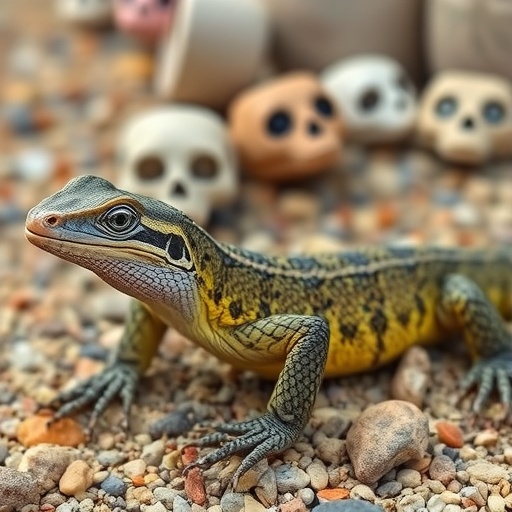
Island-Restricted Reptiles Face Accelerated Extinction Risk Amid Neglected Scientific Inquiry
Despite constituting less than 7% of the Earth’s surface, islands serve as critical reservoirs of global biodiversity. Among their unique inhabitants, reptiles occupy a pivotal ecological niche, contributing profoundly to the functioning and evolutionary distinctiveness of these isolated ecosystems. However, new evidence from a comprehensive global assessment led by the University of Oxford reveals a striking paradox: reptiles confined to islands are disproportionately threatened by extinction yet remain markedly understudied compared to their mainland relatives. This neglected status urgently calls for a reassessment of scientific priorities and conservation strategies.
Islands act as natural evolutionary crucibles, fostering speciation through geographic isolation and distinct environmental pressures. Approximately one-third of the world’s 12,000 known reptile species are endemic to islands, including emblematic taxa such as the Galápagos giant tortoise and the Komodo dragon. These reptiles have evolved unique adaptations, contributing not only to island biodiversity but also to broader ecological processes, including pollination, seed dispersal, and trophic regulation. Paradoxically, their very isolation that underpins their evolutionary novelty also renders them exceedingly vulnerable to anthropogenic perturbations and introduced species.
The study, published in Conservation Science and Practice, quantitatively demonstrates that 30% of island reptile species are threatened with extinction — a figure more than double the global average for reptiles at 12.1%. This heightened vulnerability is attributed to several factors: small geographic ranges, specialized habitat requirements, and an evolutionary history devoid of exposure to mammalian predators, which leaves them defenseless against invasive species such as feral cats and rats. Moreover, habitat degradation through logging, agricultural expansion, and pollution compounds these threats, creating an ecological bottleneck for island reptile persistence.
Despite these alarming extinction risks, island reptiles have been drastically underrepresented in scientific research. Analysis of over six decades of published literature reveals that a mere 6.7% of reptile-focused studies have prioritized island-dwelling species. This research disparity is particularly pronounced for smaller-bodied, recently described, or high-elevation species which remain effectively invisible to the scientific community. The attention predominantly favors larger, more widespread reptiles, creating significant knowledge gaps that impede effective conservation planning.
Ricardo Rocha, Associate Professor in Conservation Science at the University of Oxford and senior author of the study, underscores the keystone role of reptiles in island ecosystems. Citing his native Madeira Island as a case study, Rocha explains how endemic wall lizards perform essential ecological services such as insect predation and plant pollination. Their decline could disproportionately disrupt island ecological networks, triggering cascading effects that compromise ecosystem integrity and services vital to both biodiversity and human well-being.
The evolutionary naivety of island reptiles further exacerbates their plight. Lacking appropriate anti-predator behaviors honed through millennia, these species are easy prey for invasive predators. Rocha emphasizes the lethal impact of free-ranging domestic cats on island lizard populations, citing research that a single cat on Madeira Island can kill over 90 lizards annually. Such predation pressure is emblematic of the fragility and imbalance introduced by non-native species, highlighting the complexity of managing these vulnerable ecosystems.
The researchers also analyzed the socio-economic and geographical context influencing research focus. Islands in wealthier nations often emphasize tourism development, diverting funds away from biodiversity science. Additionally, logistical challenges in accessing remote islands further deter scientific efforts, while global biases favor charismatic or medically relevant reptiles, sidelining lesser-known island endemics. This confluence of factors perpetuates a significant research funding and attention gap, jeopardizing the preservation of island reptile diversity.
Addressing these challenges requires a multipronged approach emphasizing targeted research investment on understudied, high-risk island reptiles. The study advocates for equitable collaborations involving local institutions and communities to build capacity for sustained conservation science. Furthermore, integrating diverse data sources beyond peer-reviewed publications — including governmental and non-governmental reports — alongside multilingual studies could broaden understanding and inform more inclusive conservation frameworks.
Island reptiles exemplify evolutionary marvels with immense ecological and scientific value. The Caribbean’s Anolis lizards showcase spectacular adaptive radiations, while Madagascar harbors over 450 endemic reptile species, representing a significant fraction of global reptilian diversity with substantial numbers faced with extinction risks. Despite this, regions such as the Indo-Malayan archipelago remain understudied despite their high reptile endemism, underscoring critical knowledge gaps and priority areas for future research and conservation efforts.
As the global biodiversity crisis deepens, the imperative to safeguard island reptiles intensifies. These species provide invaluable insights into evolutionary biology and ecosystem dynamics while sustaining island environmental health. Rocha’s evocative remark about Komodo Island poignantly captures the stakes: losing these unique reptiles would irrevocably diminish not only biodiversity but also the cultural and natural heritage intrinsic to island landscapes.
This synthesis of global data and ecological understanding presents a clarion call to conservationists, funding agencies, and researchers. Prioritizing island reptiles for comprehensive studies and protection stands as a necessary frontier in biodiversity conservation. Without impactful intervention, we risk losing evolutionary treasures before their biology, behavior, and ecological roles are fully understood or appreciated.
Collaborative, interdisciplinary, and culturally attuned scientific initiatives can bridge existing knowledge gaps and enhance conservation efficacy. By embracing innovative strategies and inclusive partnerships, the scientific community can better document island reptile diversity and dynamics, enabling proactive rather than reactive measures. This forward-looking paradigm is essential to reverse current trends and preserve the irreplaceable natural heritage of island ecosystems for future generations.
Subject of Research: Conservation status and research disparity of island-restricted reptile species
Article Title: Island-restricted reptiles are more threatened but less studied than their mainland counterparts
News Publication Date: 6 November 2025
Web References:
– https://www.biology.ox.ac.uk/people/ricardo-rocha
– http://dx.doi.org/10.1111/csp2.70184
References:
– Rocha, R., Nunes, S., et al. (2025). Island-restricted reptiles are more threatened but less studied than their mainland counterparts. Conservation Science and Practice. DOI: 10.1111/csp2.70184
Image Credits: Patricia Guedes / Ricardo Rocha
Keywords: Island reptiles, extinction risk, biodiversity conservation, research bias, invasive species, endemism, evolutionary biology, habitat fragmentation, ecological vulnerability, conservation science, island ecosystems, reptile ecology
Tags: anthropogenic threats to reptilesbiodiversity conservation strategiesconservation priorities for reptilesecological roles of reptilesendemic reptile speciesevolutionary adaptations of island reptilesGalápagos giant tortoise conservationgeographic isolation and speciationisland reptiles extinction riskKomodo dragon habitat protectionneglected island biodiversity researchscientific inquiry on reptiles