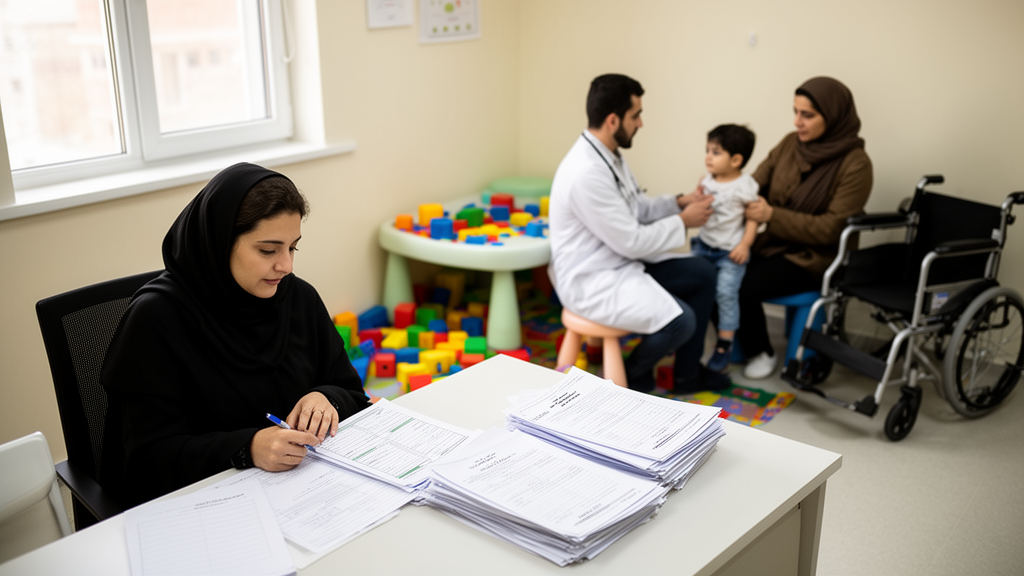
Interviews with 14 practitioners also found that they perceived poorer coordination and service quality than under an earlier liaison-based model, although the qualitative study did not objectively quantify this retrospective assessment. The research examined Iran’s Comprehensive Child Development Center programme in Tabriz, focusing on its first decade of implementation from 2011 to 2022, when it operated as a pilot across selected provinces. Iran’s Ministry of Health established the centers at selected universities in 2014 to promote early-childhood development screening, referral and intervention services.
The study therefore represents a provider-level assessment of service implementation, not a test of whether the programme improved developmental outcomes among children. Researchers used an exploratory qualitative design with a phenomenological framework and purposive sampling. The 14 participants comprised seven service providers from primary healthcare centers and seven from the specialized Child Development Unit at Mardani Azar Hospital.
They included general practitioners, health workers, and specialists in pediatrics, psychology, audiology, speech therapy, occupational therapy, physiotherapy and nutrition. Eleven participants, or 78.6% of the sample, were women. Individual semi-structured interviews lasted up to one hour and took place between February and April 2026.
Twelve sessions were conducted in person and two by telephone. Recordings were transcribed using automated tools and then manually verified. The researchers analyzed the transcripts through six stages of framework-guided content analysis and reported the study according to the 32-item COREQ checklist.
Trustworthiness measures included member checking, peer debriefing, dual coding and an audit trail. Five overarching themes characterized the barriers reported by participants: systemic referral and communication failures; organizational and structural deficits; financial and economic barriers; parental and cultural factors; and service-quality and workforce challenges. These categories describe issues perceived by the people delivering the services.
They do not establish the frequency or magnitude of each barrier, and the study did not compare child or family outcomes between the centers and a control group. Participants also identified several facilitators: the previous liaison arrangement, multidisciplinary staffing secured through an academic contract, availability of Bayley testing, provider commitment, and collaboration between the university and the deputy’s office. Their comparison with the earlier model led them to perceive a regression in service quality and coordination.
This conclusion is based on retrospective professional accounts rather than a measured longitudinal comparison, and the supplied findings do not establish the cause of the perceived deterioration. The authors concluded that technology alone was insufficient without corresponding attention to organizational structure, communication infrastructure and financial accessibility. In other words, the study’s results do not support treating access to technical resources as a complete solution to the operational problems described by providers.
The interviews instead emphasize the institutional connections and practical arrangements needed for screening, referral and intervention to operate as an integrated service. The paper identifies several priorities for policy and practice: re-establishing liaison systems, expanding insurance coverage for developmental services, developing culturally adapted screening tools, formalizing the centers’ organizational status, and implementing public-awareness campaigns. These are proposed responses to the implementation problems documented in the study, not interventions that the researchers tested or demonstrated to be effective.
The study also frames the findings as a potentially transferable framework for restructuring early-childhood development services within Iran’s healthcare system. Important limitations constrain the conclusions. The study included only 14 purposively selected providers in Tabriz, so it cannot represent all service professionals, families or Iranian provinces.
Its retrospective perceptions of the earlier model were not validated through a formal quantitative comparison, and the small sample was drawn from only two types of service settings. The findings offer a detailed qualitative account of barriers and facilitators reported during a decade of programme implementation, but they do not demonstrate effects on children’s development, service coverage, clinical outcomes or programme effectiveness.
Subject of Research: Provider-reported barriers and facilitators in northwest Iran’s Comprehensive Child Development Center programme
Article Title: A decade of implementing comprehensive child development services in Northwest Iran: a qualitative study of provider perspectives on barriers and facilitators
Article References: Amir-Behghadami, M., Tabrizi, J. S., & Heidarabadi, S. (2026). A decade of implementing comprehensive child development services in Northwest Iran: a qualitative study of provider perspectives on barriers and facilitators. BMC Public Health. https://doi.org/10.1186/s12889-026-29764-1
Image Credits: AI Generated
DOI: 10.1186/s12889-026-29764-1
Keywords: early childhood development, integrated health services, child screening, referral systems, developmental assessment, service coordination, healthcare funding, qualitative research, Iran, implementation science, decade, implementing
News Source: Harold Sullivan. (October 26, 2026). Iranian child-development providers report referral, funding and coordination barriers. Scienmag.