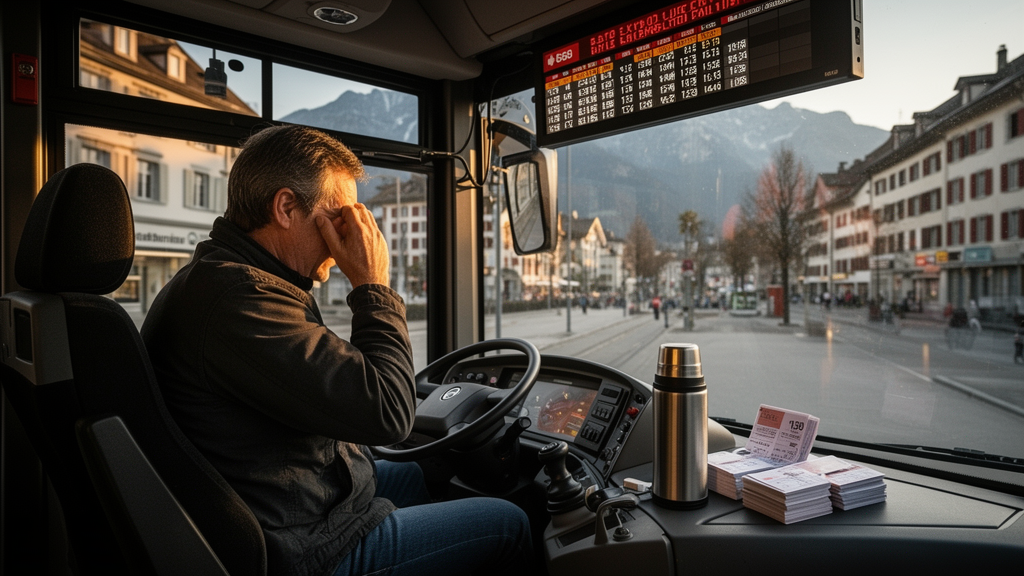
A cross-sectional analysis of 424 Swiss bus drivers found that 17.2% were categorized as being at risk of occupational burnout and 15.3% as being at high risk using the 12-item Burnout Assessment Tool (BAT-12). Higher burnout scores were associated with work-related effort–reward imbalance, daily fear of accidents, internal organizational hostility, frequent aggression from passengers, urban driving and workdays longer than 10 hours. Better-equipped break areas were associated with lower burnout scores. The results identify working conditions correlated with burnout in this group of drivers, but the study did not establish that any of these conditions caused the outcome.
The findings were drawn from the baseline questionnaires of the Swiss Transport Personnel Health Cohort, known as TRAPHEAC. All 424 participating bus drivers completed the relevant questionnaires between June and October 2024. Their mean age was 49.5 years, and 16.1% were women. Researchers measured work stress with the Effort–Reward Imbalance (ERI) model and evaluated 15 working conditions as potential predictors of burnout. Statistical analyses used multilevel linear regression models, with transport company represented as a random intercept. The models accounted for age, sex and interaction terms, while model performance and explanatory power were assessed using the Akaike Information Criterion and marginal R².
Drivers’ mean ERI score was 1.25, with a standard deviation of 0.58, indicating greater effort than reward. ERI showed a significant dose–response association with burnout: each one-unit increase in ERI was associated with an estimated 0.37-point increase in the burnout score, with a 95% confidence interval of 0.31 to 0.42. The estimated association was larger among men, at β = 0.47, than among women, at β = 0.31. Analyses stratified by career duration suggested greater vulnerability among drivers with three or fewer years of experience than among those with longer careers, although this subgroup result was described as suggestive rather than definitive.
In the multivariable models, daily fear of accident was associated with an estimated 0.63-point increase in burnout score, while internal organizational hostility was associated with an increase of 0.30 points. Frequent aggression from passengers and urban driving were also significant predictors. Each weekly workday lasting more than 10 hours was associated with an estimated 0.08-point increase in burnout score. In contrast, amenities in break areas were associated with lower burnout scores, making them the protective factor identified in the analysis. The authors concluded that efforts to reduce long workdays, mitigate passenger aggression, improve the organizational climate and enhance break facilities should be priorities. They also called for regulatory measures that limit excessive hours and support safer, more respectful working environments, which the authors linked to safeguarding drivers’ mental health and the sustainability of public transport services. As a cross-sectional study based on one baseline questionnaire round, the research cannot determine whether working conditions preceded burnout, whether burnout affected reported conditions, or whether changes to any single factor would reduce burnout scores over time.
Subject of Research: Occupational burnout and associated working conditions among Swiss bus drivers
Article Title: Predictors of occupational burnout in Swiss bus drivers: results from the TRAPHEAC study
Article References: Guseva Canu, I., Soumillion, M., & Remy, V. F. M. (2026). Predictors of occupational burnout in Swiss bus drivers: results from the TRAPHEAC study. BMC Public Health. https://doi.org/10.1186/s12889-026-29784-x
Image Credits: AI Generated
DOI: 10.1186/s12889-026-29784-x
Keywords: occupational burnout, bus drivers, TRAPHEAC cohort, work stress, effort–reward imbalance, passenger aggression, workplace hostility, long workdays, accident fear, public transport, Predictors, occupational
News Source: Ophelia Keating. (October 26, 2026). Cross-sectional study links Swiss bus driver burnout to demanding working conditions. Scienmag.