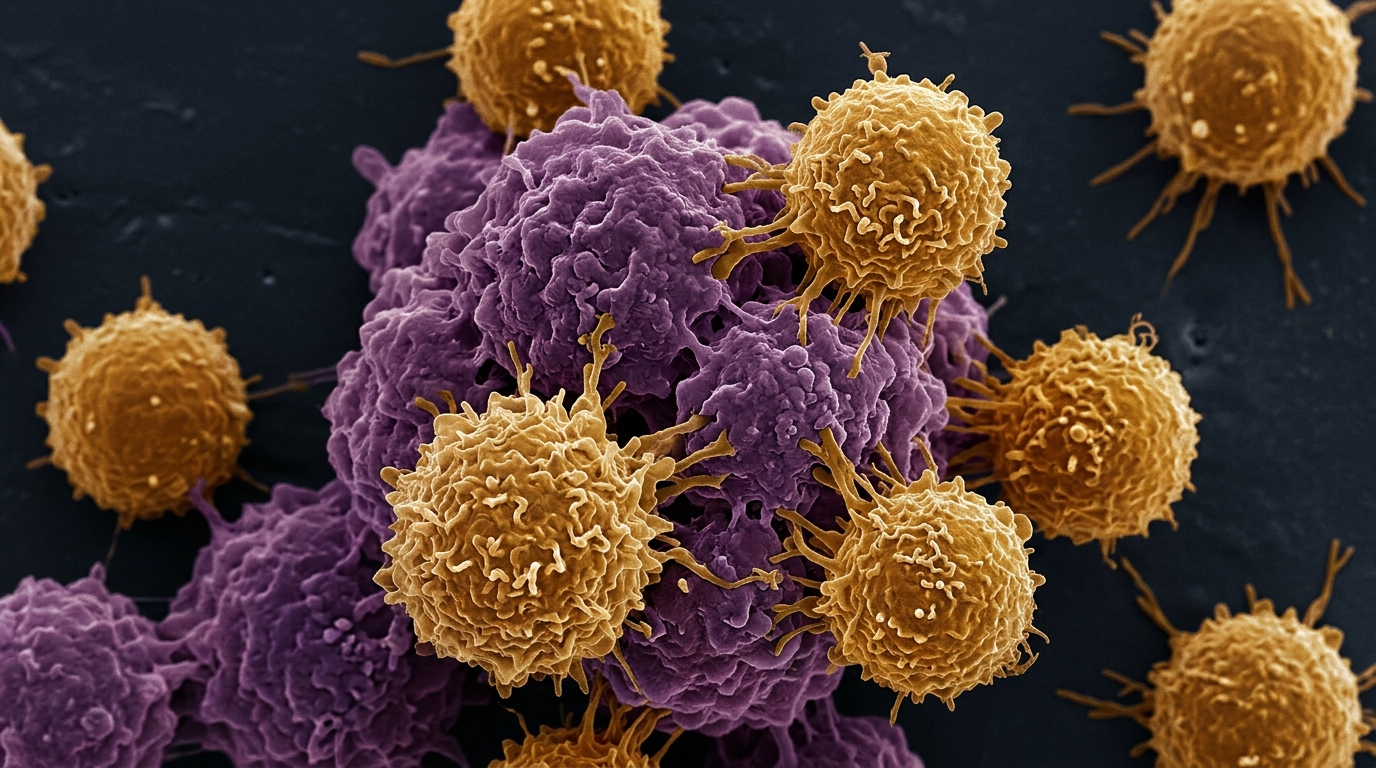
In preclinical models of solid tumors, intraperitoneal administration of chimeric antigen receptor (CAR)-T cells achieved superior antitumor efficacy compared to standard intravenous delivery, according to findings published in BMC Cancer. Alongside enhanced tumor control, regional intraperitoneal delivery resulted in increased CAR-T cell persistence within both the systemic circulation and tumor tissue.
While chimeric antigen receptor (CAR)-T cell therapy has achieved remarkable clinical success against hematological malignancies, translating these benefits to solid tumors has remained a major challenge in immunotherapy. Although intravenous (i.v.) infusion currently serves as the standard clinical administration route, its therapeutic effectiveness against solid tumors may be fundamentally limited by delivery barriers.
To address these delivery hurdles, the study evaluated alternative administration strategies in solid tumor models, directly comparing intraperitoneal (i.p.) and peritumoral (p.t.) injections against conventional intravenous (i.v.) administration. The investigators systematically assessed multiple parameters of therapeutic performance, focusing on CAR-T cell persistence across the circulation and tumor tissue, local infiltration into tumor lesions, the expression profiles of exhaustion-associated surface receptors, and in vivo cellular trafficking dynamics across the course of treatment.
The research team utilized several complementary analytical techniques to evaluate these administration routes in solid tumor models. In addition, the researchers employed noninvasive positron emission tomography-computed tomography (PET-CT) imaging with ⁸⁹Zr-oxine-labeled CAR-T cells to track the early in vivo migration and biodistribution of the infused immune cells over time.
In vivo tracking through PET-CT imaging revealed that intraperitoneal infusion generated early tumor-associated radioactivity within the first 48 hours that was comparable to the radioactivity observed following intravenous infusion. However, endpoint evaluations utilizing flow cytometry demonstrated clear advantages for regional administration.
The investigation also assessed combination therapy by pairing intraperitoneally delivered CAR-T cells with the anti-angiogenic agent anlotinib. This combined therapeutic regimen enhanced overall tumor control in solid tumor models without impairing the infiltration capacity of the infused CAR-T cells, even though anlotinib treatment led to reduced vascular density in the tumor tissue. Based on these observed outcomes, the authors propose intraperitoneal infusion as an optimized delivery route for CAR-T cell therapy in solid tumors and support combining regional delivery with anti-angiogenic treatment to improve therapeutic outcomes.
Subject of Research: CAR-T cell delivery routes in solid tumor models
Article Title: Optimizing infusion methods to enhance the efficacy of CAR-T cell therapy for solid tumors
Article References: Xue, Y., Hu, C., Liang, Y., Shen, W., Meng, P., Li, S., Lin, K., Liu, Y., Xu, J., Cheng, Q., Liu, Z., Zhang, Q., & Sun, S. (2026). Optimizing infusion methods to enhance the efficacy of CAR-T cell therapy for solid tumors. BMC Cancer. https://doi.org/10.1186/s12885-026-17301-7
Image Credits: AI Generated
DOI: 10.1186/s12885-026-17301-7
Keywords: CAR-T cell therapy, solid tumors, intraperitoneal infusion, intravenous administration, cellular immunotherapy, anlotinib, tumor infiltration, flow cytometry, Optimizing, infusion, methods, enhance
News Source: Nathaniel Bowman. (November 6, 2026). Intraperitoneal Infusion Improves CAR-T Cell Therapy in Solid Tumor Models. Scienmag.