Surgical preservation of the delicate neurovascular bundles during robot-assisted radical prostatectomy significantly enhances postoperative urinary continence and functional nerve recovery when executed at the closest anatomical dissection plane to the prostatic capsule, according to a clinical investigation conducted by urological surgeons at Akita University Graduate School of Medicine and published in the Annals of Surgical Oncology. The retrospective cohort study evaluated functional outcomes across six hundred consecutive patients treated for localized and locally advanced prostate cancer between December 2012 and September 2023. By categorizing surgical planes according to an established four-layer anatomical model ranging from intrafascial preservation to complete extrafascial resection, the investigative team demonstrated that patients receiving intrafascial dissection on at least one side achieved markedly superior urinary continence rates at three, six, and twelve months postoperatively compared to individuals undergoing wider surgical resections. The clinical observations were further corroborated by physiological and objective functional measurements, which showed that closer dissection planes preserved significantly higher intraoperative electrical responsiveness in penile cavernous nerves and resulted in greater postoperative bladder voiding volumes.
Radical prostatectomy remains a cornerstone of curative intervention for localized prostate malignancies, yet postoperative urinary incontinence and erectile dysfunction represent substantial concerns that adversely affect postoperative quality of life. Nevertheless, the definitive clinical influence of specific microscopic dissection depths across the prostatic fascia has remained an area of ongoing debate within oncological surgery. Conventional classifications historically categorized surgical interventions broadly into bilateral, unilateral, or non-nerve-sparing procedures, frequently overlooking the nuanced depth of the surgical planes along the lateral pelvic fascia. To address this clinical uncertainty, the research team sought to clarify the independent prognostic value of dissection depth by evaluating patient-reported recovery metrics, standardized pad usage criteria, catheter-based urodynamic testing, and direct intraoperative cavernous nerve stimulation across defined surgical grades within a single academic medical center.
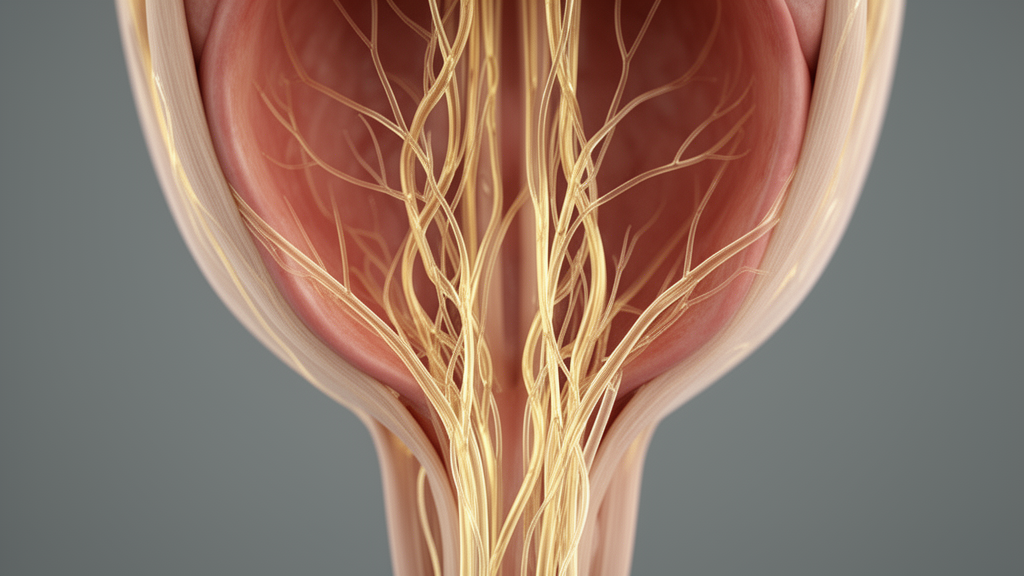
The study protocol classified nerve preservation using a four-layer dissection paradigm established in urological literature, designating grade one as intrafascial dissection performed strictly between the periprostatic veins and the prostatic pseudocapsule. Grade two was defined as interfascial dissection performed along the perivenous plane, while grade three denoted interfascial dissection directed through the outer compartment of the lateral prostatic fascia, and grade four corresponded to complete extrafascial resection where the neurovascular bundle is widely excised. Dissection depth was determined intraoperatively by the operating surgeon and recorded within formal operative notes, with unrecorded historic cases retrospectively re-evaluated through surgical video review by two independent investigators. To account for bilateral surgical variability, investigators designated the maximum nerve-sparing grade as the highest preservation score achieved on either lateral side of the prostate gland. In addition, an aggregate nerve-sparing sum was calculated across both sides on an ordinal scale assigning three points to grade one, two points to grade two, one point to grade three, and zero points to grade four, yielding a cumulative score between zero and six.
Among an initial consecutive cohort of six hundred fifty-six patients undergoing robotic prostatectomy, fifty-six individuals were excluded from the final analysis due to follow-up intervals shorter than eleven months or concurrent participation in other clinical trials, leaving a robust study population of six hundred men. Across the analyzed cohort, procedures were executed by eighteen urologists, reflecting institutional surgical variability over more than a decade. The baseline patient population presented with a median age of sixty-seven years, an interquartile range of sixty-four to seventy-one years, a median preoperative prostate-specific antigen level of 6.74 nanograms per milliliter, and a median body mass index of 24.2 kilograms per square meter. Clinical tumor staging showed that 48.6 percent of patients were staged as clinical T1 disease and 47.9 percent as clinical T2 disease. Neoadjuvant therapy was administered to 18.5 percent of the cohort, while zero patients received adjuvant oncological treatments during the recorded monitoring interval. The overall surgical series yielded a positive resection margin rate of 11.5 percent and an extracapsular extension rate of 10.8 percent across a median observation period of twenty-nine months.
Nerve-sparing maneuvers were actively performed in 242 patients, representing 40.3 percent of the entire cohort, with unilateral nerve preservation executed in 173 patients and bilateral nerve preservation achieved in 69 individuals. When grouped by the highest grade achieved on either side, maximum nerve-sparing grade one was documented in 86 patients, grade two in 129 patients, and grade three in 27 patients, while the remaining 358 patients underwent bilateral extrafascial dissection. Baseline demographic and oncological characteristics remained balanced across the surgical groups, showing no statistically significant discrepancies in pathological grade groups, extracapsular extension rates, or positive surgical margins between patients receiving intrafascial grade one preservation and those undergoing grades two through four. Furthermore, longitudinal surveillance demonstrated that serum prostate-specific antigen concentrations measured at three, six, and twelve months postoperatively were statistically comparable between grade one recipients and patients managed with less preserving dissection planes, confirming that intrafascial preservation did not compromise intermediate biochemical disease control within this carefully selected surgical population.
Urinary continence recovery, clinically defined as requiring zero pads or at most a single security pad per day, differed substantially when stratified by the depth of surgical dissection. Patients who achieved maximum nerve-sparing grade one demonstrated a continence rate of 45.8 percent at three months, 70.6 percent at six months, and 76.2 percent at twelve months postoperatively. In contrast, patients managed with maximum nerve-sparing grades two through four exhibited significantly lower continence rates of 29.2 percent at three months, 48.5 percent at six months, and 62.0 percent at twelve months, yielding statistically significant advantages for the intrafascial cohort across all three follow-up intervals. When examining the cumulative nerve-sparing score, individuals with an aggregate score of three or greater likewise demonstrated superior continence rates of 41.7 percent at three months, 68.2 percent at six months, and 75.2 percent at twelve months, compared to 29.3 percent, 48.2 percent, and 61.6 percent among patients with scores below three. These findings indicate that achieving intrafascial preservation on a single side provides meaningful functional advantages even when oncological margins mandate wider resection contralaterally.
To isolate the independent predictors of postoperative continence recovery, investigators performed univariate and multivariable logistic regression analyses modeling clinical and surgical variables against the presence of urinary incontinence at three and six months. In the univariate analysis at three months, patient age of seventy years or older, operative durations exceeding 232 minutes, estimated blood loss of 108 milliliters or more, maximum nerve-sparing grades two through four, and cumulative nerve scores below three were significantly associated with urinary incontinence. In the multivariable model, age of seventy years or older yielded an odds ratio of 1.80 with a 95 percent confidence interval of 1.19 to 2.73, estimated blood loss of 108 milliliters or greater produced an odds ratio of 1.60 with a 95 percent confidence interval of 1.09 to 2.35, and surgical preservation outside grade one produced an odds ratio of 2.62 with a 95 percent confidence interval of 1.46 to 4.69. By six months, multivariable analysis revealed that only non-intrafascial preservation remained an independent predictor of persistent incontinence, with grades two through four carrying an odds ratio of 2.61 and a 95 percent confidence interval of 1.47 to 4.64.
Standardized pad weighing assessments and instrumental urodynamic evaluations provided complementary objective evidence regarding pelvic floor and lower urinary tract function. In a subset analysis of fifty-six patients who underwent formal cystometry alongside one-hour pad tests, the incidence of severe urinary incontinence at six months was 9.1 percent among grade one patients compared to 24.4 percent in grades two through four. At twelve months, severe leakage was entirely absent among intrafascial patients at zero percent, whereas 28.2 percent of patients in the remaining groups continued to experience severe incontinence. Comprehensive urodynamic evaluations revealed that most storage and voiding metrics—including maximum cystometric capacity, detrusor pressure at maximum flow, bladder compliance, first sensation of filling, and post-void residual urine volume—did not show statistically significant differences across dissection grades. However, median voided volume on uroflowmetry at twelve months was significantly greater in the intrafascial group at 407.3 milliliters compared to 309.6 milliliters among patients undergoing grades two through four, indicating enhanced volumetric voiding efficiency associated with closer fascial dissection.
To directly assess the neurophysiological integrity of autonomic pathways, intraoperative electrical stimulation of the cavernous nerves was conducted in a prospective cohort of fifty-eight patients undergoing robotic prostatectomy between April 2020 and March 2025. Monopolar needle electrode stimulation was delivered before and after lateral prostatic resection at thirty milliamperes and ten hertz, while resulting changes in penile intraurethral pressure were captured through a single-sensor catheter connected to an amplifier and polygraph recorder. The analysis showed that patients who underwent intrafascial grade one dissection experienced a significantly smaller decline in pressure amplitude following resection compared to those managed with grades two through four. Specifically, intrafascial preservation retained 58.4 percent of the baseline intraurethral pressure response following tissue resection, whereas patients receiving grades two through four retained only 29.4 percent of their initial electrophysiological response, providing direct objective validation that intrafascial dissection mitigates intraoperative mechanical and functional nerve injury during lateral prostatic mobilization.
The authors underscored several methodological limitations that temper the immediate generalizability of these findings, noting the retrospective observational nature of the primary cohort and the inherent risk of surgical selection bias. Surgical planes were chosen based on individual surgeon discretion and preoperative tumor topography rather than standardized randomization, introducing potential confounding regarding anatomical difficulty. Furthermore, unmeasured technical factors such as traction intensity, energy application, dissection direction, and variations in pelvic anatomy could not be fully controlled across eighteen operating urologists. The advanced urodynamic and electrophysiological evaluations were also limited to single-center institutional subsets rather than the entire six-hundred-patient registry. Nevertheless, the research group concluded that preserving the intrafascial plane on at least one surgical side confers tangible continence benefits and superior neurophysiological preservation, offering valuable technical guidance for urological surgeons balancing oncological clearance with functional preservation during robotic radical prostatectomy.
Subject of Research: Four-layer nerve-sparing grades and functional urinary outcomes in robot-assisted radical prostatectomy
Article Title: Differential Impact of Four-Layer Nerve-Sparing Grades on Urinary and Nerve Functional Outcomes in Patients with Prostate Cancer Treated with Robot-Assisted Radical Prostatectomy
Article References: Sekine, A. K., Narita, S., Kumagai, T., Nara, T., Sekine, Y., Sato, H., Kobayashi, M., Kashima, S., Yamamoto, R., Numakura, K., Saito, M., Nakamura, S., Fujiyama, N., & Habuchi, T. (2026). Differential Impact of Four-Layer Nerve-Sparing Grades on Urinary and Nerve Functional Outcomes in Patients with Prostate Cancer Treated with Robot-Assisted Radical Prostatectomy. Annals of Surgical Oncology. https://doi.org/10.1245/s10434-026-20670-9
Image Credits: AI Generated
DOI: 10.1245/s10434-026-20670-9
Keywords: robot-assisted radical prostatectomy, nerve-sparing surgery, intrafascial dissection, prostate cancer, urinary continence, cavernous nerve stimulation, urodynamic study, maximum nerve-sparing grade, surgical oncology, urologic oncology, penile intraurethral pressure, voided volume, interfascial dissection, extrafascial dissection, postoperative recovery, Akita University Hospital
News Source: Nathaniel Bowman. (November 24, 2026). Intrafascial Nerve Sparing Improves Urinary Continence and Nerve Function After Prostatectomy. Scienmag.