Researchers have introduced CGMap, an interpretable graph-learning framework designed to prioritize potential cancer genes from biomolecular networks and trace underlying mechanistic cues. Identifying testable candidates through the systematic screening of cancer genes remains a fundamental objective within precision oncology, yet progress has been constrained by the difficulty of integrating oncogenic signals that are both sparse and spatially dispersed across complex biological systems.
To overcome the hurdle of dispersed network signals, CGMap deploys a width-oriented parallel architecture configured with distance-resolved channels. These channels localize spatially dispersed cancer gene signals across multiple topological scales within the network. This specialized design allows the framework to process multi-scale structural information effectively while avoiding representation homogenization, preventing distinct node features from blending together during learning.
Intrinsic model interpretability is established through an integrated global diffusion module that quantifies gene cooperativity along pathway contexts. As information diffuses across the network, the module generates traceable virtual interactions. These virtual interactions establish a direct bridge from algorithmic predictions to potential regulatory hypotheses, allowing researchers to examine the mechanistic rationale underlying each prioritized candidate rather than treating the system as a black box.
The computational framework was evaluated in a comprehensive pan-cancer setting encompassing multiple biomolecular networks, where it analysed a total of 12,022 genes. Across these extensive evaluations, CGMap consistently outperformed existing computational screening methods while remaining computationally efficient, maintaining high reliability, robustness, and consensus across diverse network datasets and validations against external database evidence.
From the 12,022 genes evaluated across the biomolecular networks, the framework successfully prioritized 70 reliable candidate cancer genes. Importantly, several of these prioritized candidates had been previously unannotated within established cancer gene databases, highlighting the capacity of distance-resolved graph learning to detect viable targets that standard annotation resources and conventional screening pipelines previously missed.
Biological evidence supporting the model’s computational predictions was obtained through parallel loss-of-function assays executed across cancer and non-malignant cell lines. Across these laboratory experiments, the prioritized candidate genes were associated with the suppression of critical tumour-related phenotypes, yielding measurable decreases in cancer cell proliferation, cellular migration, and tissue invasion.
Furthermore, the cellular loss-of-function assays demonstrated that candidate prioritization corresponded with a distinct shift of epithelial-to-mesenchymal transition features toward a non-mesenchymal cellular state. Within these experimental validation efforts, researchers confirmed the oncogenic roles of specific model-predicted targets, explicitly verifying the functional involvement of the predicted genes FN1 and TTN in the tested cell lines.
Subject of Research: Interpretable graph learning for cancer gene prioritization
Article Title: Interpretable distance-resolved graph learning for cancer gene priority screening
Article References: Wang, C., Xu, S., Tang, L., Luo, G., Zhang, Y., & Li, M. (2026). Interpretable distance-resolved graph learning for cancer gene priority screening. Nature Machine Intelligence. https://doi.org/10.1038/s42256-026-01327-4
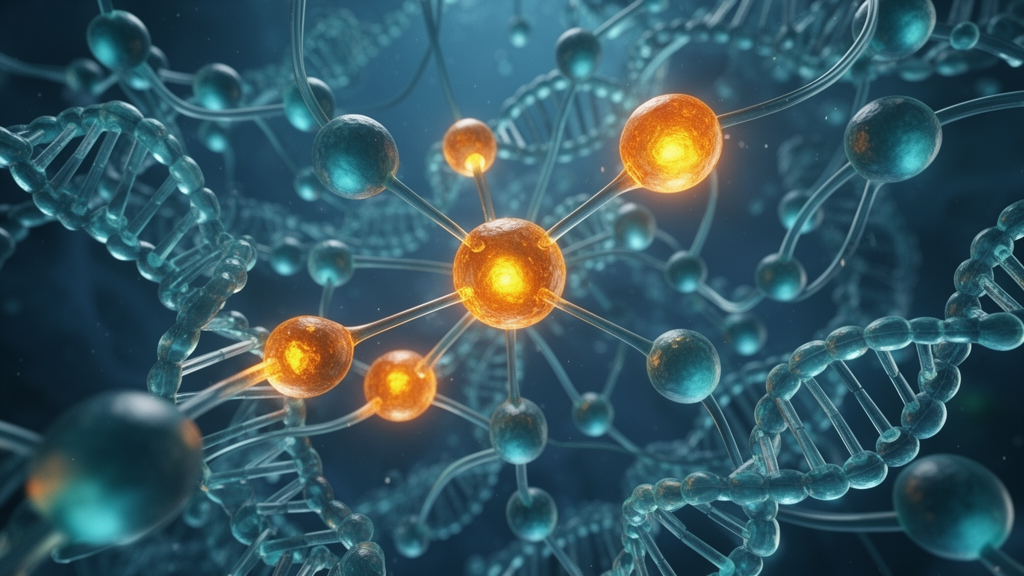
Image Credits: AI Generated
DOI: 10.1038/s42256-026-01327-4
Keywords: CGMap, cancer gene prioritization, graph learning, precision oncology, biomolecular networks, distance-resolved channels, topological scales, representation homogenization, global diffusion module, gene cooperativity, pathway contexts, virtual interactions, pan-cancer analysis, loss-of-function assays, cell proliferation, cell migration, cell invasion, epithelial-to-mesenchymal transition, FN1, TTN
News Source: Nathaniel Bowman. (November 16, 2026). Interpretable Graph Learning Framework CGMap Prioritizes Cancer Genes Across Biomolecular Networks. Scienmag.