• HOME
  • NEWS
  • EXPLORE
    • CAREER
      • Companies
      • Jobs
    • EVENTS
    • iGEM
      • News
      • Team
    • PHOTOS
    • VIDEO
    • WIKI
  • BLOG
  • COMMUNITY
    • FACEBOOK
    • INSTAGRAM
    • TWITTER
Thursday, April 16, 2026
BIOENGINEER.ORG
No Result
View All Result
  • Login
  • HOME
  • NEWS
  • EXPLORE
    • CAREER
      • Companies
      • Jobs
        • Lecturer
        • PhD Studentship
        • Postdoc
        • Research Assistant
    • EVENTS
    • iGEM
      • News
      • Team
    • PHOTOS
    • VIDEO
    • WIKI
  • BLOG
  • COMMUNITY
    • FACEBOOK
    • INSTAGRAM
    • TWITTER
  • HOME
  • NEWS
  • EXPLORE
    • CAREER
      • Companies
      • Jobs
        • Lecturer
        • PhD Studentship
        • Postdoc
        • Research Assistant
    • EVENTS
    • iGEM
      • News
      • Team
    • PHOTOS
    • VIDEO
    • WIKI
  • BLOG
  • COMMUNITY
    • FACEBOOK
    • INSTAGRAM
    • TWITTER
No Result
View All Result
Bioengineer.org
No Result
View All Result
Home NEWS Science News

Intensive animal production may boost flu pandemic threat

Bioengineer by Bioengineer
January 16, 2017
in Science News
Reading Time: 2 mins read
0
Share on FacebookShare on TwitterShare on LinkedinShare on RedditShare on Telegram
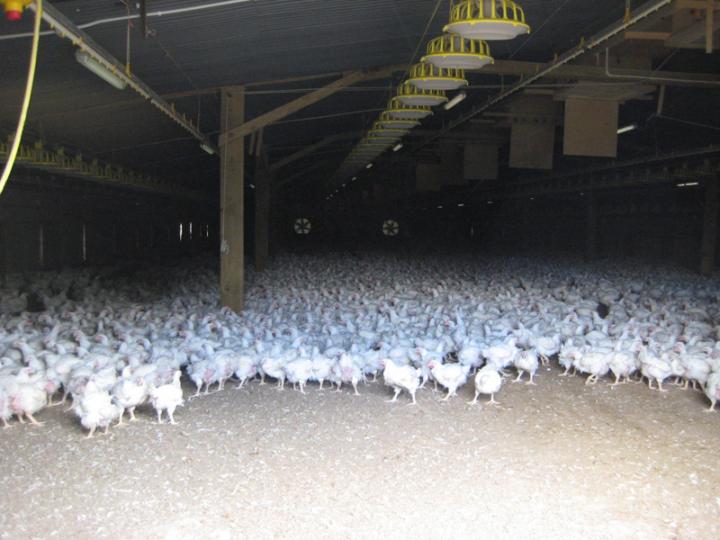
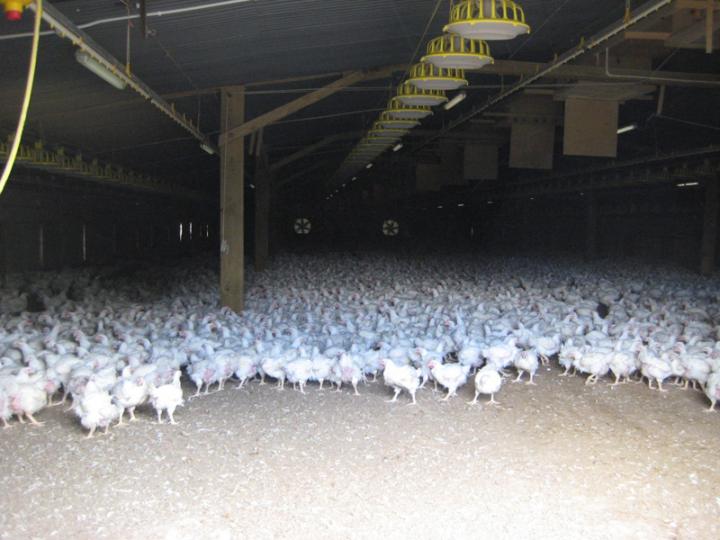
IMAGE

Credit: Steve Hinchliffe

Mass livestock production is driving molecular changes in diseases that could lead to human pandemics, according to an expert from the University of Exeter.

Rapidly rising global poultry numbers, along with selective breeding and production techniques which have dramatically altered the bodies of chickens and other poultry, have made the planet more "infectable", Professor Stephen Hinchliffe says.

In a book called Pathological Lives, he and three co-authors say a combination of factors ranging from virus evolution to economics are putting humans and animals at risk.

The recent global spike in avian influenza cases has resulted in hundreds of thousands of birds being culled around the world in an attempt to contain severe forms of the avian influenza virus (also known as avian flu or bird flu).

"Avian flu might often be presented as a problem of infected wild birds spreading the disease, but to understand it fully we need to think about pathological lives — issues caused by our economies and modes of organising life," said Professor Hinchliffe.

"In this book we investigate how human and animal lives have become dangerous to themselves in a world of accelerated production and biological intensity.

"We question the sustainability and security of the kinds of intensive protein production that are now being rolled out across the planet."

Some current forms of avian influenza can infect people and – though none can so far be transmitted from human to human – the scientists say the current "swarm" of influenzas circulating gives cause for heightened concern.

Professor Hinchliffe added: "Avian flu has been around for a long time, circulating in wild birds without too much of an issue.

"But as inexpensively produced protein-rich diets become a worldwide norm, poultry populations, growth rates and metabolisms have changed accordingly.

"This is due to economic pressure driving selective breeding, feed and dietary supplements, changing housing regimes, population densities and sometimes inappropriate use of veterinary medicines like antibiotics.

"To get to market weight takes a third of the time it did 30 or so years back with the result that disease tolerance is often compromised.

"Between that and sheer numbers, flock densities and global connectivity, humans have created a new set of conditions for viral selection and evolution.

"As any epidemiologist will tell you, a microbe can only become deadly or pathogenic if there are the right environmental and host conditions.

"Bird numbers and altered bodies have, in short, made the planet more 'infectable'."

###

The book was written along with Dr Nick Bingham, Professor John Allen and Dr Simon Carter, all of the Open University.

Media Contact

Alex Morrison
[email protected]
01-392-724-828
@uniofexeter

http://www.exeter.ac.uk

############

Story Source: Materials provided by Scienmag

Share12Tweet8Share2ShareShareShare2

Related Posts

Mineralocorticoid Pathway Drives Ocular Rosacea Revealed

April 16, 2026

Fat Cells Crucial in Learning to Avoid Danger, Study Finds

April 16, 2026

Millisecond Electric Pulse Enhances Strength and Toughness of Titanium

April 16, 2026

New Study Reveals Growing Racial and Gender Disparities in Polysubstance Overdose Deaths

April 16, 2026
Please login to join discussion

POPULAR NEWS

  • Scientists Investigate Possible Connection Between COVID-19 and Increased Lung Cancer Risk

    61 shares
    Share 24 Tweet 15
  • Boosting Breast Cancer Risk Prediction with Genetics

    47 shares
    Share 19 Tweet 12
  • Popular Anti-Aging Compound Linked to Damage in Corpus Callosum, Study Finds

    46 shares
    Share 18 Tweet 12
  • NSF funds machine-learning research at UNO and UNL to study energy requirements of walking in older adults

    97 shares
    Share 39 Tweet 24

About

We bring you the latest biotechnology news from best research centers and universities around the world. Check our website.

Follow us

Recent News

Mineralocorticoid Pathway Drives Ocular Rosacea Revealed

Fat Cells Crucial in Learning to Avoid Danger, Study Finds

Millisecond Electric Pulse Enhances Strength and Toughness of Titanium

Subscribe to Blog via Email

Enter your email address to subscribe to this blog and receive notifications of new posts by email.

Join 79 other subscribers
  • Contact Us

Bioengineer.org © Copyright 2023 All Rights Reserved.

Welcome Back!

Login to your account below

Forgotten Password?

Retrieve your password

Please enter your username or email address to reset your password.

Log In
No Result
View All Result
  • Homepages
    • Home Page 1
    • Home Page 2
  • News
  • National
  • Business
  • Health
  • Lifestyle
  • Science

Bioengineer.org © Copyright 2023 All Rights Reserved.