• HOME
  • NEWS
  • EXPLORE
    • CAREER
      • Companies
      • Jobs
    • EVENTS
    • iGEM
      • News
      • Team
    • PHOTOS
    • VIDEO
    • WIKI
  • BLOG
  • COMMUNITY
    • FACEBOOK
    • INSTAGRAM
    • TWITTER
Wednesday, June 17, 2026
BIOENGINEER.ORG
No Result
View All Result
  • Login
  • HOME
  • NEWS
  • EXPLORE
    • CAREER
      • Companies
      • Jobs
        • Lecturer
        • PhD Studentship
        • Postdoc
        • Research Assistant
    • EVENTS
    • iGEM
      • News
      • Team
    • PHOTOS
    • VIDEO
    • WIKI
  • BLOG
  • COMMUNITY
    • FACEBOOK
    • INSTAGRAM
    • TWITTER
  • HOME
  • NEWS
  • EXPLORE
    • CAREER
      • Companies
      • Jobs
        • Lecturer
        • PhD Studentship
        • Postdoc
        • Research Assistant
    • EVENTS
    • iGEM
      • News
      • Team
    • PHOTOS
    • VIDEO
    • WIKI
  • BLOG
  • COMMUNITY
    • FACEBOOK
    • INSTAGRAM
    • TWITTER
No Result
View All Result
Bioengineer.org
No Result
View All Result
Home NEWS Science News

Integrated disease management saves olive trees from Verticillium wilt

Bioengineer by Bioengineer
January 25, 2021
in Science News
Reading Time: 2 mins read
0
IMAGE
Share on FacebookShare on TwitterShare on LinkedinShare on RedditShare on Telegram

IMAGE

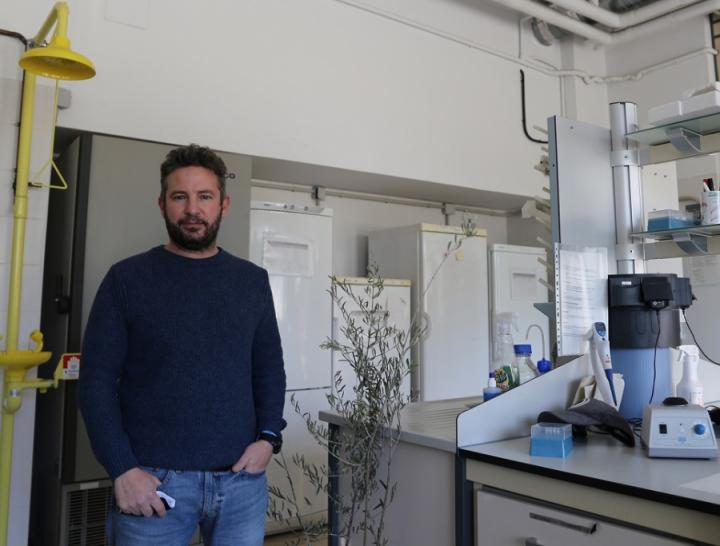
Credit: University of Córdoba

Olive trees are some of the most important woody crops in the world and Verticillium wilt, caused by the Verticillium dahliae fungus, is the most concerning disease for farmers in the olive sector.

In Spain, the leader in olive oil and table olive production, the increase in Verticillium wilt is primarily due to taking over infested soils formerly used for cotton (one of the main hosts for this pathogen) and the spread of a defoliating variant of the pathogen, which is more ferocious and ends up killing the olive tree.

This is why agronomy research efforts are focused on the search for the most resistant crops and the implementation of practices that reduce disease rates. In this vein, UCOLIVO Group researcher Juan Moral at the María de Maeztu Excellence Unit, Agronomy Department, has been able to reduce disease occurrence using an Integrated Disease Management approach at a commercial olive grove with the Picual variety, affected by the pathogen.

Since 1998, in the Grañon olive grove, a strategy integrating different practices has been used: replacing dead olive trees with crops that are more resistant to Verticillium wilt such as Frantoio trees after soil solarization (disinfestation using translucent plastic), chemical weed control, refraining from tilling, burning the waste from pruning and increasing the plantation density with more Frantoio olive trees.

Upon comparing the Verticillium wilt epidemic at the Grañón grove with that at the Ancla grove, located in the same area, but using traditional management techniques, tilling and substituting sick olive trees with trees from the same Picual variety in soil without solarization, it was verified how the intensity and severity of the epidemic at the second olive grove was greater than at the Grañón grove. In addition, the comparison between the varieties Picual and Frantoio at the Grañón farm allowed researchers to observe how “the impact of the variety in the decrease in Verticillium wilt is even greater than the rest of the control practices that were used” as pointed out by Moral, since Frantoio trees suffered less from the disease. While the yearly mortality rate of the trees was 5.6% for Picual trees on the farm using traditional techniques, at the Grañón olive farm Picual trees suffered at a mortality rate of 3.1% and Frantoio trees only 0.6%.

This study signifies, for the first time, the integration of an Integrated Disease Management approach at a olive farm in field conditions. In addition, it is the first time the Frantoio variety, which is more resistant to Verticillium wilt, was commercially planted in Spain.

With these results, farmers in the olive sector now have an efficient new tool that can keep their farms safe.

###

Reference:

Ostos E, Garcia-Lopez MT, Porras R, Lopez-Escudero FJ, Trapero-Casas A, Michailides TJ and Moral J (2020) Effect of Cultivar Resistance and Soil Management on Spatial-Temporal Development of Verticillium Wilt of Olive: A Long-Term Study. Front. Plant Sci. 11:584496. doi: 10.3389/fpls.2020.584496

Media Contact
Elena Lázaro
[email protected]

Related Journal Article

http://dx.doi.org/10.3389/fpls.2020.584496

Tags: AgricultureFertilizers/Pest Management
Share12Tweet8Share2ShareShareShare2

Related Posts

Inequality Amplifies Climate Disaster Risks Globally — Technology and Engineering

Inequality Amplifies Climate Disaster Risks Globally

June 17, 2026
MDPI Implements AI-Driven Ethics Screening for All Manuscript Submissions — Technology and Engineering

MDPI Implements AI-Driven Ethics Screening for All Manuscript Submissions

June 17, 2026

Revolutionary Atom-Thin Coating from NUS CDE and Applied Materials Partnership Breaks New Ground in Chip Miniaturization

June 17, 2026

IKKα-Controlled miR-9-5p Drives Lung Cancer Progression

June 17, 2026
Please login to join discussion

POPULAR NEWS

  • ESMO 2025: mRNA COVID Vaccines Enhance Efficacy of Cancer Immunotherapy

    326 shares
    Share 130 Tweet 82
  • Saying Goodbye to PGY-6: Pediatric Fellowship Realities

    102 shares
    Share 41 Tweet 26
  • Multi-Hospital Study Reveals Long Covid Burden Is Twice as High as Current Estimates

    92 shares
    Share 36 Tweet 23
  • Detection of EDCs in Breast Milk and Infant Urine Up to Six Months Highlights Early Exposure Risks

    76 shares
    Share 30 Tweet 19

About

We bring you the latest biotechnology news from best research centers and universities around the world. Check our website.

Follow us

Recent News

Inequality Amplifies Climate Disaster Risks Globally

MDPI Implements AI-Driven Ethics Screening for All Manuscript Submissions

Revolutionary Atom-Thin Coating from NUS CDE and Applied Materials Partnership Breaks New Ground in Chip Miniaturization

Subscribe to Blog via Email

Enter your email address to subscribe to this blog and receive notifications of new posts by email.

Join 82 other subscribers
  • Contact Us

Bioengineer.org © Copyright 2023 All Rights Reserved.

Welcome Back!

Login to your account below

Forgotten Password?

Retrieve your password

Please enter your username or email address to reset your password.

Log In
No Result
View All Result
  • Homepages
    • Home Page 1
    • Home Page 2
  • News
  • National
  • Business
  • Health
  • Lifestyle
  • Science

Bioengineer.org © Copyright 2023 All Rights Reserved.