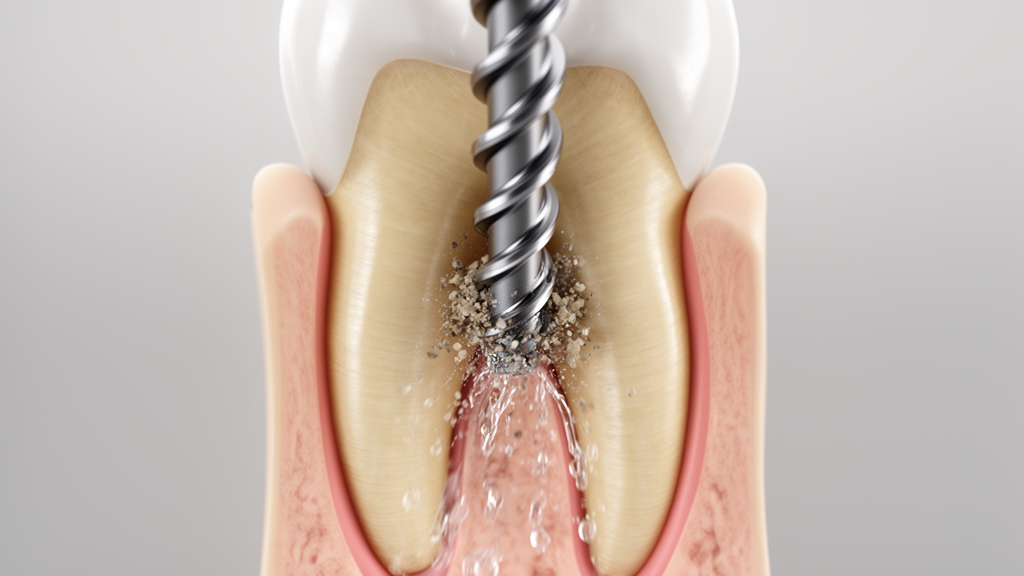
The laboratory study evaluated apical extrusion during root canal shaping by implementing a novel radiographic evaluation method designed to quantitatively measure both particulate debris and liquid irrigant within a single standardized experimental model.
Although apical extrusion is known to be influenced by the specific design and kinematic properties of the rotary file system together with irrigation dynamics, reliable laboratory methods that allow objective quantitative assessment of apical extrusion under conditions close to clinical practice have remained distinctly limited.
To address this methodological challenge, researchers developed a practical in vitro radiographic method to quantitatively assess apical extrusion and compare the performance of the ProTaper Gold and ProTaper Next rotary file systems. The investigation utilized eighty single-rooted, single-canal human teeth that were systematically allocated into four balanced experimental groups of twenty teeth each based on measured tooth length, with each group subsequently assigned according to the specific file system tested and whether particulate debris or liquid irrigant was being evaluated.
Root canal shaping procedures were executed using either the ProTaper Gold or ProTaper Next rotary instrumentation systems in combination with radiopaque markers to enable radiographic detection.
Following shaping procedures, the extruded radiopaque materials were captured on standardized digital radiographs, and the total radiopaque extrusion area was quantitatively measured in pixels squared (px²) using ImageJ image analysis software to ensure consistent evaluation.
Statistical analysis performed with the Mann–Whitney U test at a significance level of p < 0.05 confirmed significant differences between the two rotary file systems across both measured parameters. The ProTaper Gold system resulted in significantly greater apical debris extrusion compared with the ProTaper Next system (p = 0.028). In contrast, apical irrigant extrusion was significantly higher in the ProTaper Next group than in the ProTaper Gold group (p = 0.027).
The study authors concluded that their radiographic evaluation method provides an effective approach for quantitatively assessing both apically extruded debris and irrigant within the same experimental setup.
Subject of Research: Quantitative radiographic assessment of apically extruded debris and irrigant during rotary endodontic instrumentation
Article Title: Novel experimental methods to measure apically extruded debris and irrigants during root canal instrumentation: an in vitro study
Article References: Uçaş-Yıldız, F. S., & Terlemez, A. (2026). Novel experimental methods to measure apically extruded debris and irrigants during root canal instrumentation: an in vitro study. BMC Oral Health. https://doi.org/10.1186/s12903-026-10508-x
Image Credits: AI Generated
DOI: 10.1186/s12903-026-10508-x
Keywords: apical extrusion, root canal instrumentation, ProTaper Gold, ProTaper Next, debris extrusion, irrigant extrusion, radiographic evaluation, endodontics, sodium hypochlorite, barium sulphate, cobalt-chromium-molybdenum, ImageJ, single-rooted human teeth, periapical tissues simulation, Mann-Whitney U test, rotary file systems, in vitro dental study
News Source: Ophelia Keating. (November 20, 2026). In Vitro Study Reveals Contrasting Apical Extrusion Between Rotary Root Canal Systems. Scienmag.