• HOME
  • NEWS
  • EXPLORE
    • CAREER
      • Companies
      • Jobs
    • EVENTS
    • iGEM
      • News
      • Team
    • PHOTOS
    • VIDEO
    • WIKI
  • BLOG
  • COMMUNITY
    • FACEBOOK
    • INSTAGRAM
    • TWITTER
Thursday, May 21, 2026
BIOENGINEER.ORG
No Result
View All Result
  • Login
  • HOME
  • NEWS
  • EXPLORE
    • CAREER
      • Companies
      • Jobs
        • Lecturer
        • PhD Studentship
        • Postdoc
        • Research Assistant
    • EVENTS
    • iGEM
      • News
      • Team
    • PHOTOS
    • VIDEO
    • WIKI
  • BLOG
  • COMMUNITY
    • FACEBOOK
    • INSTAGRAM
    • TWITTER
  • HOME
  • NEWS
  • EXPLORE
    • CAREER
      • Companies
      • Jobs
        • Lecturer
        • PhD Studentship
        • Postdoc
        • Research Assistant
    • EVENTS
    • iGEM
      • News
      • Team
    • PHOTOS
    • VIDEO
    • WIKI
  • BLOG
  • COMMUNITY
    • FACEBOOK
    • INSTAGRAM
    • TWITTER
No Result
View All Result
Bioengineer.org
No Result
View All Result
Home NEWS Science News Biology

Insulin release is controlled by the amount of Epac2A at the secretory vesicles

Bioengineer by Bioengineer
July 7, 2017
in Biology
Reading Time: 2 mins read
0
Share on FacebookShare on TwitterShare on LinkedinShare on RedditShare on Telegram

Specialized beta cells in the pancreas release the hormone insulin to control our blood glucose levels, and failure of this mechanism is central to the development of type-2 diabetes. How much and when insulin is released depends on a complex system of messenger molecules and proteins that is not well understood.

A research group at the Department of Medical Cell Biology at Uppsala University has now been able to visualize the mechanism of action for one of the most important messenger molecules in insulin secretion, cyclic AMP. It was previously known that this messenger is generated in beta cells during a meal and that it potentiates insulin secretion by binding to the protein Epac2A, and this process is already exploited in a new class of drugs for diabetes treatment.

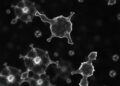
Using advanced microscopy techniques, the researchers have now discovered that cyclic AMP triggers movement of Epac2A to the sites at the cell membrane where insulin vesicles are prepared for release, and that the amount of Epac2A at the vesicles controls how much insulin is released. Strikingly, in beta cells from patients with type 2 diabetes there was significantly less accumulation of Epac2A than in cells from healthy individuals. The results shed new light over the causes of reduced insulin secretion in diabetes and can facilitate the development of new diabetes drugs that enhances insulin release from the beta cells.

###

Alenkvist, I., Gandasi, N., Barg, S. and Tengholm, A., Recruitment of Epac2A to insulin granule docking sites regulates priming for exocytosis; Diabetes DOI 10.2337/db17-0050. diabetes.diabetesjournals.org/lookup/doi/10.2337/db17-0050

For more information

Professor Anders Tengholm, Department of Medical Cell Biology, Uppsala University. [email protected], +46-18-471 44 81.

Media Contact

Anders Tengholm
[email protected]
46-184-714-481
@UU_University

http://www.uu.se

http://dx.doi.org/10.2337/db17-0050
Share12Tweet8Share2ShareShareShare2

Related Posts

Early Delivery Improves Outcomes for Mothers and Babies in Hypertensive Pregnancies — Biology

Early Delivery Improves Outcomes for Mothers and Babies in Hypertensive Pregnancies

May 21, 2026
How Atlantic Herring Rewired Their Reproductive Strategy to Thrive in Changing Oceans — Biology

How Atlantic Herring Rewired Their Reproductive Strategy to Thrive in Changing Oceans

May 20, 2026

Study Finds Young Fraser River Chinook Salmon Swimming in Chemical Mixture

May 20, 2026

Thousands of UK Beekeepers Contribute Honey to Advance Environmental Science

May 20, 2026
Please login to join discussion

POPULAR NEWS

  • blank

    New Study Reveals Plants Can Detect the Sound of Rain

    733 shares
    Share 292 Tweet 183
  • ESMO 2025: mRNA COVID Vaccines Enhance Efficacy of Cancer Immunotherapy

    303 shares
    Share 121 Tweet 76
  • Research Indicates Potential Connection Between Prenatal Medication Exposure and Elevated Autism Risk

    846 shares
    Share 338 Tweet 212
  • Breastmilk Balances E. coli and Beneficial Bacteria in Infant Gut Microbiomes

    58 shares
    Share 23 Tweet 15

About

We bring you the latest biotechnology news from best research centers and universities around the world. Check our website.

Follow us

Recent News

De Novo Design of Quasisymmetric Protein Cages

Rural Siblings of Individuals with Neurodevelopmental Conditions Face Unique Challenges Without Adequate Support

Stretch-Resistant Spoof Plasmonic Fabric via Fiber Buckling

Subscribe to Blog via Email

Enter your email address to subscribe to this blog and receive notifications of new posts by email.

Join 82 other subscribers
  • Contact Us

Bioengineer.org © Copyright 2023 All Rights Reserved.

Welcome Back!

Login to your account below

Forgotten Password?

Retrieve your password

Please enter your username or email address to reset your password.

Log In
No Result
View All Result
  • Homepages
    • Home Page 1
    • Home Page 2
  • News
  • National
  • Business
  • Health
  • Lifestyle
  • Science

Bioengineer.org © Copyright 2023 All Rights Reserved.