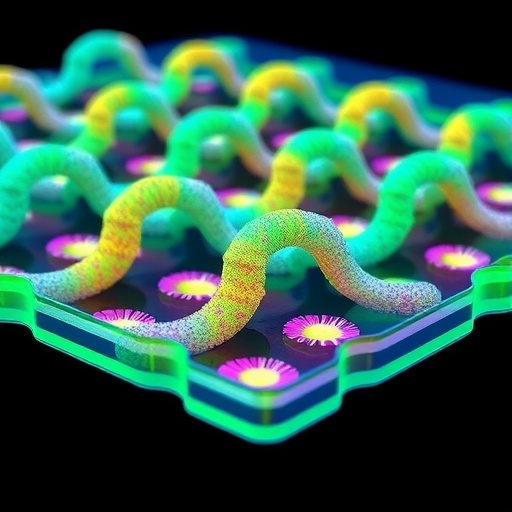
A pioneering advancement has emerged from the Hefei Institutes of Physical Science, part of the Chinese Academy of Sciences, where a team led by WANG Junfeng has introduced a breakthrough technique for surface plasmon resonance (SPR) applications targeting membrane proteins. This innovative immobilization method, detailed in the prestigious journal Analytical Chemistry, surmounts longstanding technical hurdles that have historically constrained the study of these vital biomolecules. The development promises to herald a new era in membrane protein research, with significant ramifications for drug discovery and molecular biology.
Membrane proteins constitute approximately one-third of all human proteins and represent nearly 60% of recognized drug targets, underscoring their critical roles in cellular signaling, transport mechanisms, and overall physiological maintenance. Understanding their interaction dynamics with various ligands is central to deciphering biological pathways and developing efficacious therapeutic agents. Among the techniques available, SPR stands out as a gold-standard, label-free technology enabling real-time monitoring of molecular binding kinetics. Despite this, the application of SPR to membrane proteins has been fraught with challenges, largely due to difficulties in immobilizing such proteins in a manner that preserves their native conformation and functional integrity.
Addressing this persistent impediment, the research team integrated the SpyCatcher-SpyTag system, a covalent conjugation technology known for its specificity and stability, with membrane scaffold protein (MSP)-based nanodisc technology. This fusion of approaches affords a robust and simplified strategy for tethering membrane proteins onto SPR sensor chips. The technique involves engineering an MSP fusion protein tagged with SpyTag, facilitating the construction of lipid-encapsulated nanodiscs that house the target membrane proteins in a near-native lipid milieu. These SpyTag-labeled nanodiscs can then be selectively captured by SpyCatcher molecules pre-immobilized onto CM5 sensor chips via conventional amine coupling chemistry, resulting in a highly specific and permanent attachment.
Central to the method’s success is the ability of the nanodiscs to preserve the membrane proteins’ structural integrity and functional activity by mimicking their physiological lipid environment. Conventional methods frequently rely on detergent solubilization or nonspecific adsorption, often leading to partial denaturation or loss of protein activity. In contrast, this SpyCatcher-SpyTag nanodisc system anchors the proteins covalently, ensuring stability throughout the SPR assay duration and enabling repeated experimental cycles without significant degradation or detachment.
In validating their platform, the team conducted comprehensive SPR analyses spanning three representative categories of membrane protein interactions. First, they examined protein–lipid interactions to understand how peripheral proteins associate with membrane components. Subsequently, transmembrane protein–antibody interactions were characterized, offering insights into antibody binding kinetics essential for therapeutic antibody development. Finally, they evaluated transmembrane protein–small molecule interactions, critical for drug candidate screening and optimization. Each assay demonstrated the method’s capacity to deliver high-fidelity kinetic measurements, paving the way for broader placement in membrane protein research workflows.
Notably, the binding interactions measured exhibited superior stability and reproducibility compared to traditional immobilization methods. The covalent linkage via SpyCatcher-SpyTag minimized artifacts such as protein aggregation or desorption under flow conditions. This enhanced robustness enables precise quantification of association and dissociation rates, affinities, and other parameters critical for understanding molecular mechanisms. The method’s versatility also allows for adaptation to a wide range of membrane proteins and ligand types, thus broadening the scope of SPR applications.
The profound implications of this technology extend beyond basic science. Given that membrane proteins serve as targets for most clinically significant drugs, improved tools for their study accelerate rational drug design processes. This immobilization approach facilitates detailed mechanistic studies, aids in screening potential therapeutic compounds, and enhances antibody characterization, potentially reducing time and cost associated with later-stage drug development. Researchers anticipate that this technique will become a mainstay in pharmacological and biophysical laboratories worldwide.
The integration of SpyCatcher-SpyTag conjugation with MSP-nanodisc technology also exemplifies a shift towards leveraging bioorthogonal chemistries and biomimetic systems in analytical assays. Where earlier techniques often compromised biomolecule functionality, these contemporary strategies embrace molecular precision and biological relevance. This method stands as a model for future innovations seeking to bridge the gap between in vitro analytical tools and in vivo biological complexity.
While the study focused on three interaction types, the fundamental principles underlying this immobilization method suggest it could be extended to other challenging membrane protein systems, including ion channels, G-protein-coupled receptors (GPCRs), and transporters. The capacity to maintain proteins within a tailored lipid environment and affix them stably to sensor surfaces may lead to breakthroughs in characterizing these complex entities, which have traditionally been intractable using conventional SPR protocols.
Furthermore, the strategy’s modular nature allows for customization of the nanodisc composition, enabling researchers to mimic specific cellular membrane environments, potentially unlocking new insights into the influence of lipid context on protein function. Such customization adds an additional layer of biological relevance which has been difficult to achieve with previous immobilization methodologies.
Overall, this novel SPR immobilization approach represents a harmonious convergence of molecular biology, bioengineering, and analytical chemistry, collectively overcoming a formidable technical bottleneck in membrane protein research. As membrane proteins continue to be at the frontier of medical and biological inquiry, the emergence of reliable, efficient analysis platforms will drive deeper understanding and innovative therapeutics.
This work spearheaded by WANG Junfeng’s team is poised to achieve widespread adoption in academic and industrial settings, heralding a transformative shift in the landscape of membrane protein assays. With its publication slated in Analytical Chemistry, this pioneering research will undoubtedly inspire subsequent developments and foster collaboration across biotechnology, pharmaceutical, and research communities worldwide.
Subject of Research: Membrane protein immobilization for surface plasmon resonance assays using SpyCatcher–SpyTag conjugation and MSP-nanodisc technology
Article Title: A Robust Immobilization Method for Membrane Protein SPR Assays Using SpyCatcher–SpyTag
News Publication Date: 31-Aug-2025
Web References: https://doi.org/10.1021/acs.analchem.5c01671
Keywords
Physical sciences
Tags: binding kinetics of biomoleculescellular signaling mechanismsconformation preservation in proteinsdrug discovery advancementsimmobilization techniques for proteinslabel-free detection technologiesmembrane protein research innovationsmolecular biology breakthroughsresearch from Hefei Institutes of Physical ScienceSpyCatcher-SpyTag systemsurface plasmon resonance applicationstherapeutic agent development