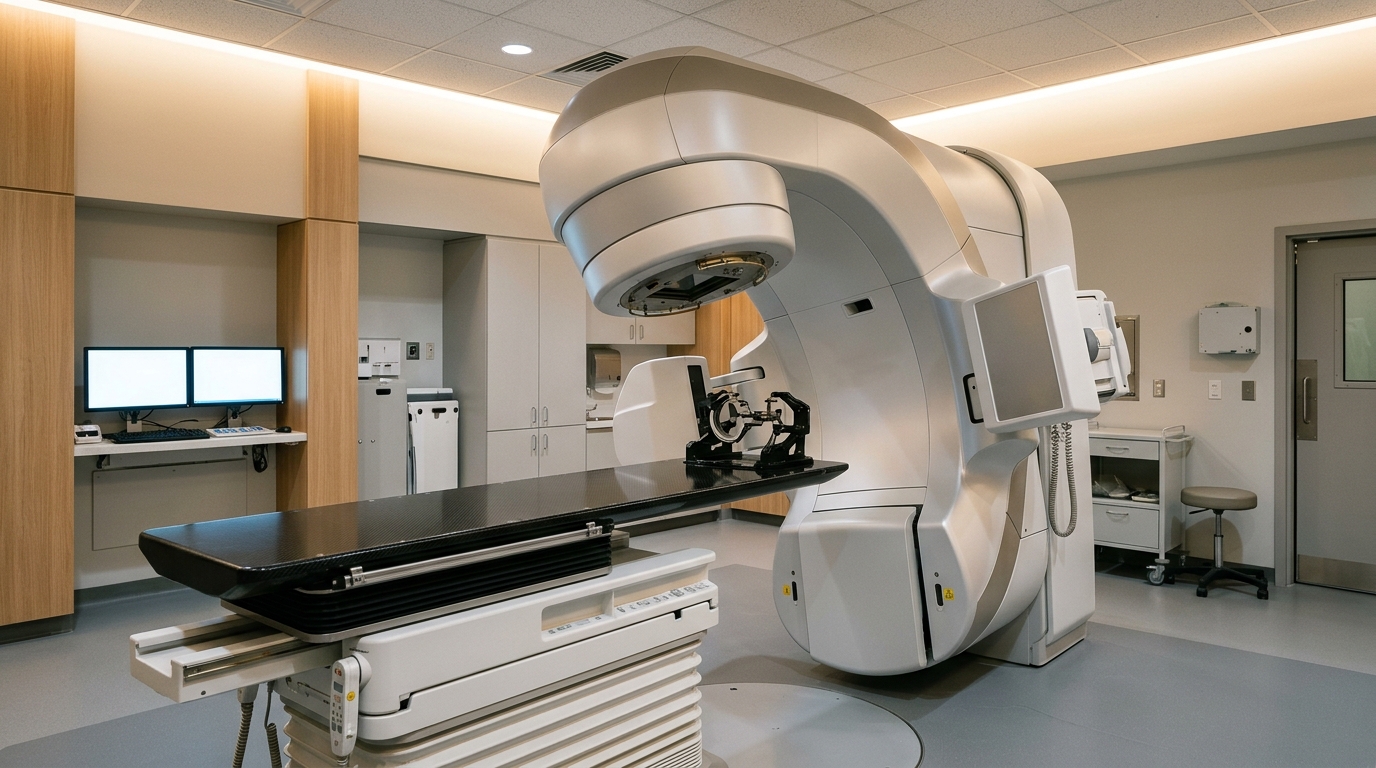
In a retrospective cohort study evaluating eight patients treated across two institutions in Houston, Texas, researchers found that an induction chemotherapy regimen administered prior to standard chemoradiation and magnetic resonance imaging-guided brachytherapy achieved substantial gross tumor volume regression in locally advanced cervical cancer. The clinical experience, conducted at the Harris Health System and the Dan L. Duncan Comprehensive Cancer Center, evaluated patients who received weekly carboplatin and paclitaxel followed by definitive chemoradiation and image-guided adaptive radiation therapy. All eight patients presented with locally advanced disease, with six individuals diagnosed at Federation of Gynecology and Obstetrics stage IIIC1, one at stage IIA, and one at stage IB3. While standard definitive management for locally advanced disease relies on concurrent chemoradiation followed by brachytherapy, managing large or geometrically unfavorable tumors often poses substantial technical challenges for radiation planning and anatomical dose coverage.
The study sought to explore whether an induction regimen structured similarly to the randomized INTERLACE trial could be successfully integrated into routine practice within safety-net and comprehensive cancer center environments following EMBRACE-aligned volumetric planning principles. In locally advanced cervical cancer, distant metastatic failure remains a major clinical hurdle, prompting ongoing investigation into systemic intensification approaches. Prior historical attempts evaluating adjuvant chemotherapy delivered after chemoradiation failed to show a survival advantage, highlighting the critical role of treatment sequencing. The phase 3 INTERLACE trial recently demonstrated improvements in progression-free and overall survival by administering upfront induction chemotherapy before concurrent chemoradiation. To understand the operational and anatomical consequences of this sequence in a real-world setting, the Houston investigators tracked serial volumetric changes across multiple imaging milestones, assessed radiation dose distributions delivered to target tissues and adjacent healthy organs, and recorded treatment-related adverse events.
Patients selected for inclusion received six planned weeks of induction chemotherapy consisting of weekly carboplatin dosed at an area under the receiver operator curve of 2 alongside weekly paclitaxel delivered at 80 milligrams per square meter. Following induction, patients transitioned to definitive external beam radiation therapy, receiving a pelvic dose of 45 Gray delivered in 25 fractions over five weeks, with or without para-aortic coverage. Six of the eight patients had documented gross pelvic lymph node involvement, and all six received a simultaneous integrated radiation boost to 55 Gray in 25 fractions to involved pelvic nodes, or 57.5 Gray for nodes outside the true pelvis, aligned with the EMBRACE II protocol. Concurrent weekly cisplatin was prescribed during external beam irradiation. Following external beam therapy, patients underwent image-guided adaptive brachytherapy utilizing high-dose-rate Iridium-192 sources planned with the TG-43 formalism and the BrachyVision planning system.
Volumetric tracking of gross tumor volume revealed marked and progressive anatomical shrinkage from baseline to the completion of all therapy. Across the cohort, the mean gross tumor volume measured 122 cubic centimeters at diagnosis, with a median of 88.3 cubic centimeters and an overall range from 18 to 370 cubic centimeters. After completing six weeks of induction chemotherapy, the mean gross tumor volume decreased to 43 cubic centimeters, reflecting a median volume of 15.3 cubic centimeters. Following the subsequent course of concurrent chemoradiation, the mean tumor volume contracted to 3 cubic centimeters, with a median of 2.2 cubic centimeters and a range of 0 to 11.5 cubic centimeters. Per-patient analysis demonstrated a median tumor volume reduction of 70 percent following induction chemotherapy alone, which increased to a cumulative median reduction of 97 percent following concurrent chemoradiation. While seven of the eight patients presented with bulky disease greater than 30 cubic centimeters at baseline, only three maintained tumor volumes above 30 cubic centimeters after induction, and none had bulky disease remaining after chemoradiation.
A critical technical question addressed by the investigators was the impact of volumetric tumor shrinkage on the choice of brachytherapy applicator and procedural complexity. Bulky cervical tumors frequently require interstitial brachytherapy, such as Syed-Neblett perineal template implants, to achieve adequate target volume coverage without exceeding normal tissue tolerances. At the study institutions, intracavitary brachytherapy using tandem-and-ovoid applicators is routinely completed in the outpatient clinic setting, whereas interstitial placement demands a complex procedure under general anesthesia in an operating room, inpatient hospital admission, and repeated ambulance transports for imaging and treatment while immobilized with interstitial needles in place. In this cohort, all eight patients were initially judged to require likely or possible interstitial brachytherapy at diagnosis. Following marked chemotherapy-induced tumor regression, seven of the eight patients successfully transitioned to outpatient tandem-and-ovoid applicators, with only the single patient presenting with the largest baseline tumor of 370 cubic centimeters requiring a Syed-Neblett interstitial implant.
Radiation dosimetric analysis showed that target dose objectives aligned with established international standards were achievable despite the real-world safety-net setting. Incorporating external beam doses converted using the linear-quadratic model with an alpha/beta ratio of 10 Gray for tumor tissue, the mean cumulative dose delivered to 90 percent of the high-risk clinical target volume was 90.2 Gray equivalent dose in 2-Gray fractions, with a median of 90.5 Gray and a range from 87.0 to 93.7 Gray. The mean dose to 98 percent of the high-risk clinical target volume was 80.5 Gray equivalent dose in 2-Gray fractions. For adjacent organs at risk, evaluated with an alpha/beta ratio of 3 Gray, the mean maximum dose delivered to the most exposed 2 cubic centimeters volume was 61.8 Gray for the rectum, 78.2 Gray for the bladder, 60.7 Gray for the bowel, and 64.8 Gray for the sigmoid colon. The authors noted that induction therapy does not permit dose de-escalation to the cervix itself, as EMBRACE guidelines require the high-risk clinical target volume to encompass the entire cervix and residual pathologic tissue.
Treatment timeline metrics demonstrated a median interval of 7.5 days between the final dose of induction chemotherapy and the initiation of chemoradiation, spanning a range of 0 to 75 days. The mean overall radiation treatment time was 47 days, with a median of 47 days and a range extending from 41 to 56 days. Six patients missed at least one scheduled radiotherapy appointment, ranging from one to four missed sessions, but investigators documented that none of these interruptions were caused by clinical toxicity. Instead, schedule adjustments stemmed from radiation quality assurance checks, incomplete planning, insurance-related administrative delays, or disruptive regional weather events. Seven of the eight patients completed the full six cycles of weekly carboplatin and paclitaxel, while one patient ceased induction after four cycles due to grade 3 thrombocytopenia.
Hematologic adverse events were recorded during both treatment phases, highlighting distinct toxicities associated with induction chemotherapy versus subsequent chemoradiation. During the six-week induction period, grade 3 neutropenia occurred in one patient, grade 3 thrombocytopenia occurred in one patient, and grade 3 anemia occurred in one patient, while no patients experienced grade 3 leukopenia. During the subsequent concurrent chemoradiation phase, grade 3 neutropenia was observed in three patients, grade 3 leukopenia developed in two patients, and grade 3 anemia occurred in one patient, with no instances of grade 3 thrombocytopenia. Supportive interventions included granulocyte colony-stimulating factor administered to one patient during chemoradiation, and red blood cell transfusion administered to one patient during induction and chemoradiation. Three patients completed five or more cycles of concurrent weekly cisplatin, four completed exactly four cycles, and two patients discontinued cisplatin early due to hematologic toxicities.
Post-treatment oncologic monitoring revealed that seven of the eight patients achieved a complete metabolic response on positron emission tomography imaging performed at three months following treatment completion. At the time of last clinical follow-up, representing a mean observation period of 53.9 months and a median of 62.4 months with a range between 23.0 and 72.9 months, all seven responding patients remained alive without evidence of disease. The remaining patient was lost to follow-up immediately following treatment completion before a three-month metabolic assessment could be obtained, despite showing an initial near-complete anatomical response on pre-brachytherapy magnetic resonance imaging. This patient returned symptomatically 11 months later with biopsy-confirmed persistent or recurrent disease and subsequently received six cycles of salvage chemotherapy combining carboplatin, paclitaxel, bevacizumab, and pembrolizumab, achieving a near-complete imaging response followed by ongoing maintenance therapy.
The study authors contextualized their observations against previously published historical cohorts treated at the same Texas institutions without induction chemotherapy. A prior local series of 40 patients undergoing Syed-Neblett interstitial brachytherapy reported a two-year local control rate of 81 percent and progression-free survival of 64 percent, an era when nearly all bulky cases required interstitial procedures. Another local historical cohort of 45 bulky cervical cancer patients managed with interstitial brachytherapy without induction reported a 62 percent three-month complete metabolic response rate, compared to 87.5 percent observed in the present series. However, the authors explicitly emphasized several structural limitations, most notably the small retrospective sample size of eight patients, the lack of a concurrent randomized control group, and the loss of one patient to early post-treatment follow-up. Consequently, the investigators emphasized that these real-world findings represent preliminary, hypothesis-generating observations demonstrating procedural feasibility rather than definitive proof of comparative clinical efficacy.
Subject of Research: Tumor regression and MRI-guided brachytherapy following induction chemotherapy in locally advanced cervical cancer
Article Title: Real-world experience with INTERLACE-style induction chemotherapy: Tumor regression and MRI-guided brachytherapy in locally advanced cervical cancer
Article References: Chavana, A., Flanagan, M., Owrangi, A., Sharma, S., Hoppenot, C., Sunde, J., Costales, A. B., Kamepalli, S., Hall, T., & Ludwig, M. (2026). Real-world experience with INTERLACE-style induction chemotherapy: Tumor regression and MRI-guided brachytherapy in locally advanced cervical cancer. Gynecologic Oncology Reports, 68, Article 102231. https://doi.org/10.1016/j.gore.2026.102231
Image Credits: AI Generated
DOI: 10.1016/j.gore.2026.102231
Keywords: cervical cancer, locally advanced cervical cancer, induction chemotherapy, chemoradiation, MRI-guided brachytherapy, brachytherapy, carboplatin, paclitaxel, cisplatin, EMBRACE protocol, tumor regression, high-risk clinical target volume, radiation oncology, gynecologic oncology, tandem and ovoid, interstitial brachytherapy
News Source: Nathaniel Bowman. (November 22, 2026). Induction Chemotherapy Shrinks Advanced Cervical Tumors Before Targeted Radiation. Scienmag.