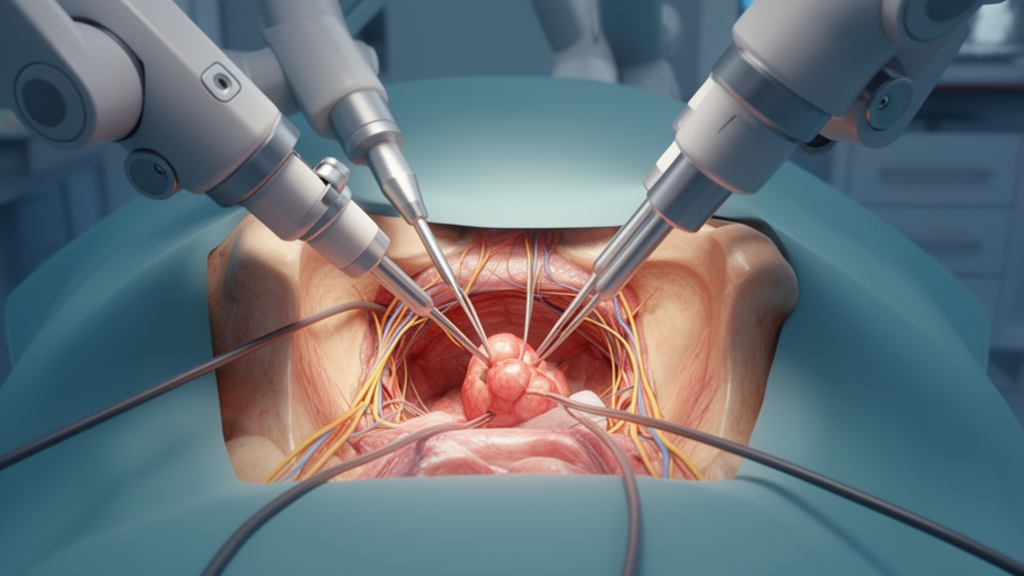
Extrafascial Retzius-sparing robot-assisted radical prostatectomy is associated with significantly lower rates of positive surgical margins and a reduced hazard of biochemical recurrence compared with the intrafascial surgical technique, according to a retrospective cohort study published in the World Journal of Surgical Oncology. The comparative clinical evaluation, conducted by surgical researchers at the Chinese PLA General Hospital, examined real-world perioperative, oncological, and functional recovery outcomes among patients diagnosed with localized prostate cancer who were treated by experienced robotic surgeons operating beyond their surgical learning curve.
The investigation focused on resolving differences in surgical effectiveness and functional preservation between the intrafascial (IF) and extrafascial (EF) procedural approaches in Retzius-sparing robot-assisted radical prostatectomy (RS-RARP). The study cohort comprised 188 patients with localized prostate cancer (LPCa) who underwent surgical resection at the hospital’s urology departments between May 2021 and July 2023. Based on clinical evaluations and procedural planning, the patient population was stratified into two distinct operative cohorts: 72 patients underwent intrafascial RS-RARP, whereas 116 patients received the extrafascial RS-RARP approach.
Surgical allocation between the intrafascial and extrafascial cohorts was determined according to each patient’s clinical tumor T stage and individual treatment preferences. All surgeries were completed by experienced surgeons who had surpassed the learning curve, with each practitioner having performed more than 100 previous Retzius-sparing robot-assisted radical prostatectomy cases. The research team systematically collected and tracked perioperative data, positive surgical margin rates, biochemical progression-free survival, urinary continence recovery rates, and validated questionnaire metrics.
In terms of immediate surgical safety and postoperative hospitalization metrics, the research team identified no statistically significant differences between the intrafascial and extrafascial treatment arms. Measures including total operative time, estimated intraoperative blood loss, postoperative length of hospital stay, and overall complication rates remained comparable between the two cohorts. Each of these perioperative comparisons yielded p-values greater than 0.05, with no statistically significant differences observed between the two cohorts.
Distinct oncological advantages were observed among patients who underwent the extrafascial operative technique following rigorous multivariable adjustment. The extrafascial RS-RARP group demonstrated a significantly lower hazard of biochemical recurrence compared with the intrafascial cohort, presenting an adjusted hazard ratio of 0.12 with a 95 percent confidence interval ranging from 0.06 to 0.22 (P < 0.001). In parallel, the odds of encountering a positive surgical margin were substantially lower in the extrafascial group, with an adjusted odds ratio of 0.16 and a 95 percent confidence interval of 0.06 to 0.42 (P < 0.001).
Evaluating postoperative functional restoration revealed divergent results between urinary control and sexual recovery metrics. For urinary continence (UC) recovery, the researchers found no statistically significant differences between the intrafascial and extrafascial cohorts across the entire postoperative monitoring timeline. Urinary continence recovery rates and functional scores evaluated via the Expanded Prostate Cancer Index Composite 26-item (EPIC-26) urinary incontinence domain showed comparable trajectories between the two groups at 3 months, 6 months, and 12 months following surgery, with all comparative analyses demonstrating p-values greater than 0.05.
In contrast to urinary continence, patient-reported sexual function measurements exhibited marked divergence between the two surgical approaches. Patients undergoing extrafascial RS-RARP recorded significantly lower median scores in the EPIC-26 sexual domain compared with the intrafascial cohort at both 3 months postoperatively (13.8 with an interquartile range of 1.1 to 22.2 versus 22.2 with an interquartile range of 4.2 to 30.5, P = 0.001) and at 12 months postoperatively (18.0 with an interquartile range of 9.7 to 27.7 versus 40.3 with an interquartile range of 22.2 to 57.0, P < 0.001). Furthermore, when evaluating the proportion of patients who exceeded the minimal clinically important difference (MCID) at 12 months, the extrafascial group had a significantly higher rate at 100 percent compared to 79.2 percent in the intrafascial group (P < 0.001).
Synthesizing these findings, the authors concluded that extrafascial RS-RARP provides lower positive surgical margin rates and a reduced risk of biochemical recurrence while offering long-term urinary continence recovery comparable to intrafascial RS-RARP after multivariable adjustment. Consequently, extrafascial RS-RARP represents a viable surgical option for patients with localized prostate cancer who do not place a primary priority on erectile function preservation. Nevertheless, the study authors emphasized that the retrospective design and non-randomized allocation based on clinical T stage and patient preference introduce inherent allocation bias, noting that prospective clinical trials are warranted to validate these comparative outcomes.
Subject of Research: Outcomes of intrafascial versus extrafascial Retzius-sparing robot-assisted radical prostatectomy
Article Title: Perioperative, oncological, and functional outcomes of intrafascial versus extrafascial retzius-sparing robot-assisted radical prostatectomy: a real-world retrospective cohort study
Article References: Jia, Y., Dong, Y., Li, Z., Jia, Z., Luo, J., Liu, Q., Li, J., Du, S., Chen, Z., Yang, Q., Wang, C., Xu, J., Niu, S., Zhang, X., Ma, X., & Wang, B. (2026). Perioperative, oncological, and functional outcomes of intrafascial versus extrafascial retzius-sparing robot-assisted radical prostatectomy: a real-world retrospective cohort study. World Journal of Surgical Oncology. https://doi.org/10.1186/s12957-026-04635-6
Image Credits: AI Generated
DOI: 10.1186/s12957-026-04635-6
Keywords: robot-assisted radical prostatectomy, Retzius-sparing prostatectomy, intrafascial prostatectomy, extrafascial prostatectomy, localized prostate cancer, biochemical recurrence, positive surgical margins, urinary continence recovery, EPIC-26 sexual domain, EPIC-26 urinary incontinence, minimal clinically important difference, biochemical progression-free survival, Chinese PLA General Hospital, prostate cancer surgery, surgical learning curve, functional recovery, oncological outcomes
News Source: Nathaniel Bowman. (November 24, 2026). Extrafascial Retzius-Sparing Prostatectomy Associated With Lower Recurrence and Reduced Sexual Function. Scienmag.