• HOME
  • NEWS
  • EXPLORE
    • CAREER
      • Companies
      • Jobs
    • EVENTS
    • iGEM
      • News
      • Team
    • PHOTOS
    • VIDEO
    • WIKI
  • BLOG
  • COMMUNITY
    • FACEBOOK
    • INSTAGRAM
    • TWITTER
Thursday, November 19, 2026
BIOENGINEER.ORG
No Result
View All Result
  • Login
  • HOME
  • NEWS
  • EXPLORE
    • CAREER
      • Companies
      • Jobs
        • Lecturer
        • PhD Studentship
        • Postdoc
        • Research Assistant
    • EVENTS
    • iGEM
      • News
      • Team
    • PHOTOS
    • VIDEO
    • WIKI
  • BLOG
  • COMMUNITY
    • FACEBOOK
    • INSTAGRAM
    • TWITTER
No Result
View All Result
Bioengineer.org
No Result
View All Result
Home NEWS Science News Agriculture

Indonesian Pulp Sector Expansion Risks Reversing Progress Toward Zero Deforestation

by
November 19, 2026
in Agriculture
Reading Time: 2 mins read
0
Indonesian Pulp Sector Expansion Risks Reversing Progress Toward Zero Deforestation

Indonesian Pulp Sector Expansion Risks Reversing Progress Toward Zero Deforestation

Share on FacebookShare on TwitterShare on LinkedinShare on RedditShare on Telegram

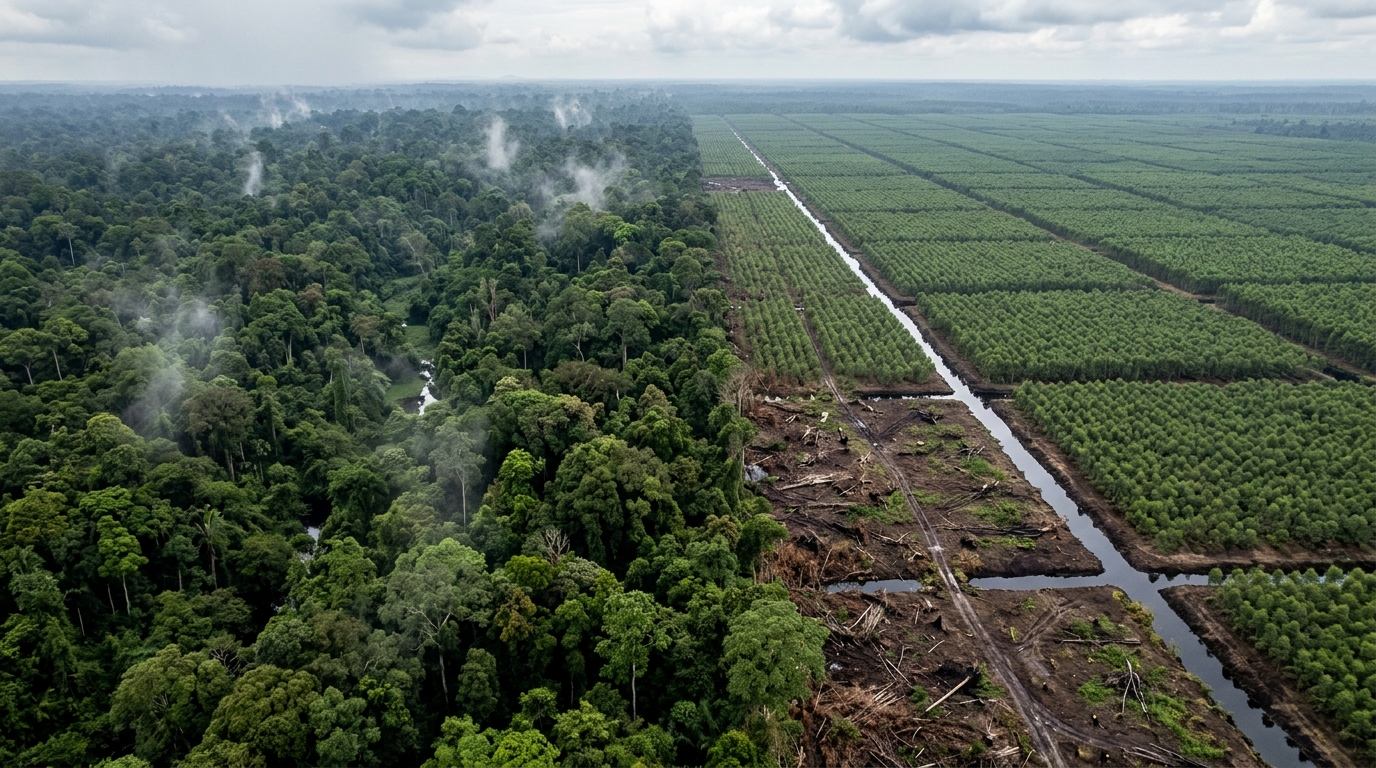
In a policy article published in the journal Science, researcher Robert Heilmayr and colleagues report that a planned wave of industrial expansion within Indonesia’s pulp sector threatens to reverse recent conservation achievements.

The study highlights that between 2011 and 2017, pulp-driven deforestation across Indonesia declined by 95 percent. This substantial drop followed a coordinated combination of international market incentives, strengthened domestic environmental policies, improvements in plantation productivity, and voluntary corporate commitments by major pulp producers to eliminate forest clearing from their supply chains.

According to the authors, however, these hard-won conservation gains have proven increasingly fragile over time. Deforestation rates began climbing again after 2017, with emerging evidence indicating that commercial operators may be actively circumventing their public sustainability commitments by relying on indirectly controlled third-party suppliers and opaque corporate ownership structures.

The authors emphasize that historical trends demonstrate meaningful conservation progress is technically achievable within the sector, yet remains vulnerable without ongoing oversight. Writing in their report, the researchers observe that the Indonesian pulp sector’s past actions demonstrate both that an end to deforestation is possible, but maintaining this progress as the sector rapidly expands will require sustained action and accountability by multiple parties.

Current plans to dramatically expand industrial pulp production threaten to accelerate forest loss further, particularly as government protections weaken and existing plantations reach the physical limits of further productivity gains.

Even assuming that plantation yields continue to experience productivity improvements, the researchers estimate that the projected industrial expansion could result in the direct clearing of an additional 123,000 hectares of forest.

Heilmayr and his colleagues use these findings to underscore how rapidly conservation progress can unravel whenever industrial growth outpaces environmental governance. The authors conclude that preventing future ecological losses will require reinstating robust government safeguards, establishing transparent and legally enforceable corporate sustainability commitments, and maintaining sustained international support.

Subject of Research: Environmental impacts of Indonesian pulp sector expansion

Article Title: Indonesia’s pulp industry threatens to reverse hard-won conservation gains

Article References: Indonesia’s pulp industry threatens to reverse hard-won conservation gains. Original publication (Bibliographic details unavailable.)

Image Credits: AI Generated

DOI: Not provided

Keywords: Indonesia, pulp industry, deforestation, conservation policy, peatland conversion, plantation productivity, Robert Heilmayr, corporate accountability, environmental protection, pulpwood demand, supply chain commitments, zero deforestation, industrial expansion, opaque ownership structures, land use policy, forest conservation, environmental governance

News Source: Alan Morgan. (November 19, 2026). Indonesian Pulp Sector Expansion Risks Reversing Progress Toward Zero Deforestation. Scienmag.


Tags: conservation policycorporate accountabilitydeforestationenvironmental governanceenvironmental protectionforest conservationIndonesiaindustrial expansionland use policyopaque ownership structurespeatland conversionplantation productivitypulp industrypulpwood demandRobert Heilmayrsupply chain commitmentszero deforestation
Share12Tweet7Share2ShareShareShare1

Related Posts

Air Frying Produces Firmest Texture and Highest Sensory Scores in Marinated Sturgeon

Air Frying Produces Firmest Texture and Highest Sensory Scores in Marinated Sturgeon

November 19, 2026
Modified Nitrogen Attenuation Models Enhance Cotton Canopy Hyperspectral Nitrogen Estimation Accuracy

Modified Nitrogen Attenuation Models Enhance Cotton Canopy Hyperspectral Nitrogen Estimation Accuracy

November 19, 2026

Mango Leaf Cuticular Wax Biosynthesis Mechanism Unveiled Through Multi-Omics Profiling

November 19, 2026

Korean Mugwort Harvest Stage Shapes Caffeoylquinic Acids and Anti-Inflammatory Effects

November 19, 2026

POPULAR NEWS

  • Study Reveals Outflow of Early-Career Japanese Pharmacists From Hospitals to Pharmacies

    Study Reveals Outflow of Early-Career Japanese Pharmacists From Hospitals to Pharmacies

    29 shares
    Share 12 Tweet 7
  • Mouse and Human Studies Show GATA2 Actively Maintains Müllerian Ducts

    29 shares
    Share 12 Tweet 7
  • Study Identifies Factors Linked to Women’s Health Decision Autonomy in Zambia

    29 shares
    Share 12 Tweet 7
  • Dual-Network Decomposition Model Improves Carbon Price Prediction Intervals Across Chinese Markets

    29 shares
    Share 12 Tweet 7

About

We bring you the latest biotechnology news from best research centers and universities around the world. Check our website.

Follow us

Recent News

Multidrug-Resistant Providencia hangzhouensis Strain Identified in Laying Hen Feces

Livestock Management and Soil Handling Drive Anthrax Outbreaks in Bangladesh

Updated Kidney Injury Thresholds Identify More Children at High Mortality Risk

Subscribe to Blog via Email

Enter your email address to subscribe to this blog and receive notifications of new posts by email.

Join 89 other subscribers
  • Contact Us

Bioengineer.org © Copyright 2023 All Rights Reserved.

Welcome Back!

Login to your account below

Forgotten Password?

Retrieve your password

Please enter your username or email address to reset your password.

Log In
No Result
View All Result
  • Homepages
    • Home Page 1
    • Home Page 2
  • News
  • National
  • Business
  • Health
  • Lifestyle
  • Science

Bioengineer.org © Copyright 2023 All Rights Reserved.