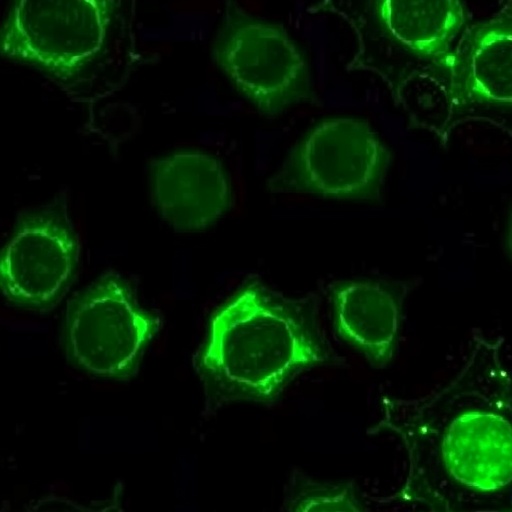
In a groundbreaking advancement poised to redefine pediatric oncology, researchers have unveiled a novel use of indocyanine green (ICG) fluorescence to distinguish viable neuroblastic tumor tissue from non-viable counterparts. This innovative technique offers a leap forward in the precision of tumor assessment, promising to refine surgical outcomes and therapeutic strategies for one of the most challenging and diverse tumor types in children.
Neuroblastic tumors, arising from the sympathetic nervous system, present a clinical conundrum due to their heterogeneous nature and varied biological behavior. Current diagnostic modalities, while effective in locating and partially characterizing these tumors, often fall short in differentiating live tumor cells from necrotic or non-viable tissue. This differentiation is critical, as residual viable cells post-surgery can lead to recurrence and treatment resistance, underscoring the need for real-time, intraoperative assessment tools.
Enter indocyanine green fluorescence, a near-infrared dye with a proven track record in medical imaging and surgical guidance. Traditionally used for vascular and lymphatic mapping, ICG’s fluorescence properties enable it to highlight tissue perfusion and viability dynamically. The study by You and Chen leverages these properties, exploring how ICG fluorescence can serve as a biomarker for tissue viability specifically within neuroblastic tumors.
The methodology underpinning this research involved administering ICG to pediatric patients diagnosed with neuroblastic tumors prior to surgical intervention. During surgery, specialized imaging devices captured the fluorescence emitted by the tumor tissues upon excitation by near-infrared light. The intensity and distribution of this fluorescence were then meticulously analyzed to map viable regions against areas showing diminished or absent fluorescence, suggestive of non-viable or necrotic tissue.
Findings were remarkable. Viable neuroblastic tumor segments exhibited robust, uniform fluorescence, correlating strongly with histopathological assessments confirming cellular integrity and metabolic activity. Conversely, areas lacking fluorescence corresponded to necrotic zones, fibrosis, or non-functional tumor regions. This clear delineation provides surgeons with a dynamic visual map, enhancing the accuracy of tumor resections and minimizing inadvertent removal of healthy tissues.
The implications extend beyond operative precision. Real-time differentiation allows oncologists to tailor adjuvant therapies more effectively, concentrating on regions harboring residual viable tumor cells that may evade complete surgical excision. Such targeted therapeutic approaches could translate into improved survival rates and reduced treatment-related morbidities.
Mechanistically, the efficacy of ICG fluorescence in this context is rooted in its cellular uptake and retention, which depend heavily on local blood flow and cellular metabolism. Viable tumor cells maintain active vasculature and metabolic pathways enabling uptake, whereas necrotic or non-functional tissue lacks these capabilities, resulting in diminished fluorescence signals. This biological basis validates ICG’s role as a functional marker rather than merely an anatomical one.
Moreover, the nondestructive nature of fluorescence imaging means it can be seamlessly integrated into existing surgical workflows without added patient risk. The technology employs safe doses of ICG, which has a well-documented safety profile, particularly useful in pediatric populations where minimization of intervention-related risks is paramount.
Challenges remain, however, in universalizing this technique. Tissue depth, heterogeneous tumor environments, and variability in vascularization can influence fluorescence intensity and interpretation. The researchers acknowledge the need for standardized imaging protocols and advanced image-processing algorithms to enhance diagnostic accuracy and reproducibility.
Future directions proposed include integrating ICG fluorescence imaging with other modalities such as intraoperative ultrasound or MRI to construct comprehensive, multimodal maps of tumor viability. This synergy could further empower surgical teams, providing layered data to guide excision margins with unprecedented confidence.
The potential for ICG fluorescence also sparks interest in its application to other pediatric solid tumors with similar diagnostic hurdles. Expanding the research scope might reveal a wider spectrum of indications where this technology augments conventional histopathological techniques, shaping a new era of fluorescence-guided oncology surgery.
In parallel, ongoing research is investigating the pharmacokinetics of ICG in different pediatric tumor types, optimizing dosage and timing to maximize imaging outcomes. Personalized protocols tailored to specific tumor biology and patient characteristics could become the norm, ushering in precision medicine’s promise in surgical oncology.
This breakthrough aligns with a broader trend in cancer treatment emphasizing real-time assessment, minimal invasiveness, and maximal efficacy. Fluorescence-guided surgery represents a paradigm shift, moving away from reliance on static imaging and delayed pathology toward dynamic, in situ decision-making that could dramatically improve patient prognoses.
The study by You and Chen arrives at a critical juncture, offering a practical, implementable solution to a longstanding clinical challenge. As their findings gain traction, we may anticipate rapid adoption across surgical oncology centers worldwide, coupled with iterative technological enhancements fueled by interdisciplinary collaboration.
Taken together, the deployment of indocyanine green fluorescence imaging in differentiating viable from non-viable neuroblastic tumor tissue is a testament to the innovative spirit driving pediatric cancer research. It exemplifies how rethinking established tools through novel applications can yield transformative outcomes, underscoring the vital interplay between scientific ingenuity and clinical practice.
For families confronting the daunting reality of neuroblastic tumors, this technique heralds hope for more effective, less risky interventions. It stands as a beacon of progress, illuminating pathways to better survival and quality of life for some of the most vulnerable patients.
This pioneering work confirms that the future of pediatric oncology lies not only in discovering new drugs but also in refining how we visualize, understand, and tackle cancer at the surgical front line. Indocyanine green fluorescence, once an ancillary method, now emerges center stage as a critical ally in the fight against childhood neuroblastoma.
As the medical community embraces these revelations, sustained interdisciplinary research will be essential to optimize technology, validate clinical outcomes, and expand applications. Together, such efforts promise to solidify fluorescence-guided surgery as a new standard, transforming pediatric cancer care into a more precise and hopeful endeavor.
Subject of Research: Differentiating viable from non-viable neuroblastic tumors using indocyanine green fluorescence imaging.
Article Title: Indocyanine green fluorescence in differentiating viable from non-viable neuroblastic tumors.
Article References: You, J., Chen, Ht. Indocyanine green fluorescence in differentiating viable from non-viable neuroblastic tumors. Pediatr Res (2026). https://doi.org/10.1038/s41390-026-05090-5
Image Credits: AI Generated
DOI: https://doi.org/10.1038/s41390-026-05090-5
Tags: ICG fluorescence in oncologyindocyanine green fluorescence imagingintraoperative tumor assessmentnear-infrared fluorescence in surgeryneuroblastic tumor differentiationneuroblastoma surgical outcomespediatric oncology imagingprecision tumor characterizationreal-time surgical guidancesympathetic nervous system tumorstumor tissue viability biomarkerviable vs non-viable tumor tissue