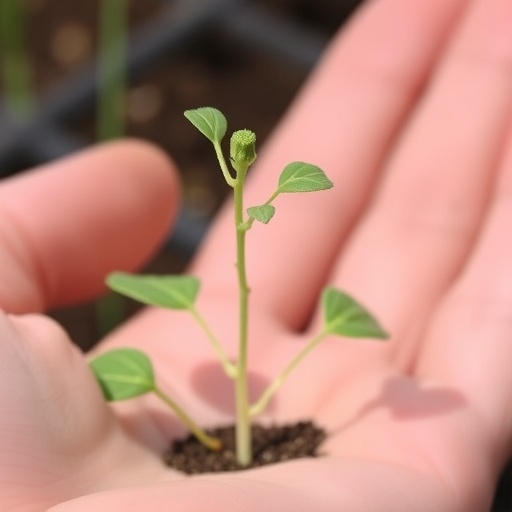
In the realm of agricultural science, the search for sustainable solutions to combat pests and enhance plant growth is more crucial than ever. Recent research conducted in Vietnam shines a light on the potential of indigenous bacterial strains that not only promote healthy plant development but also provide an effective defense against root-knot nematodes, particularly those from the genus Meloidogyne. This groundbreaking study evaluates various strains of bacteria, revealing their capacity to revolutionize practices in sustainable agriculture.
Root-knot nematodes are notorious for their detrimental effects on crops worldwide, leading to significant agricultural losses. These microscopic parasites invade the root systems of plants, causing galls, reduced system health, and ultimately lower yields. Traditional methods of controlling nematode populations often involve synthetic pesticides, which can have harmful impacts on the environment and human health. As such, the urgent need for eco-friendly alternatives in pest management could not be more pressing.
The focus of the study is on Malabar spinach, a leafy green vegetable recognized for its nutritional value and rapid growth. This adaptable plant species is widely grown in various environments, making it an excellent candidate for trials involving nematode resistance. By harnessing the power of beneficial bacteria, the researchers sought to reduce the reliance on chemical interventions while promoting a healthier crop yield.
The methodology employed in this study was thorough and systematic. Researchers first isolated a number of indigenous bacterial strains from natural soil samples within the local ecosystem. The selection process involved rigorous screening to identify strains exhibiting plant growth-promoting traits and effective biocontrol capabilities against Meloidogyne spp. The strains were subjected to various tests to evaluate their ability to enhance plant growth metrics, such as root length, shoot height, and overall biomass.
One of the standout findings from the research was the identification of strains that significantly improved root development in Malabar spinach. Enhanced root systems enable plants to better absorb water and nutrients, which is essential for robust growth, especially in nutrient-poor soils. This enhancement is not merely a quantitative measure; it represents a qualitative improvement in the overall health of the plant, which is more resilient to both diseases and environmental stressors.
Moreover, the study highlights the impact of these bacterial strains in effectively managing nematode populations. Certain strains demonstrated remarkable biocontrol mechanisms, reducing nematode galling on Malabar spinach roots. By promoting a healthy microbiome in the rhizosphere—the region of soil influenced by root secretions—these bacteria can effectively deter nematode infestations. The implications are clear: these biocontrol agents can serve as a natural alternative to harmful chemical pesticides.
The results of this research also underscore the importance of biodiversity in agricultural practices. The indigenous bacterial strains chosen were not merely effective in isolation; their efficacy was often enhanced when used in combination with other strains. This symbiosis suggests that nurturing a diverse array of beneficial microbes in agricultural systems could yield even greater benefits in plant health and pest management.
Furthermore, the environmental footprint of agricultural practices is reduced through this biocontrol approach. By decreasing dependency on chemical pesticides, the risks of environmental contamination, soil degradation, and harm to non-target organisms are significantly minimized. As a result, the promotion of bacterial strains aligns with global efforts to create more sustainable food systems.
A striking aspect of this research is its potential applicability beyond Malabar spinach. The principles and findings may extend to other crops affected by root-knot nematodes and similar pathogens. As agricultural challenges become more complex due to climate change and global trade dynamics, finding versatile solutions that can be adapted across various crop types is vital.
The study’s implications stretch into the realm of food security. As the global population continues to rise, the pressure on agricultural systems intensifies. Utilizing natural bacterial strains for pest control and growth promotion represents a promising avenue for enhancing productivity while safeguarding the environment. Sustainable agricultural practices that prioritize microbial health may thus play a crucial role in ensuring food security for decades to come.
In summary, the selection of indigenous bacterial strains capable of promoting plant growth and controlling root-knot nematodes in Malabar spinach represents a significant advancement in agricultural science. This research not only opens the door to more effective pest management strategies but also highlights the critical relationship between plant health, soil biodiversity, and sustainable farming practices. As this field of study progresses, further exploration of these beneficial microbial communities may unveil even more transformative solutions for modern agriculture.
The road ahead will involve not only validating these strains in diverse geographical and environmental conditions but also guiding farmers in their practical implementation. Educating agricultural stakeholders about these findings is essential for integrating microbial solutions into mainstream agricultural practices. Collaboration between scientists, agronomists, and farmers will be vital for unlocking the full potential of these promising discoveries in sustainable agriculture.
As we anticipate future innovations stemming from this research, one thing remains certain: The intersection of microbial ecology and agriculture holds tremendous potential for reshaping our approach to food production—moving us one step closer to a sustainable future, one bacterial strain at a time.
Subject of Research: Selection of indigenous bacterial strains having the ability to promote plant growth and control root-knot nematode Meloidogyne spp. on Malabar spinach in Vietnam.
Article Title: Selection of indigenous bacterial strains having the ability to promote plant growth and control root-knot nematode Meloidogyne spp. on Malabar spinach in Vietnam.
Article References:
Tran, V.T., Cao, H.T., Duong, H.K. et al. Selection of indigenous bacterial strains having the ability to promote plant growth and control root-knot nematode Meloidogyne spp. on Malabar spinach in Vietnam. Int Microbiol (2025). https://doi.org/10.1007/s10123-025-00739-3
Image Credits: AI Generated
DOI: https://doi.org/10.1007/s10123-025-00739-3
Keywords: sustainable agriculture, root-knot nematodes, indigenous bacteria, Malabar spinach, biocontrol, plant growth promotion.
Tags: agricultural science innovationsalternatives to synthetic pesticidesbacterial strains in crop healthbeneficial microbes for sustainable farmingcombatting nematodes in agricultureeco-friendly agriculture practicesindigenous bacteria for plant growthMalabar spinach nematode resistanceplant development enhancement techniquesroot-knot nematodes control methodssustainable pest management solutionsVietnam agricultural research studies